Flexible Busbar for Marine and Offshore Applications
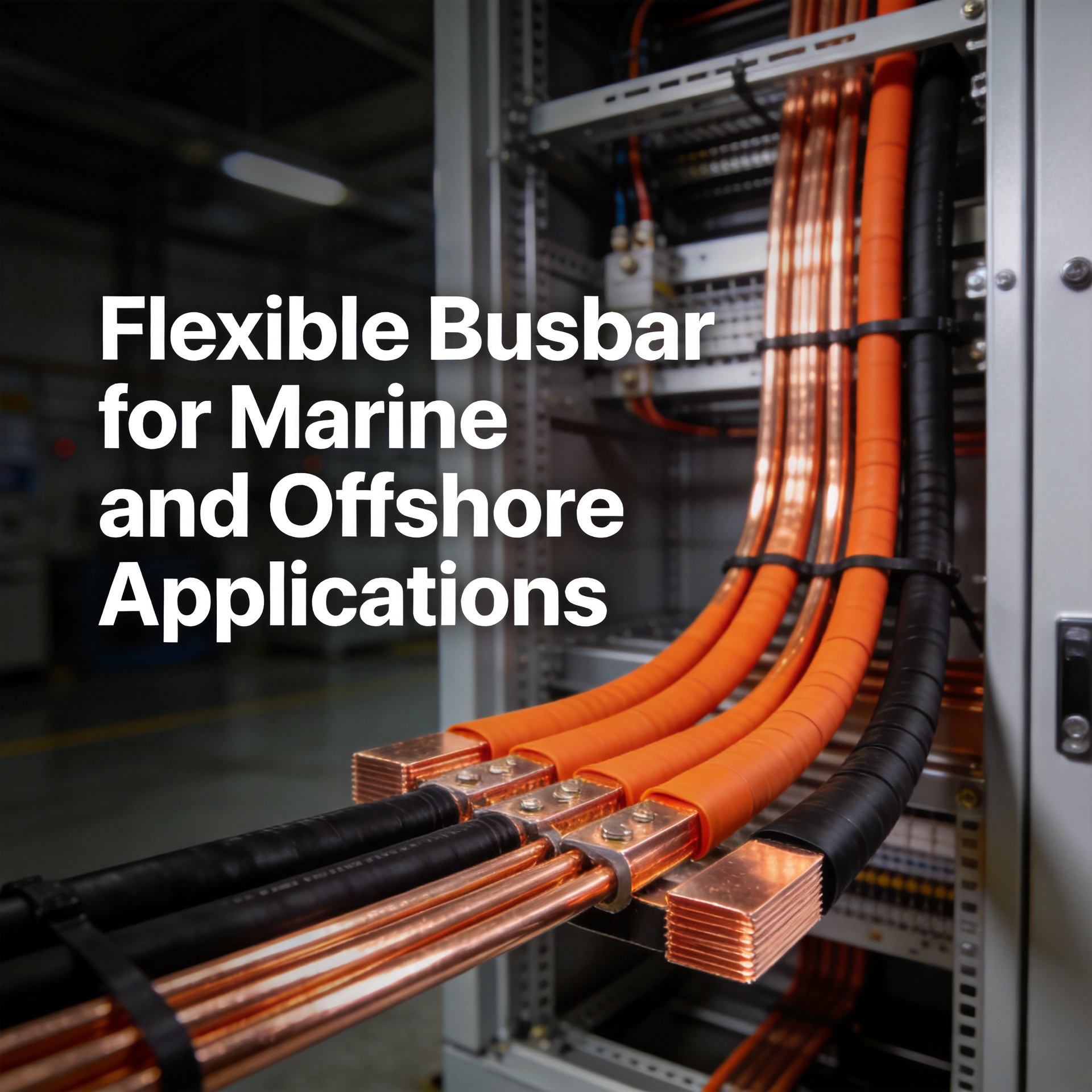
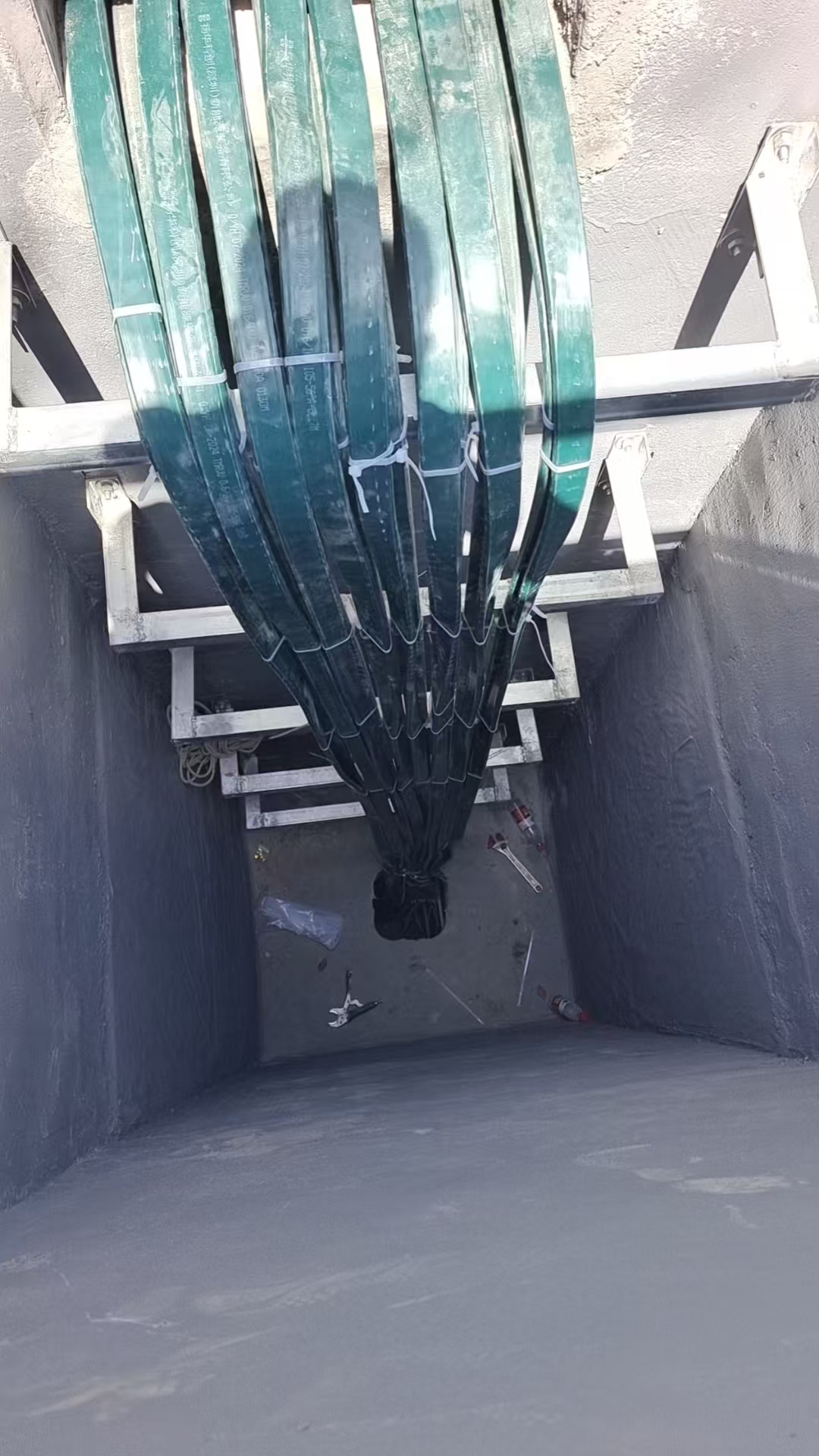
What is a flexible busbar for marine and offshore use? A flexible busbar is a laminated or braided conductor designed to connect electrical components in ships, oil platforms, and offshore wind farms. It replaces rigid copper bars where vibration, space constraints, or frequent movement require a bendable, fatigue-resistant power connection. Yanghua’s flexible busbars are engineered for corrosive marine environments and high-current density applications, with continuous operating temperatures up to 130°C [K1].
Application Scenario
Flexible busbars are critical in marine and offshore environments where rigid connections fail under vibration or thermal cycling. Common applications include:
-
Switchgear and distribution panels in ship engine rooms, where constant engine vibration loosens bolt connections
-
Offshore platform power modules, where salt spray and humidity accelerate corrosion on exposed copper
-
Generator and transformer connections, where differential thermal expansion between components must be absorbed
-
Battery banks in hybrid propulsion systems, where space is tight and connections must accommodate movement from vessel rolling
The primary advantage is service life: a properly selected flexible busbar withstands 10,000+ vibration cycles without fatigue cracking [K1], whereas rigid bar connections often fail within 2-3 years in marine service.
Engineering Decision Criteria
When selecting a flexible busbar for marine/offshore use, evaluate these parameters:
| Parameter | Specification [K1] | Why It Matters |
|---|---|---|
| Operating temperature | -40°C to 130°C | Marine environments experience wide thermal swings |
| Insulation voltage rating | Up to 1 kV (standard) | Offshore equipment uses 400-690V distribution |
| Conductor material | Tin-plated copper | Tin layer resists saltwater corrosion |
| Current density | 2-3 A/mm² typical | Deration required in confined, hot compartments |
| Bend radius | 3x thickness minimum | Too tight bends create hot spots |
| Salt spray resistance | ≥72 hours exposure | Must meet IEC 60068-2-11 for offshore |
Critical decision rule: Always specify tin-plated copper for marine use. Bare copper or silver-plated busbars rapidly degrade in salt spray and require costly protective coatings [K1].
Suitable vs. Not Suitable Cases
Suitable for
- High-vibration zones (engine rooms, thruster compartments)
- Limited-access panels where rigid bar installation is physically difficult
- Connection points between equipment on different foundations (differential movement)
- Retrofit projects where existing busbar must fit into tight, irregular spaces
Not Suitable for
- Primary hull grounding — flexible busbars offer lower short-circuit withstand than solid copper bar [K1]
- Very high current >5000A — laminated designs may overheat; consider water-cooled rigid bus
- Direct seawater immersion — no flexible busbar is rated for continuous underwater use
Procurement Notes
-
Require corrosion documentation — ask for salt spray test results per IEC 60068-2-11, minimum 72 hours without corrosion [K1]. Do not accept generic data sheets.
-
Specify insulation material — PVC is common but degrades at 80°C. For engine rooms, demand silicone rubber insulation rated to 180°C.
-
Request thermal rise data — verify the busbar’s temperature rise at your actual operating current. Many suppliers test only at rated current in still air, which understates real-world heating.
-
Ask about end-tinning — ensure all exposed copper ends have full tin coating, not just the busbar surface [K1]. End corrosion propagates into the insulation.
-
Confirm factory test reports — for classed vessels (Lloyd’s, DNV, ABS), the busbar manufacturer must provide type test reports for flame retardance, voltage withstand, and salt spray.
Frequently Asked Questions
Q: Can I use a standard industrial flexible busbar on my offshore platform?
A: No. Industrial-grade busbars typically lack the salt spray resistance and vibration endurance required for offshore service [K1]. Always purchase marine-rated product with documented test reports.
Q: How do I calculate the correct thickness for a 1000A marine application?
A: Start at 2.5 A/mm² current density in tin-plated copper. For 1000A, that’s 400 mm² cross-section. Then apply a 0.8 derating factor for ambient temperature above 40°C, giving a final requirement of 500 mm².
Q: What happens if I install a flexible busbar with too small a bend radius?
A: The inner layers compress and the outer layers stretch, creating strain that causes premature fatigue cracks. You’ll also get increased resistance and localized heating at the bend.
Q: Do flexible busbars require special connectors for marine switchgear?
A: Yes. Use tin-plated copper lugs with stainless steel hardware — never brass or steel. Apply anti-seize compound on threads to prevent galvanic corrosion in salt air.
Q: How often should I inspect flexible busbars in shipboard service?
A: At every annual drydock inspection. Check for corrosion at the insulation-conductor interface, loose termination bolts, and any signs of arcing or discoloration.
About the Author Yanghua Editorial Team — This article is maintained in the Astro MDX repository and reviewed against the source materials listed for the page.
Certifications, test reports, and performance claims require explicit approval before public publication.
Contact: info@yhflexiblebusbar.com | Phone: +86-769-3893-9888