Comparing Busbar Types: Flexible vs Laminated vs Rigid for Different Applications
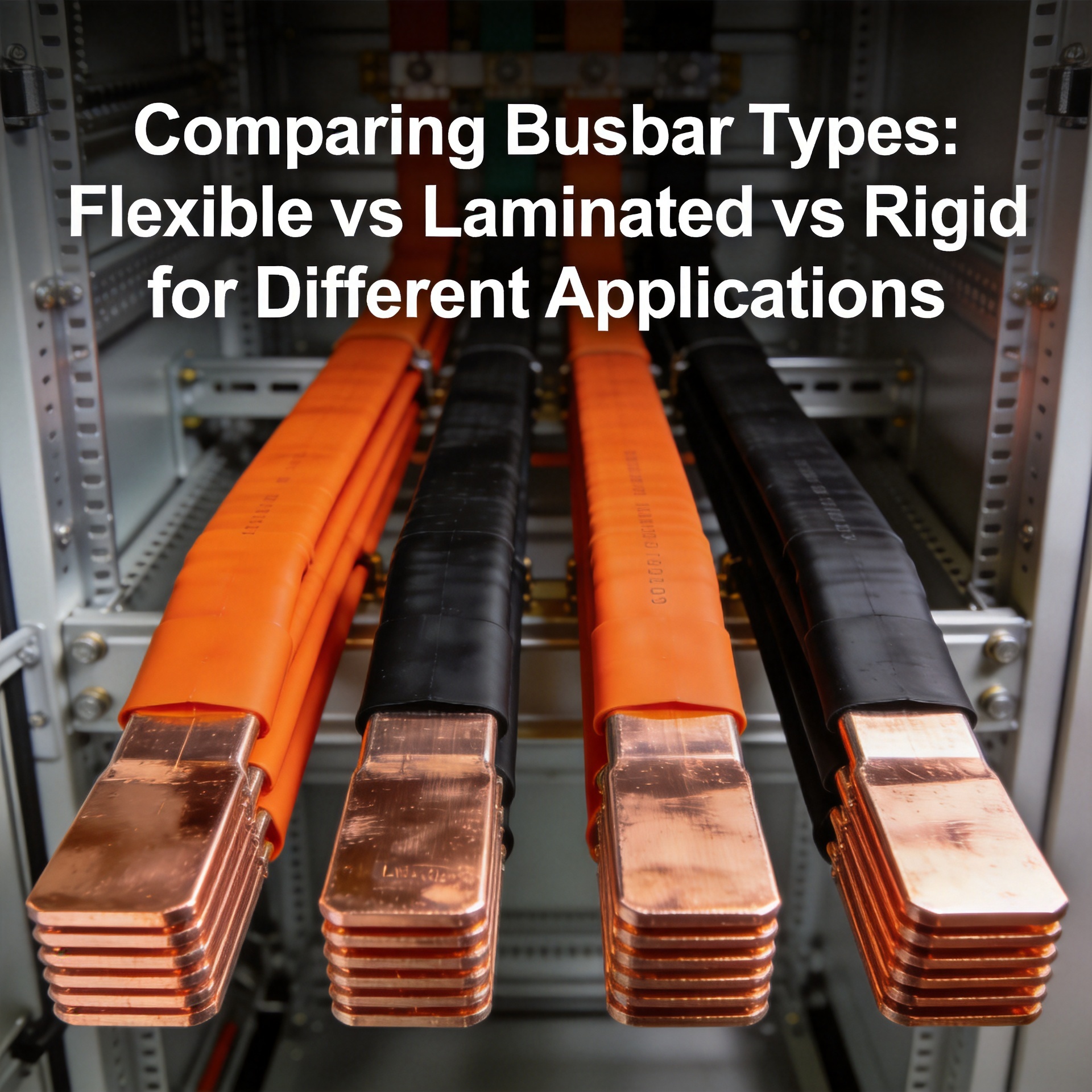
Direct answer: For most B2B electrical applications, busbar selection depends on current rating, space constraints, and installation flexibility. Flexible busbars suit high-vibration environments like renewable energy systems; laminated busbars excel in compact, low-inductance power distribution; rigid busbars are optimal for high-current, fixed installations in switchgear. Each type has specific engineering criteria that determine suitability rather than universal superiority.
Application Scenarios
| Busbar Type | Best Application | Key Advantage | Typical Environment |
|---|---|---|---|
| Flexible | EV battery packs, wind turbines, solar inverters | Vibration absorption, thermal expansion management | High shock/vibration, moving parts [K1] |
| Laminated | Data centers, UPS systems, power converters | Low inductance, compact layout | Dense cabinets, high-frequency switching |
| Rigid | Substations, industrial switchgear, main distribution | High current capacity, mechanical strength | Fixed installations, controlled environments |
Engineering Decision Criteria
When selecting busbar types, engineers should evaluate three primary parameters:
-
Current density and thermal management: Rigid busbars handle the highest continuous currents due to their cross-sectional area and natural heat dissipation [K1]. Laminated busbars manage heat through thin layers but require careful spacing. Flexible busbars have lower ampacity per cross-section due to conductor strand limits.
-
Inductance requirements: Laminated busbars provide the lowest inductance (typically 1-5 nH/m), critical for IGBT converters and high-speed switching. Rigid busbars have moderate inductance (10-30 nH/m). Flexible busbars have the highest inductance, limiting their use in high-frequency circuits.
-
Mechanical considerations: Flexible busbars tolerate thermal cycling and vibration without fatigue cracks, making them essential for mobile equipment. Rigid busbars require expansion joints for long runs exceeding 10 meters [K1].
Suitable vs Not Suitable Cases
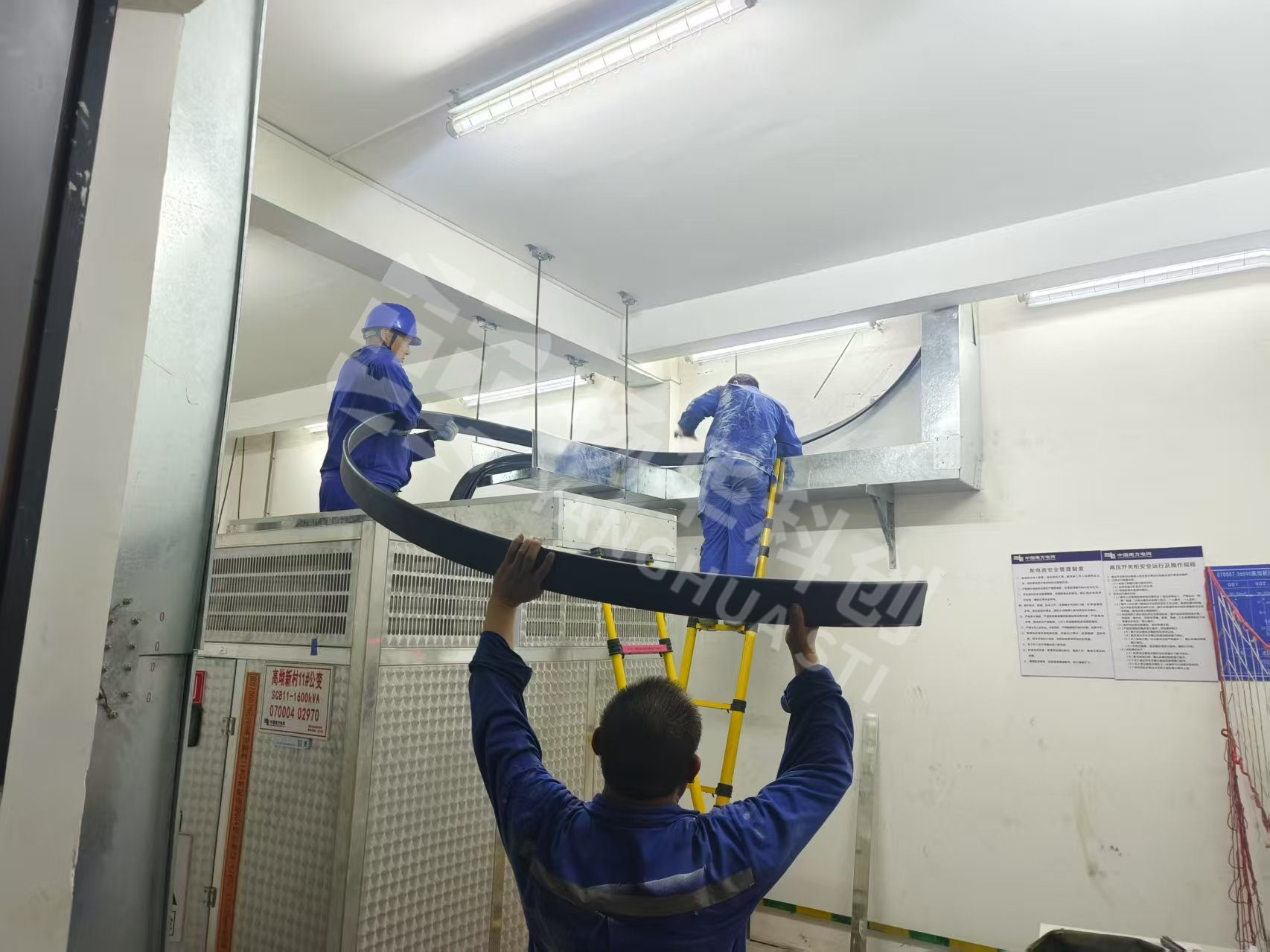
Suitable for flexible busbars:
- Battery interconnections where cells expand/contract
- Generator or transformer connections with vibration [K1]
- Retrofit installations with limited access space
Not suitable for flexible busbars:
- High-frequency power conversion (excessive inductance)
- Extreme high-current main feeders (>5000A continuous)
Suitable for laminated busbars:
- DC power distribution with tight voltage regulation
- Inverter/converter DC link capacitors [K1]
- Space-constrained cabinet layouts
Not suitable for laminated busbars:
- Outdoor installations (moisture ingress risk)
- Very high current applications (>3000A)
Suitable for rigid busbars:
- Main switchgear and transformer connections
- Long-distance power distribution
- Industrial plants with predictable layout
Not suitable for rigid busbars:
- Moving or rotating equipment
- Installations with high seismic risk [K1]
Procurement Notes
When sourcing busbars, verify these specifications against your load profile:
- Material grade: Electrolytic copper (C11000 or equivalent) vs aluminum alloy
- Plating requirements: Tin, silver, or nickel for corrosion protection [K1]
- Temperature rise limits: Typically 65°C-105°C rise at rated current
- Insulation rating: For laminated types, check dielectric strength per IEC 60243
- Flexible rating cycles: Specify minimum bending life (e.g., 10,000 cycles)
Frequently Asked Questions
Q1: Can flexible busbars replace rigid busbars in existing installations? A: No, direct replacement requires careful engineering. Flexible busbars have lower ampacity and different thermal characteristics. Always consult the busbar manufacturer with your load data and existing system configuration [K1].
Q2: How do I calculate cross-section requirements for each busbar type? A: For rigid busbars, use 1.5-2.5 A/mm² for copper. Flexible busbars typically require 20-30% more cross-section for the same current. Laminated busbars need distributed current analysis across layers. The exact value depends on temperature rise limits and enclosure ventilation.
Q3: What causes busbar failure in service? A: Common failures include thermal cycling fatigue (especially in rigid connections), vibration-induced loosening of fasteners, and corrosion at contact points. Proper torque specification and periodic thermal imaging are essential maintenance practices [K1].
Q4: Are laminated busbars always better for power converters? A: While laminated busbars offer lower inductance and better current sharing, they can be more expensive and require precise manufacturing tolerances. For converters below 100 kVA, alternative designs with discrete components may be more cost-effective.
Q5: What certifications should I require from busbar suppliers? A: Require material certificates confirming copper purity, plating thickness, and insulation dielectric test reports. For critical applications, specify UL 858 or IEC 61439 compliance documentation along with mechanical performance data.
About the Author Yanghua Editorial Team — This article is maintained in the Astro MDX repository and reviewed against the source materials listed for the page.
Certifications, test reports, and performance claims require explicit approval before public publication.
Contact: info@yhflexiblebusbar.com | Phone: +86-769-3893-9888