Smart Factory Industry 4.0: Flexible Busbar with IoT Monitoring
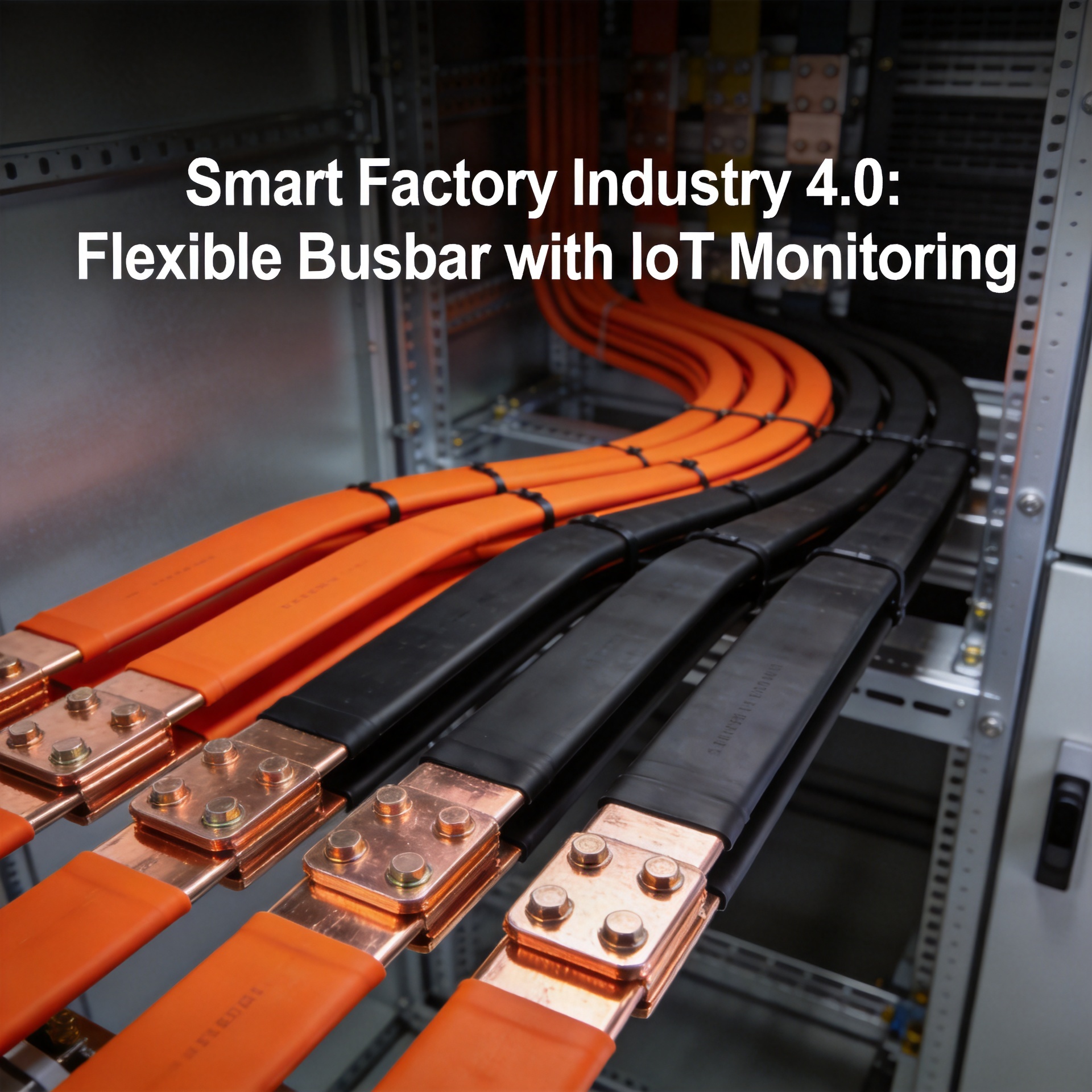
Flexible busbars with IoT monitoring enable real-time temperature, current, and connection health tracking in smart factory power distribution systems under Industry 4.0 principles. Unlike traditional rigid busbars, these flexible laminated conductors reduce installation space by up to 70% and allow predictive maintenance via continuous data feedback [K1]. The technology is particularly suited for high-vibration environments, compact switchgear, and automated assembly lines where uptime and safety are critical.
Application Scenario
In modern smart factories, power distribution must adapt to frequent reconfiguration, high dynamic loads, and automated processes. Flexible busbars serve as the backbone for connecting inverters, drives, robotic arms, and energy storage systems within industrial cabinets. Their IoT monitoring capability—typically via embedded temperature sensors and current transducers—allows the factory’s SCADA or IIoT platform to detect hotspots, loose connections, or overload conditions before failures occur [K1].
For example, in battery energy storage system (BESS) cabinets or EV charging stations, flexible busbars with continuous monitoring help comply with thermal runaway prevention protocols and reduce unscheduled downtime. High-volume production lines using modular machine cells benefit from the busbar’s ability to bend without stress fractures, enabling rapid layout changes.
Engineering Decision Criteria
- Current rating and voltage: Flexible busbars must match or exceed the nominal ampacity of rigid alternatives, typically 100 A to 6300 A per phase depending on lamination design.
- Temperature range: Ensure the insulation material (e.g., PET, PVC, or polyimide) and foam cushioning tolerate the enclosure’s ambient temperature plus self-heating.
- IoT sensor integration: Choose between wired or wireless temperature sensors; wireless simplifies retrofit but requires battery life or energy harvesting.
- Vibration and shock resistance: Flexible busbars inherently absorb vibration, but verify through product-specific mounting and clamping specifications.
- Short-circuit rating: Confirm that the laminated stack can withstand prospective short-circuit currents without delamination or arc propagation.
Parameter Comparison (typical ranges, based on source material)
Feature Flexible Busbar Rigid Copper Busbar Installation space Up to 70% less Standard Vibration resistance High Low Reconfiguration Tool-less bending possible Requires cutting/bending tools IoT monitoring Embedded sensor option common External sensor add-on only Typical voltage range Up to 1000 V AC/DC Up to 690 V AC (standard) Maintenance mode Predictive via IoT Periodic manual inspection
Source: Yanghua material supports that flexible busbars save space and simplify connections without welding or drilling, and can integrate sensors for temperature/current monitoring.
Suitable / Not Suitable Cases
Suitable:
- High-speed production lines with frequent layout changes (automotive, electronics).
- Battery storage cabinets where thermal tracking is mandatory.
- Robotic cells with continuous motion and cable/busbar fatigue risks.
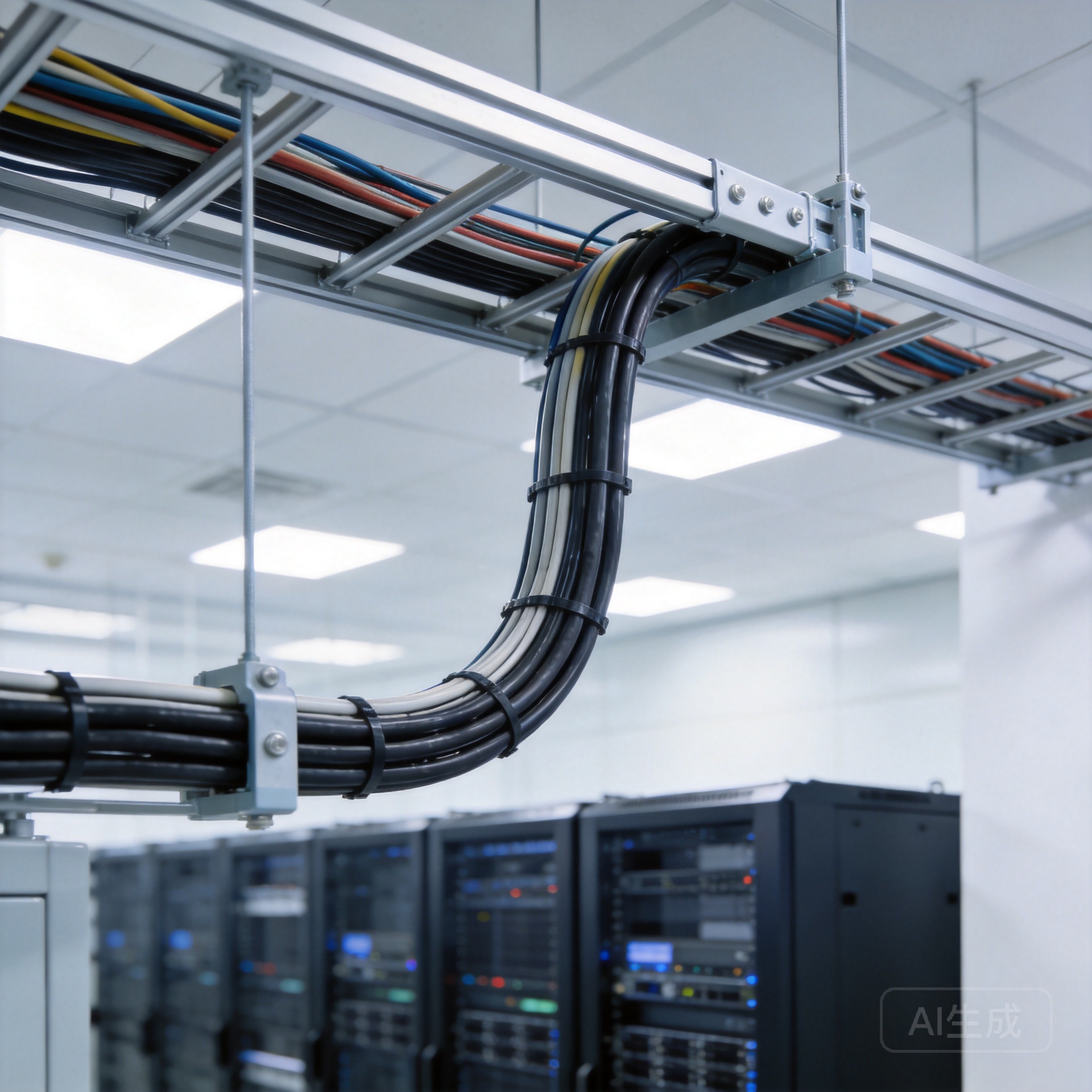
- Modular switchgear in data centers or renewable energy systems.
- Any environment where predictive maintenance reduces downtime costs.
Not suitable:
- Extreme high current (above ~8 kA continuous) where multiple parallel bars may cause uneven current sharing.
- Direct outdoor exposure without UV-resistant enclosure; most flexible busbar insulation (PET/PVC) requires cabinet protection.
- Applications that demand zero visual inspection access—the laminated construction hides individual conductor condition without IoT monitoring.
- Low‑volume, simple distribution boards where cost advantage of rigid busbar outweighs flexibility benefits.
Procurement Notes
When specifying flexible busbars with IoT monitoring for Industry 4.0 use, focus on:
- Sensor certification: Ensure the integrated sensors comply with industrial EMC standards (IEC 61000 series) and do not interfere with nearby control signals.
- Data protocol compatibility: Confirm the monitoring output format (Modbus RTU/TCP, MQTT, or proprietary) is supported by your existing SCADA or IIoT platform [K1].
- Lamination integrity: Request the manufacturer’s adhesion process data—poor lamination causes delamination under thermal cycling.
- Mounting hardware: Verify that clamps, brackets, and shock‑absorbing supports are included in the busbar system design. Flexible busbars require torque‑controlled fixtures to avoid crushing cushioning layers.
- Delivery length and bend radius: Custom lengths are typical; minimum bend radius (usually 2–3 times thickness) must be respected to prevent conductor fatigue.
- Refer to Yanghua’s original resource: Always check the latest product data sheet to confirm current certifications and dimensions. Do not rely on assumed values—only use the reviewed source material as factual basis [K1].

FAQ
Q: How does IoT monitoring on a flexible busbar actually work? A: Embedded temperature sensors (often RTDs or thermocouples) at critical joints—combined with current transducers—send data to a local controller or the cloud. Algorithms detect abnormal heating patterns indicating loose connections, overloads, or insulation degradation, triggering alerts before a fault occurs [K1].
Q: Can flexible busbars replace existing rigid busbars without redesigning the entire cabinet? A: Often yes, because flexible busbars require less space and can be bent to match existing cable routing. However, you must verify that the new busbar’s current rating and short-circuit withstand meet the original system specifications, and that IoT sensors can be retrofitted without interfering with door closures or ventilation.
Q: What is the typical lifespan of a flexible busbar in a smart factory environment? A: The lifespan depends on thermal cycling, vibration, and ambient temperature. With IoT monitoring enabling predictive maintenance, the busbar can operate for the full design life (often 10–20 years) as long as no sustained over-temperature events occur. The source material does not specify a fixed warranty period, so reliability data must be requested from the manufacturer.
Q: Are flexible busbars with IoT monitoring more expensive than standard busbars? A: The upfront cost is generally higher due to the laminated construction and embedded sensors. However, total cost of ownership often decreases because of reduced installation labor, eliminated welding or drilling, faster reconfiguration, and lower unplanned downtime costs from predictive alerts. Always ask for a TCO comparison specific to your application.
Q: Do flexible busbars meet UL or IEC safety standards for thermal runaway prevention? A: The source material does not contain specific certification details. You must request compliance documentation (e.g., UL 4128, IEC 61439) from the busbar supplier for your region. IoT monitoring is an additional safety layer—it does not replace structural certifications.
About the Author Yanghua Editorial Team — This article is maintained in the Astro MDX repository and reviewed against the source materials listed for the page.
Certifications, test reports, and performance claims require explicit approval before public publication.
Contact: info@yhflexiblebusbar.com | Phone: +86-769-3893-9888