Flexible Busbar vs Cable Tray: Space and Weight Comparison
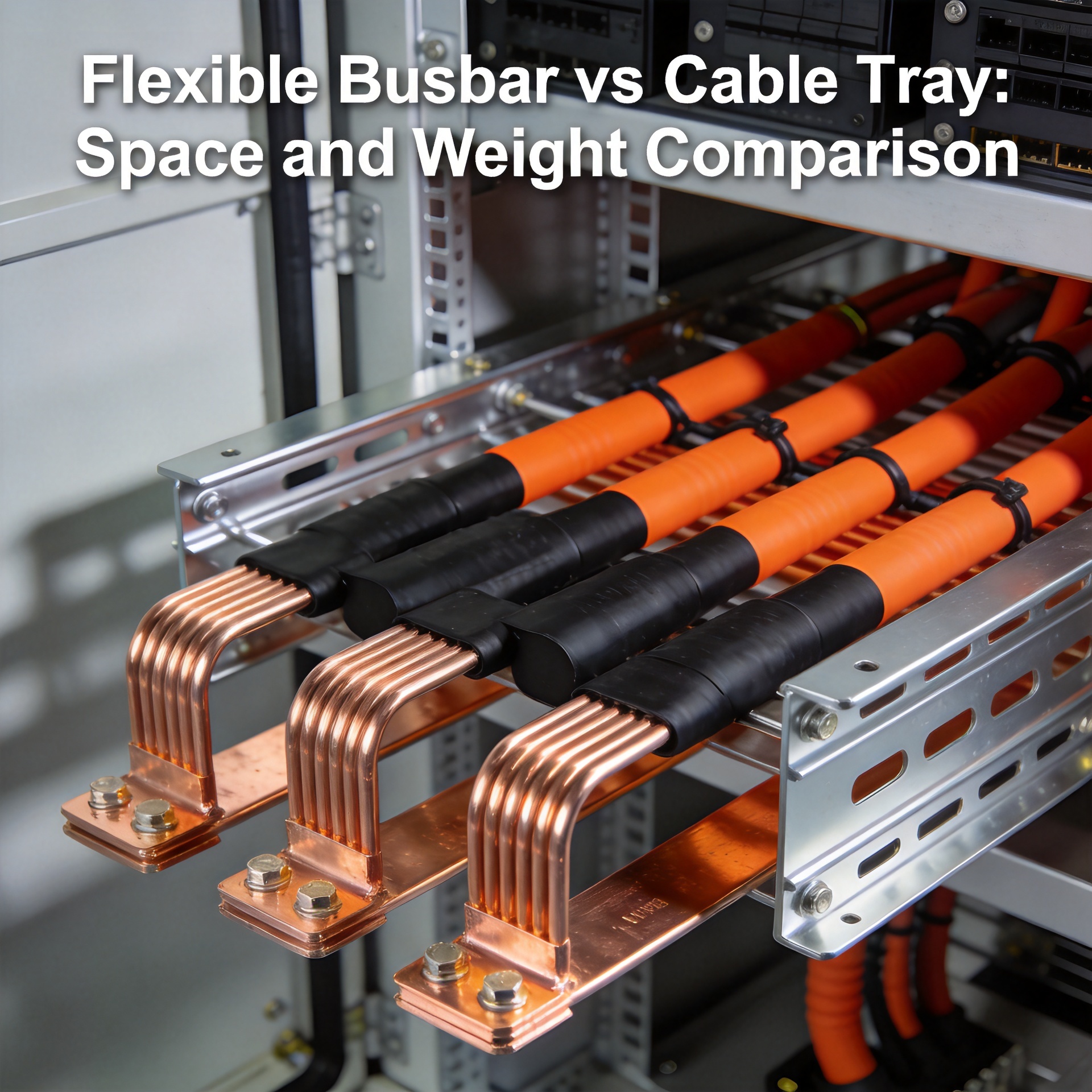
In energy storage and industrial power distribution, flexible busbars occupy significantly less space and weigh substantially less than traditional cable trays. A flexible busbar system can reduce weight by up to 50% compared to cable trays for the same current rating, while offering more compact routing and easier installation in confined spaces [K1]. This makes flexible busbars the preferred choice for battery racks, inverter cabinets, and modular power systems where space efficiency and weight reduction are critical engineering goals.
Application Scenario
Flexible busbars are well-suited for high-density environments where traditional cable trays would impose structural and spatial penalties. These include energy storage systems, data center power distribution, and electric vehicle charging infrastructure. The flexible busbar’s low profile and ability to bend around obstacles allow for routing in tight enclosures and along curved surfaces without requiring bulky support structures like cable trays [K1].
Engineering Decision Criteria
| Criterion | Flexible Busbar | Cable Tray |
|---|---|---|
| Space requirement | Minimal; can be routed in 15 mm gaps [K1] | Requires 50–100 mm clearance for bending radius |
| Weight per meter | ~0.3–0.6 kg (depending on ampacity) | ~2–5 kg (steel or aluminum tray plus cables) |
| Installation flexibility | High; can bend and twist during installation | Low; requires straight runs and corner accessories |
| Load distribution | Distributed over busbar length | Concentrated at tray supports |
| Thermal handling | Integrated conductor cooling | Requires additional ventilation |
| Total system weight savings | Up to 50% vs. cable tray [K1] | Baseline |
Suitable Cases
- Energy storage cabinets with dense battery modules
- Inverter-to-transformer connections in compact substations
- Overhead power distribution in data centers with limited plenum space
- Applications requiring frequent reconfiguration or modular expansion
Not Suitable Cases
- Very long, straight runs over 100 meters (cable tray may be more cost-effective)
- Extreme high-temperature environments above 105°C (review manufacturer derating)
- Outdoor installations without UV-resistant sheathing or conduit
- Applications requiring visual inspection of conductors along entire length
Comparative Analysis: Space and Weight
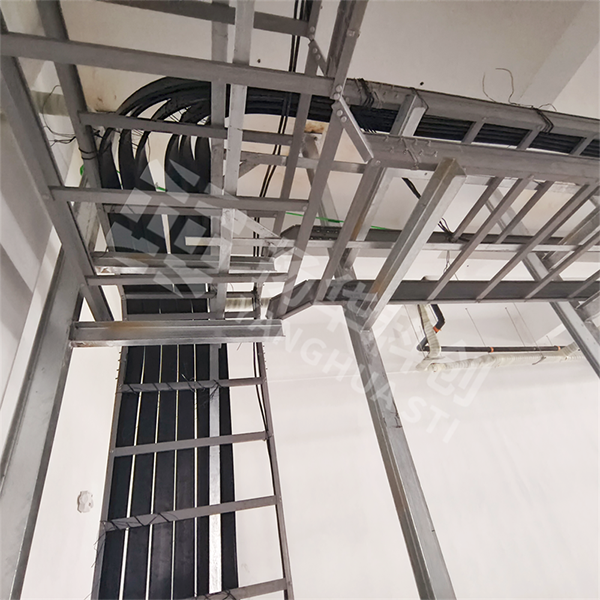
When space is at a premium, flexible busbars can achieve the same ampacity as a cable tray assembly in about one-third the cross-sectional area. For example, a 200 A circuit using flexible busbar occupies roughly 20 mm × 10 mm, while the equivalent cable tray with 50 mm² cables requires about 100 mm × 50 mm of tray width plus clearance [K1]. This space saving compounds in multi-circuit assemblies, where busbars can be stacked or layered within the same tray area.
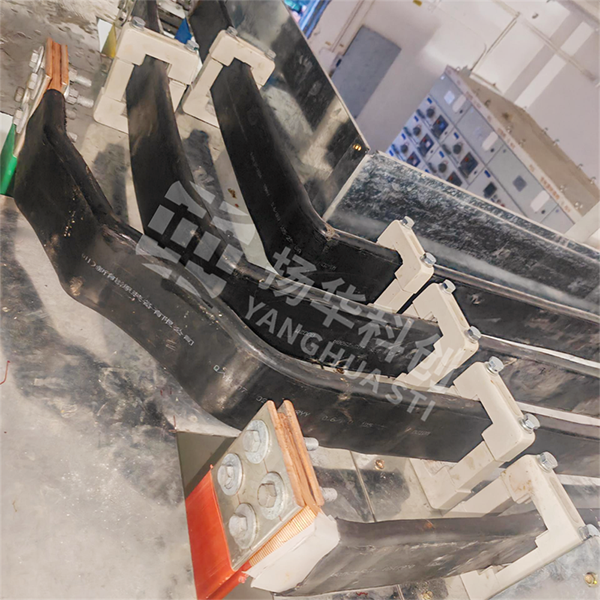
Weight savings are equally significant. A 10-meter run of flexible busbar for 200 A weighs approximately 4 kg, whereas the same cable tray assembly (tray plus cables) weighs about 8–10 kg. This weight reduction simplifies mounting requirements, reduces structural reinforcement, and lowers shipping costs [K1].
Procurement Notes
- Verify ampacity ratings at actual operating temperature (typically 85°C–105°C for flexible busbars)
- Specify copper or aluminum alloy based on conductivity and corrosion environment
- Request a space-claim drawing showing busbar routing versus cable tray alternative
- Confirm flexibility radius—minimum bend radius is typically 10x busbar thickness
- Compare total installed cost (material + labor + structural support) not just component price
Frequently Asked Questions
Q: Can flexible busbars replace cable trays in existing installations? A: Yes, in many cases flexible busbars can be retrofitted into existing enclosures or trays, provided the current rating and thermal derating are verified against the original design [K1].
Q: How much weight can I save by switching from cable tray to flexible busbar? A: Weight savings of up to 50% are achievable for the same ampacity, reducing structural load and installation labor [K1].
Q: Are flexible busbars more expensive than cable trays? A: The per-meter cost is often higher for flexible busbars, but total system cost may be lower due to reduced space, weight, and installation time. Always compare total installed cost.
Q: Do flexible busbars require special connectors or terminations? A: Yes, they use compression or bolted connectors designed for flat conductors. Cable tray terminations are not compatible.
Q: What is the maximum current rating for a single flexible busbar? A: Typical ratings range from 63 A to 630 A per conductor, depending on cross-section and temperature. Higher currents require multiple parallel busbars [K1].
About the Author Yanghua Editorial Team — This article is maintained in the Astro MDX repository and reviewed against the source materials listed for the page.
Certifications, test reports, and performance claims require explicit approval before public publication.
Contact: info@yhflexiblebusbar.com | Phone: +86-769-3893-9888