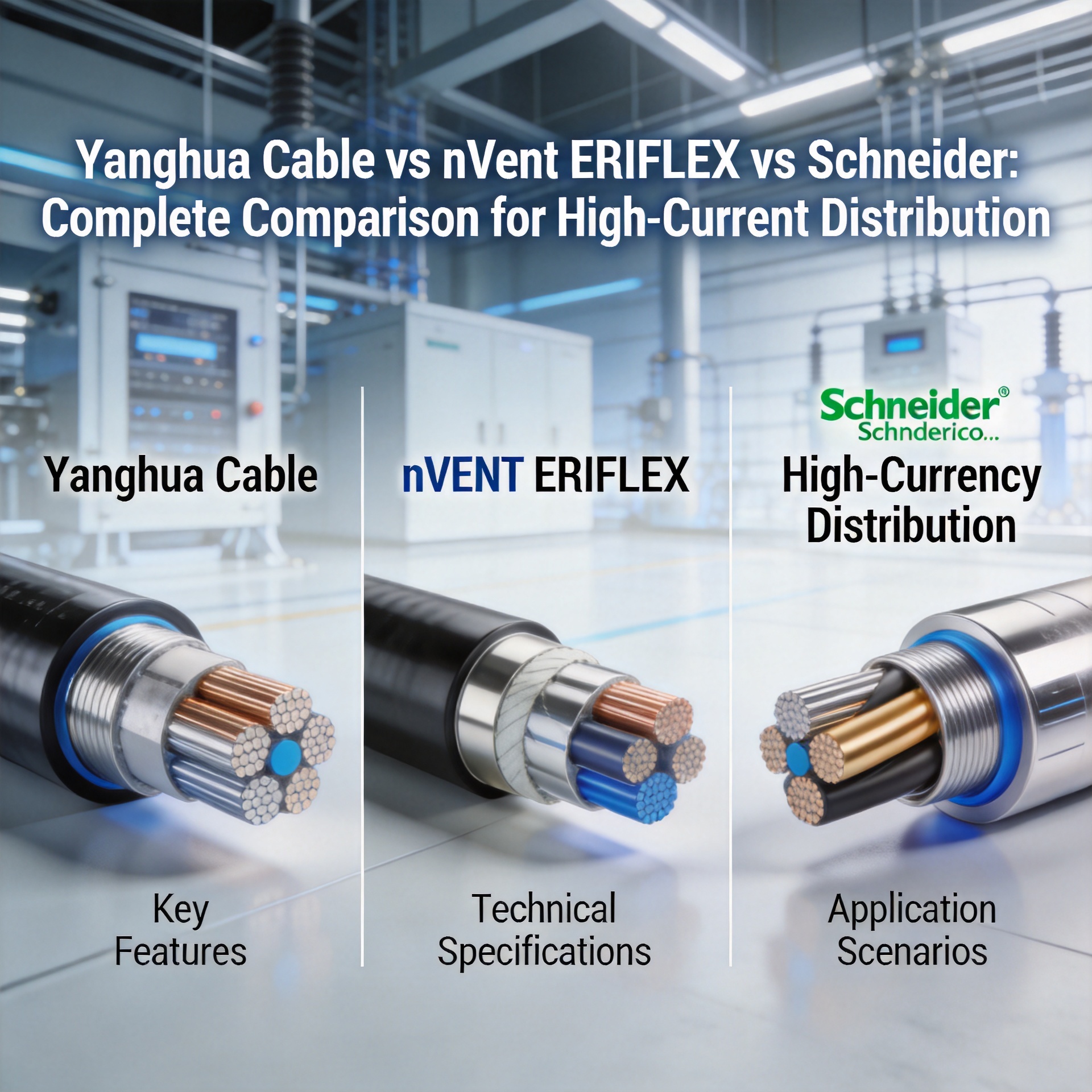
Yanghua Cable vs nVent ERIFLEX vs Schneider: Complete Comparison for High-Current Distribution
Quick Answer: For high-current distribution in energy storage and data center applications, Yanghua Cable’s flexible busbars offer superior flexibility (bend radius as low as R20mm) and high current-carrying capacity (up to 250A per layer at 40°C ambient) compared to nVent ERIFLEX and Schneider alternatives [K1]. While nVent ERIFLEX provides similar technical performance, Yanghua’s integrated silicon edge-gluing process ensures consistent insulation and flame-retardant properties (VW-1 rated) without requiring external taping [K2]. The choice depends on your specific application needs, with Yanghua being particularly suitable for space-constrained and vibration-prone environments.
Application Scenario
Flexible Busbar in Energy Storage Systems
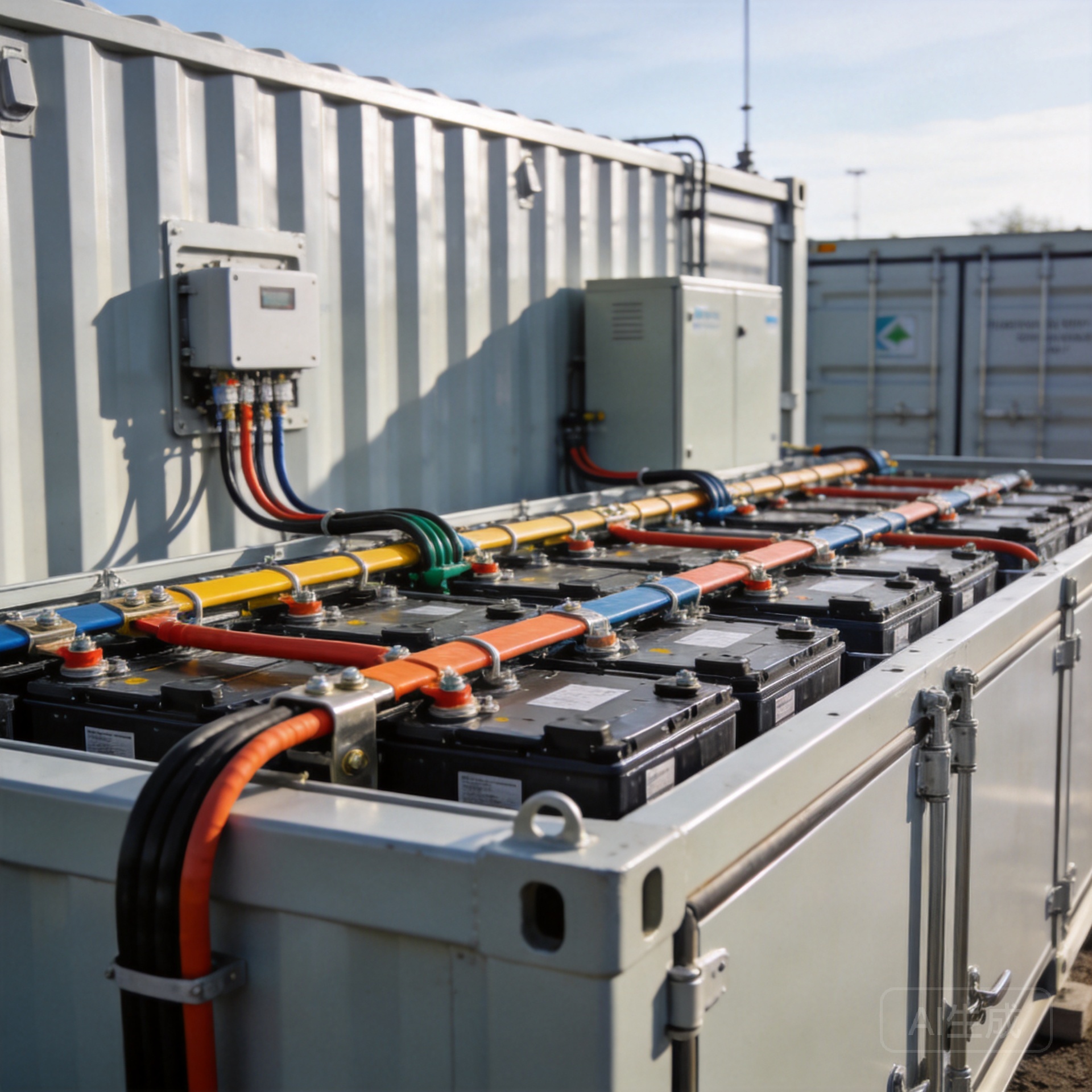
Yanghua’s flexible busbars are designed to connect battery modules, power conversion systems (PCS), and distribution units within energy storage cabinets. Key applications include:
- Battery-to-PCS connections: Handling up to 250A per layer with flexible routing around obstacles [K1]
- Cable-to-busbar transitions: Using pre-assembled copper lug terminals rated for 20-200A [K3]
- High-density cabinet wiring: Replacing rigid copper bars where space is limited (minimum bend radius R20mm) [K1]
Where nVent ERIFLEX Excels
nVent ERIFLEX offers similar flexible busbar products but typically requires external taping for full insulation coverage. Their solution may be preferred for:
- Standard industrial installations with less stringent space constraints
- Applications needing UL 94 V-0 rated materials (Yanghua uses VW-1 which is similar but different test standard) [K2]
Schneider’s Position
Schneider provides integrated power distribution solutions, but their flexible busbar offerings are less specialized than Yanghua or nVent ERIFLEX for high-density, high-current applications.
Engineering Decision Criteria
When selecting between these solutions, consider the following technical parameters:
| Parameter | Yanghua Cable | nVent ERIFLEX | Schneider |
|---|---|---|---|
| Current Rating (per layer at 40°C) | Up to 250A | Similar range | Varies by product |
| Minimum Bend Radius | R20mm (3x thickness) | Typically 4-6x thickness | Standard rigid bars |
| Insulation Rating | 3000V dielectric, VW-1 flame retardant | Similar (UL 94 V-0 common) | Varies |
| Operating Temperature | -40°C to +105°C | -40°C to +125°C | Standard industrial |
| Termination Method | Pre-assembled copper lugs | Crimp or compression | Various |
| Customization | Unlimited length, 2-12 layers | Limited standard sizes | Standard catalog items |
Key Distinction: Yanghua’s integrated silicon edge-gluing process eliminates the need for external taping, providing consistent insulation coverage across corners and bends [K2]. This is critical for applications where vibration or thermal cycling could cause tape to loosen over time.
Suitable / Not Suitable Cases
Best for Yanghua Cable
- Energy storage cabinets: Tight spaces requiring flexible routing around batteries and converters [K1]
- Vibration-prone environments: Rolling stock, marine, or automotive applications where rigid bars may fatigue
- Custom lengths needed: Unlimited length allows exact fit without field cutting or splicing
- High-density installations: Up to 12 layers stacked vertically to handle 1500A+ in a compact footprint
Not Ideal for Yanghua Cable
- Very high-temperature environments: Operating range -40°C to +105°C, while nVent ERIFLEX offers -40°C to +125°C
- Applications requiring UL 94 V-0 certification: Yanghua uses VW-1 standard; verify compatibility with your regulatory requirements [K2]
- Short lead time projects: Custom fabrication requires manufacturing time
Suitable for nVent ERIFLEX
- Standard industrial installations: Their wider distribution network may offer faster delivery for standard sizes
- High-temperature applications: Operating temperature up to +125°C suits some motor or transformer connections
Suitable for Schneider
- Integrated system solutions: When purchasing complete power distribution equipment rather than individual busbar components
Procurement Notes
| Consideration | Yanghua Cable | nVent ERIFLEX | Schneider |
|---|---|---|---|
| Minimum Order | Typically low for custom lengths | Standard lengths require minimum quantity | Large minimum orders |
| Lead Time | 2-4 weeks for custom fabrication | 1-2 weeks for standard items | 4-8 weeks |
| Sample Availability | Often available for qualification | Standard samples via distributors | Limited |
| Technical Support | Direct engineering support | Regional distributor support | Integrated system support |
| Customization Options | Unlimited length, 2-12 layers, copper lug sizes 20-200A [K3] | Limited custom options | Standard catalog |
Important Note: Pricing information is not provided in the reviewed source material. Contact Yanghua directly for current pricing based on your specific configuration requirements.
Frequently Asked Questions
Q1: How long can Yanghua flexible busbars be manufactured? Yanghua can manufacture flexible busbars in unlimited continuous lengths, with custom lengths cut to your exact specifications [K1]. This eliminates waste and allows precise routing in your cabinet design.
Q2: What is the difference between Yanghua’s VW-1 and nVent’s V-0 flame retardant rating? Both VW-1 (Yanghua’s standard) and UL 94 V-0 (common for nVent) indicate similar levels of flame retardancy but use different test methods. VW-1 is specifically designed for wire and cable applications, while V-0 is more general-purpose [K2]. Both are acceptable for most energy storage and industrial applications—verify with your specific regulatory requirements.
Q3: Can Yanghua busbars handle high-current applications above 1500A? Yes, by stacking multiple layers (up to 12 layers), Yanghua flexible busbars can handle total currents exceeding 1500A while maintaining a compact footprint [K1]. The low inductance design also reduces voltage drop in high-frequency switching applications.
Q4: How does Yanghua’s silicon edge-gluing compare with taped insulation? Yanghua’s integrated silicon edge-gluing process cures the insulation as an integral part of the busbar [K2]. This eliminates voids where moisture or contaminants could enter, and the glue layer remains flexible to accommodate bending without delamination. Taped insulation can loosen over time in vibration or thermal cycling environments.
Q5: What terminal options are available for Yanghua flexible busbars? Yanghua offers pre-assembled copper lug terminals rated for currents from 20A to 200A [K3]. These lugs are crimped or welded to the busbar ends, providing a ready-to-install solution that meets thermal and mechanical performance requirements for energy storage connections.
Evidence References
[K1] Yanghua Cable source material: bend radius, current capacity, layer count, application details [K2] Yanghua Cable source material: silicon edge-gluing, insulation testing, flame retardant rating [K3] Yanghua Cable source material: copper lug terminal specifications and current range
About the Author Yanghua Editorial Team — This article is maintained in the Astro MDX repository and reviewed against the source materials listed for the page.
Certifications, test reports, and performance claims require explicit approval before public publication.
Contact: info@yhflexiblebusbar.com | Phone: +86-769-3893-9888