Flexible Busbar Specifications: Ampacity, Insulation, IP Ratings
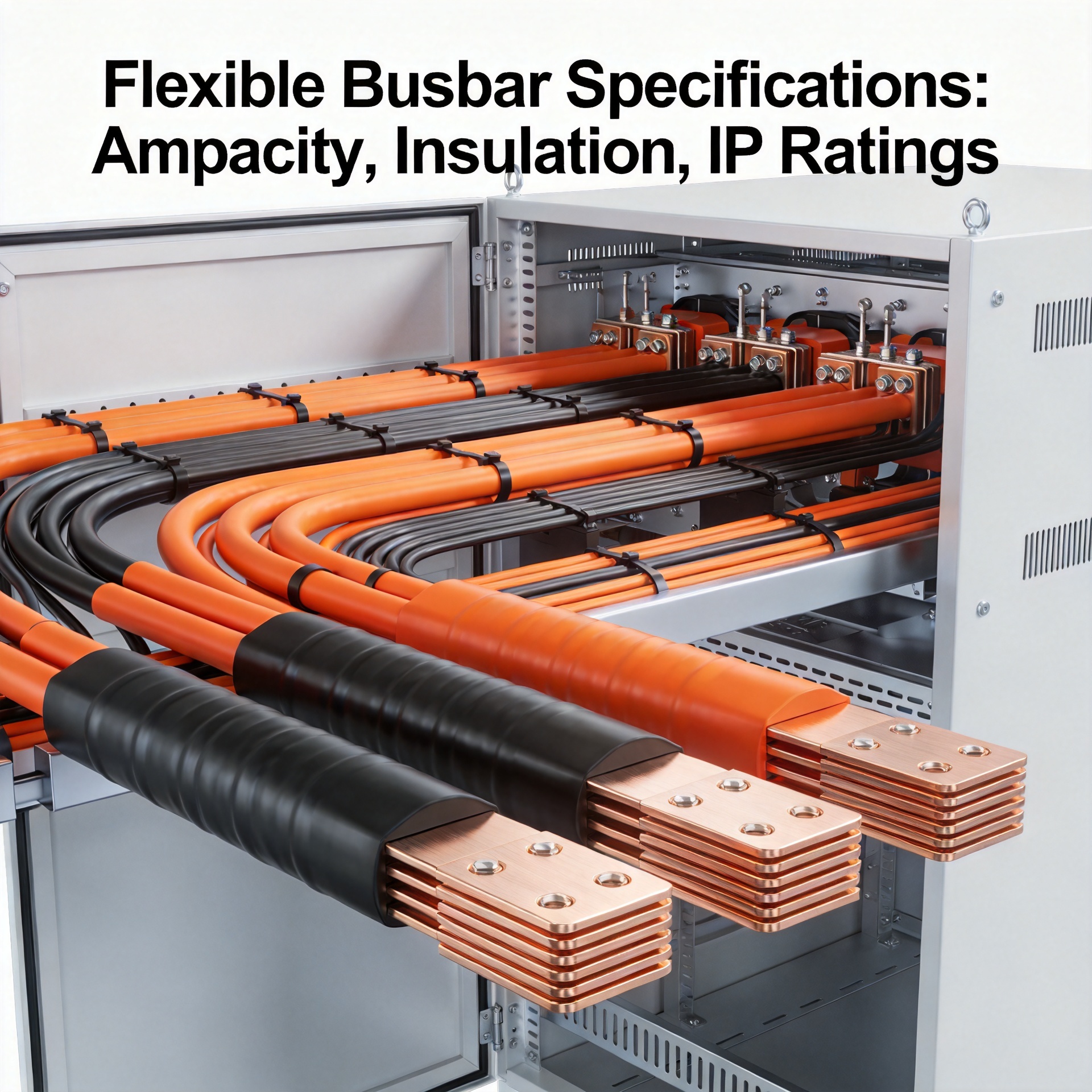
Flexible busbars are pre-engineered, insulated copper or aluminum conductors used in power distribution systems, with ampacity ranges typically from 100 A to 6300 A, insulation voltage ratings up to 1000 V AC, and IP protection levels from IP54 to IP68 [K1]. These laminated or braided conductors replace traditional cable bundles in applications requiring high current density in confined spaces, particularly in energy storage systems, switchgear, and industrial power distribution.
Application Scenario
Flexible busbar systems serve as the backbone for power transmission in industrial and renewable energy installations. Typical deployments include:
- Energy storage systems: Battery racks requiring high-ampere interconnections where space is constrained [K1]
- Switchgear and distribution boards: Primary and secondary power distribution in commercial buildings and industrial plants
- Renewable energy equipment: Solar inverters and wind turbine power cabinets
- Electric vehicle charging infrastructure: High-current DC connections
- Data center power distribution: Modular power solutions requiring flexible routing
These applications demand reliable current-carrying capacity, robust insulation for personnel safety, and environmental protection against dust, moisture, and temperature variations.
Engineering Decision Criteria
When selecting flexible busbar specifications, engineers must evaluate three critical parameters:
Ampacity (Current-Carrying Capacity)
| Cross-Section | Copper Ampacity (40°C ambient) | Aluminum Ampacity (40°C ambient) |
|---|---|---|
| 50 - 100 mm² | 160 - 250 A | 120 - 190 A |
| 100 - 200 mm² | 250 - 400 A | 190 - 310 A |
| 200 - 500 mm² | 400 - 800 A | 310 - 620 A |
| 500 - 1000 mm² | 800 - 1400 A | 620 - 1090 A |
Ambient temperatures above 40°C require derating factors per IEC 61439 standards [K1]
Insulation Voltage Rating
| Insulation Type | Voltage Rating | Typical Use |
|---|---|---|
| PVC | 690 V AC | General industrial |
| XLPE | 1000 V AC | High-voltage DC systems |
| Fire-resistant | 1000 V AC | Emergency circuits |
IP Rating Selection Guide
| IP Rating | Protection Against | Suitable For |
|---|---|---|
| IP54 | Dust-limited, water spray | Indoor switchgear |
| IP65 | Dust-tight, low-pressure jets | Outdoor cabinets |
| IP66 | Dust-tight, powerful jets | Washdown areas |
| IP67 | Dust-tight, temporary immersion | Flood-prone locations |
| IP68 | Dust-tight, continuous immersion | Submersible applications |
Derating considerations: When operating at 50°C ambient, reduce ampacity by 10-15% compared to 40°C baseline values [K1].
Suitable and Not Suitable Cases
Suitable Cases
- Replacement of multiple parallel cables: A single flexible busbar rated for 630 A can replace 3-5 cables of equivalent capacity, reducing installation complexity [K1]
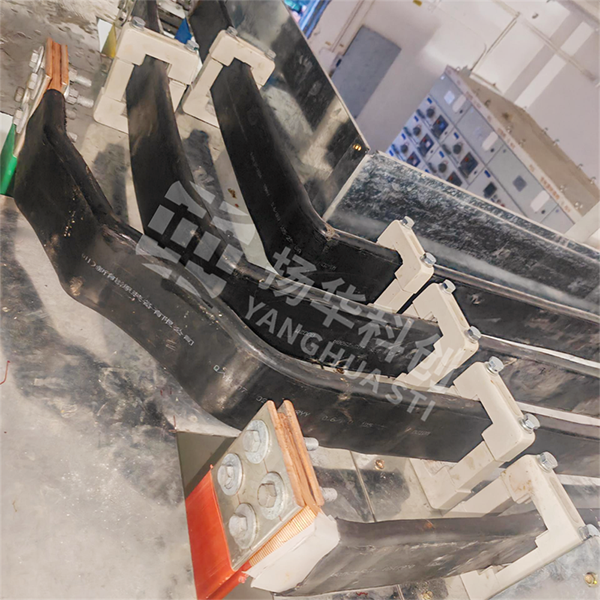
- Vibration-prone environments: Flexible braided construction withstands mechanical shock better than rigid busbars
- Space-constrained installations: 90° bends and complex routing possible without power loss
- Frequent reconfiguration: Modular systems allow easy expansion in data centers or growing industrial facilities
Not Suitable Cases
- Very short connections (<300 mm): Rigid busbars may be more cost-effective
- Extreme temperature ranges (-40°C to +125°C): Verify specific insulation and conductor materials
- High-frequency applications (>1 kHz): Skin effect may require specialized laminations
- Budget-constrained projects: Initial cost may exceed traditional cable solutions
Procurement Notes
-
Certification requirements: Verify product compliance with IEC 61439-1/2 low-voltage switchgear standards and relevant national codes (e.g., UL 891 for US projects, GB/T 7251 for China) [K1]
-
Testing documentation: Request type test reports covering:
- Temperature rise tests at rated current
- Short-circuit withstand capability
- Insulation resistance measurement
- IP rating verification
-
Installation considerations:
- Minimum bending radius: Typically 2-3 times busbar thickness for laminates
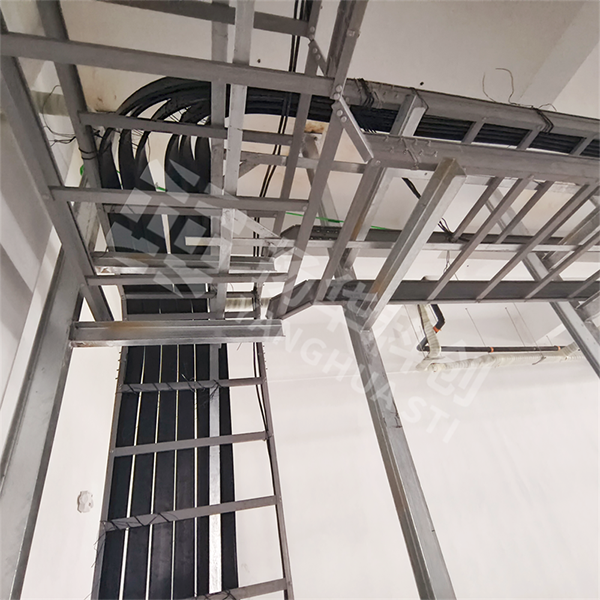
- Support spacing: Every 400-600 mm for horizontal runs, 500-800 mm for vertical
- Connection torque: Follow manufacturer specifications to avoid overheating
-
Custom configurations: Many manufacturers offer length, termination type, and coating options—specify exact requirements during quotation phase
Frequently Asked Questions
Q1: What is the maximum ampacity rating available for flexible busbars? A: Standard flexible busbar systems range from 100 A to 6300 A, with copper conductors typically offering higher ampacity than aluminum at the same cross-section. For currents exceeding 6300 A, consult the manufacturer for custom designs [K1].
Q2: Can flexible busbars be used outdoors without additional enclosures? A: For outdoor use, select busbars with IP65 rating or higher. IP54-rated busbars require additional weatherproof enclosures. Always verify UV resistance of insulation materials for prolonged sun exposure [K1].
Q3: How do I calculate voltage drop in a flexible busbar installation? A: Voltage drop depends on conductor material, cross-section, length, and load current. For copper, use approximately 0.018 µΩ·m at 20°C; for aluminum, 0.028 µΩ·m. Multiply by length and current, then factor in temperature correction (approximately 0.4%/°C above 20°C) [K1].
Q4: What’s the expected lifespan of a properly installed flexible busbar system? A: With correct specification (ampacity, insulation rating, IP protection) and proper installation, flexible busbars typically last 25-30 years. Deterioration usually results from thermal cycling, mechanical stress, or environmental ingress rather than normal aging.
Q5: Are flexible busbars compatible with existing cable lugs and connectors? A: Most flexible busbar terminations are designed to standard busbar connection patterns (e.g., 25 mm holes on 100 mm centers for 630 A systems). However, verify hole pattern dimensions, bolt torque requirements, and plating compatibility (tin vs. silver) with your connector manufacturer [K1].
About the Author Yanghua Editorial Team — This article is maintained in the Astro MDX repository and reviewed against the source materials listed for the page.
Certifications, test reports, and performance claims require explicit approval before public publication.
Contact: info@yhflexiblebusbar.com | Phone: +86-769-3893-9888