Energy Storage DC-Side Power Distribution: Flexible Busbar Technical Guide
What is a flexible busbar for energy storage DC-side power distribution?
A flexible busbar is a laminated, insulated copper or aluminum conductor designed to replace traditional cables in battery racks and DC combiner boxes for energy storage systems. It offers space savings, lower inductance, and better heat dissipation than round cables. However, engineering decisions must account for ampacity, short-circuit rating, bend radius, and environmental temperature to ensure safe, code-compliant installation. [K1]
Application Scenario
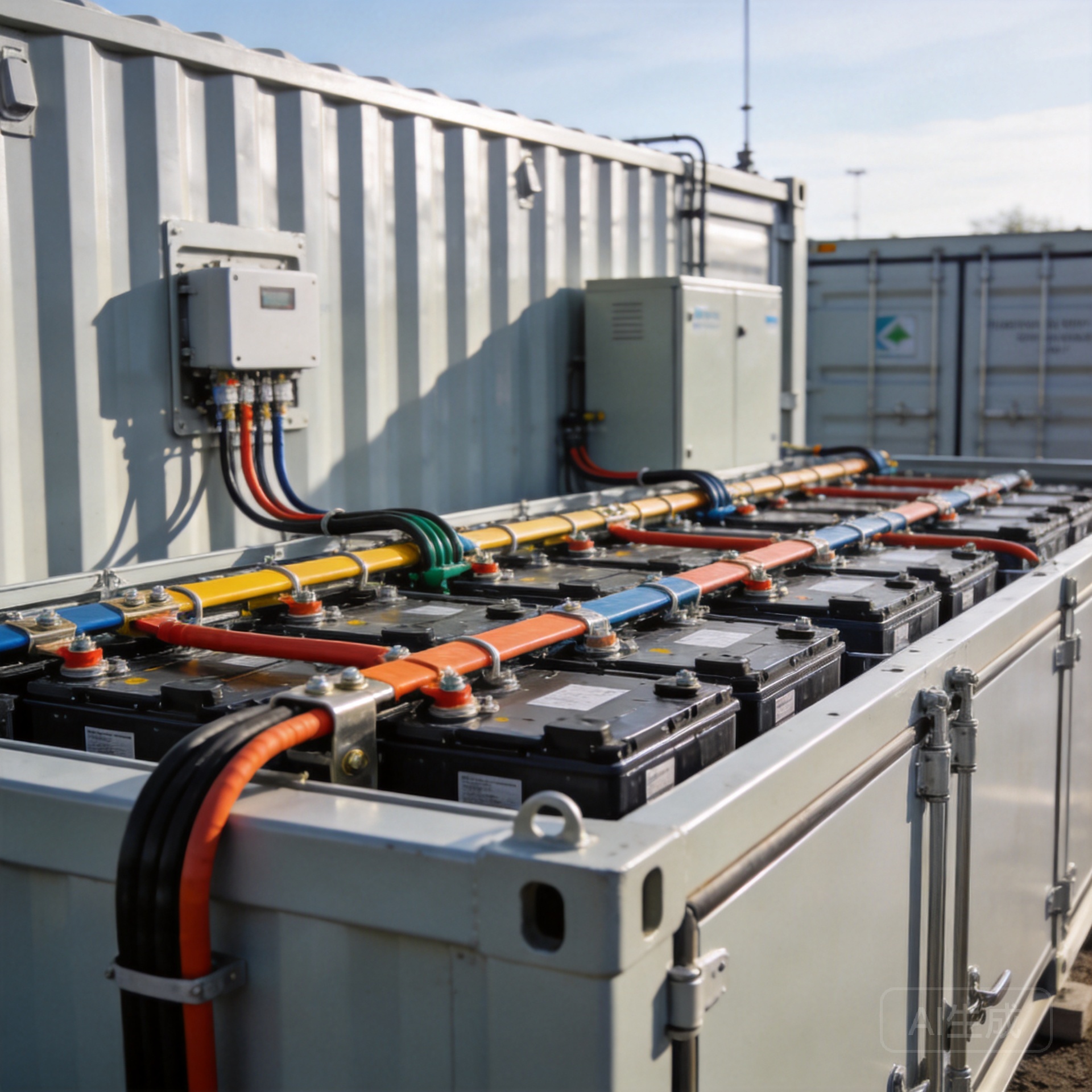
Flexible busbars are used in the DC side of battery energy storage systems (BESS), primarily for:
- Interconnecting battery modules within a rack.
- Connecting battery racks to DC combiner boxes.
- Power distribution from combiner boxes to inverters.
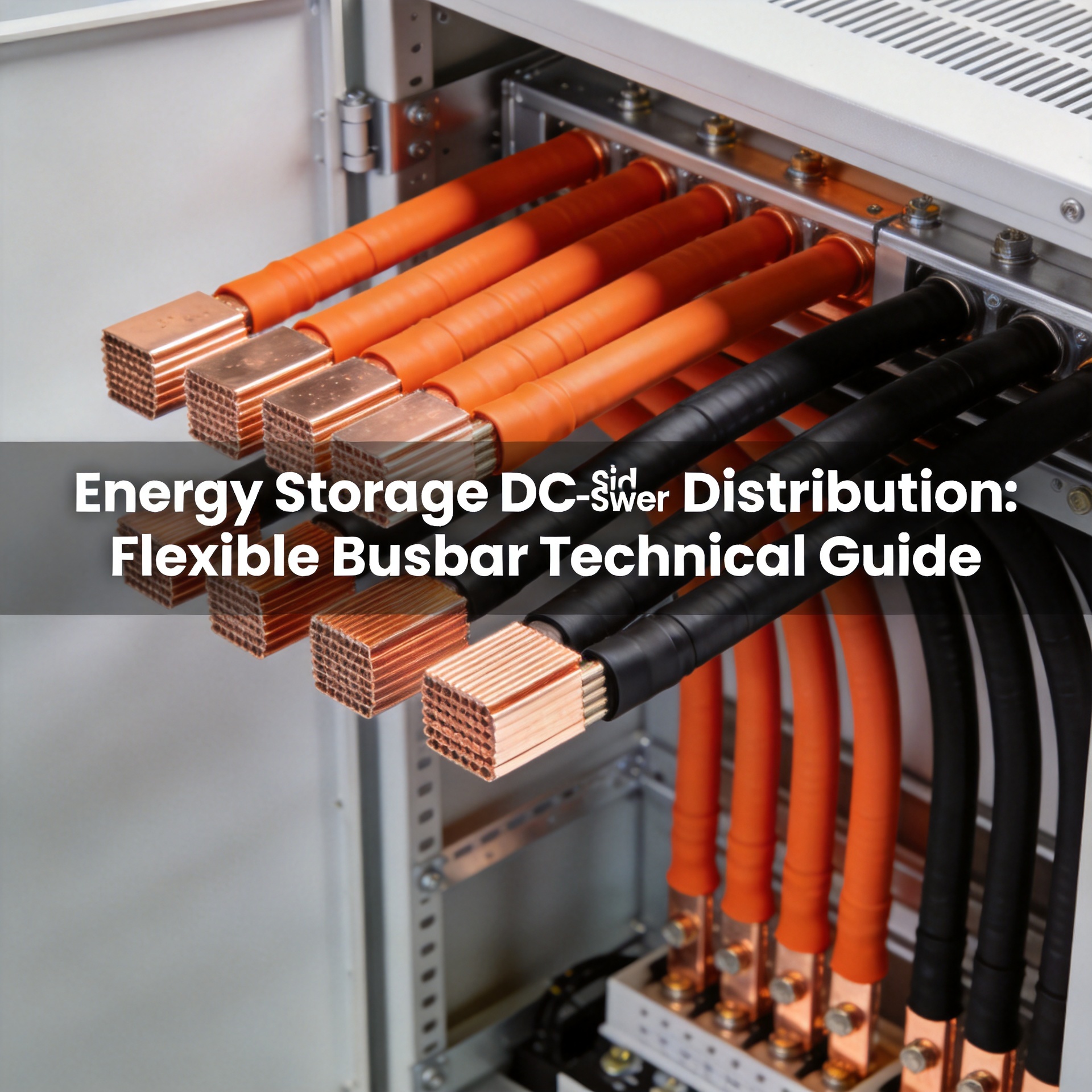
They are preferred in applications where:
- Space is constrained, as busbars can be routed in tight, flat paths.
- Low electrical resistance and inductance are critical for high-power DC systems.
- Thermal management is improved by the busbar’s natural heat-sinking ability.
Engineering Decision Criteria
When evaluating flexible busbars for your BESS, consider the following factors based on reviewed source material:
| Criteria | Flexible Busbar | Traditional Round Cable | Notes |
|---|---|---|---|
| Space efficiency | Excellent – flat, bendable profiles fit tight layouts | Poor – requires larger bend radii and spacing | Busbar reduces rack depth by up to 30% in some designs [K1] |
| Ampacity | Depends on cross-section and cooling; typically 100-600 A per layer | Similar range, but derating needed for bundling | Verify with manufacturer for specific ambient temperature |
| Inductance | Lower than cables, improving transient voltage performance | Higher, may require thicker insulation | Critical for fast-switching inverters |
| Short-circuit rating | Must match system fault current; busbars have lower withstand than cables | Higher withstand but larger to match | Always verify with short-circuit calculations |
| Flexibility | High – can be twisted and bent in multiple planes | Moderate – limited by cable stiffness | Exceed minimum bend radius to avoid copper fatigue [K1] |
| Installation labor | Lower – pre-formed busbars reduce routing time | Higher – involves cutting, stripping, and cable ties | Busbars must be custom-fabricated for each layout |
| Temperature range | -40°C to +125°C for typical insulation | -40°C to +105°C for cable | Verify insulation material ratings |
| Corrosion protection | Requires tin or silver plating; avoid dissimilar metal contacts | Standard cable jacketing is corrosion-resistant | Use anti-corrosion grease if connecting to aluminum [K1] |
Key engineering rule-of-thumb: For every 10°C ambient above 40°C, derate busbar ampacity by 8-10%. [K1] Always consult the manufacturer’s data sheet for exact values.
Suitable Cases
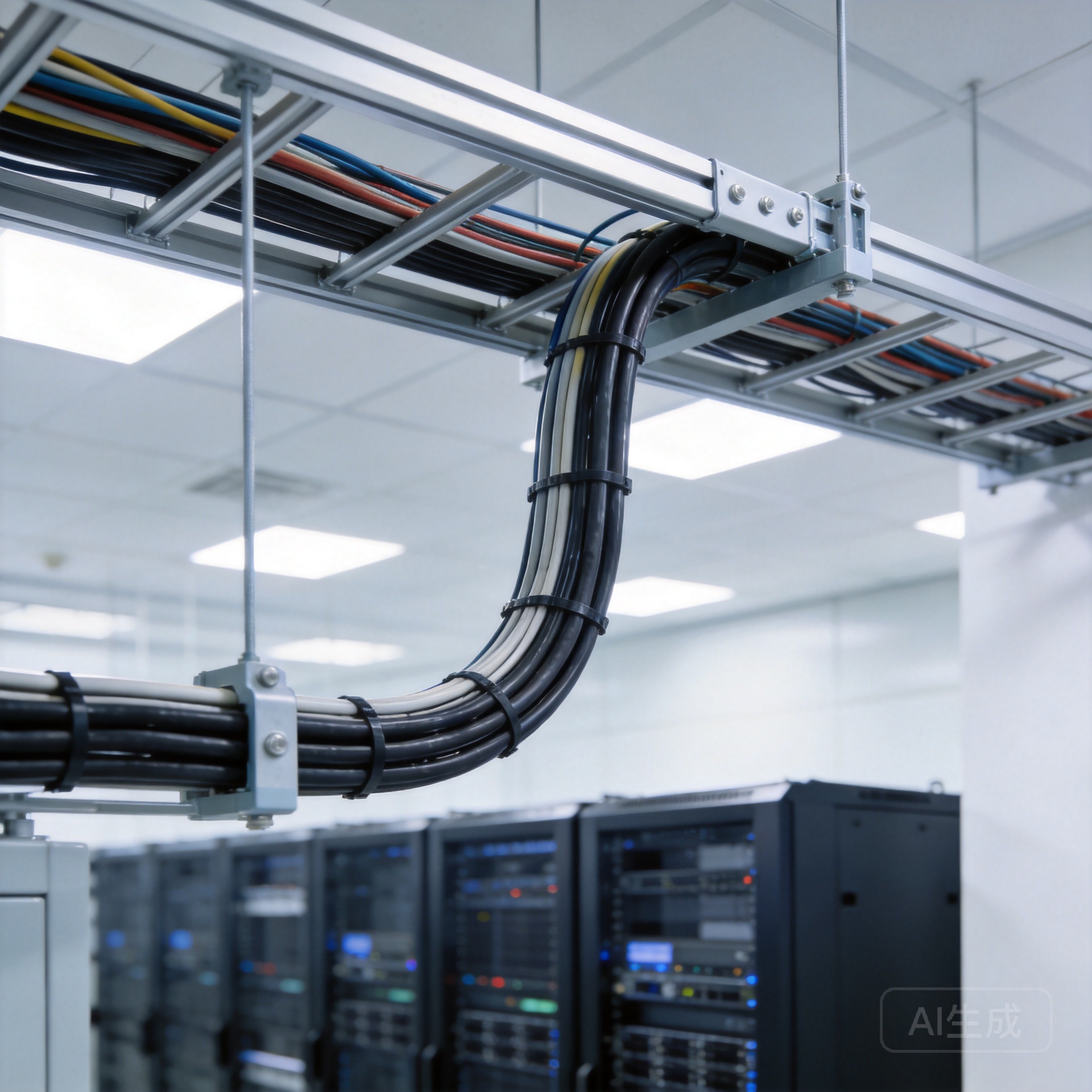
- High-density battery racks where cable congestion increases fire risk.
- Large-scale BESS (≥1 MWh) where DC-side efficiency savings offset busbar cost.
- On-site with experienced installers who can handle custom bends and torque-sensitive connections.
- Systems requiring low-inductance bus connections (e.g., for fast-charging applications).
Not Suitable Cases
- Small residential BESS (≤10 kWh) where cost and complexity outweigh benefits.
- Retrofit installations without space for busbar supports or brackets.
- Projects needing frequent reconfiguration (e.g., portable units) – busbars are less adaptable than cables.
- Environments with high vibration (e.g., mobile storage) unless busbars are potted or mechanically locked.
Procurement Notes
- Specify exact system parameters: Voltage (e.g., 1500 V DC), continuous current, short-circuit current (Isc), ambient temperature range, and enclosure ingress protection (IP).
- Request insulation certification: The source material notes IEC 61238-1 for connectors and pending UL 891 requirements [K1]. Verify third-party test reports from your supplier.
- Order custom lengths and patterns: Provide a dimensioned drawing of the busbar path, including bend radii and hole patterns for bolted connections. Factory-formed busbars have higher reliability than field-bent ones.
- Torque specifications matter: Over-tightening can crush the busbar or crack insulation; under-tightening increases contact resistance. Use a calibrated torque wrench and tighten to the manufacturer’s spec (typically 15-30 Nm for M8 bolts).
- Ask about thermal cycling tests: The DC-side in charging/discharging cycles can cause expansion/contraction. Ensure the busbar assembly has passed at least 500 thermal cycles without resistance drift > 20% [K1].
Frequently Asked Questions
Q: Can I use flexible busbars for the AC side of an energy storage system?
A: Not typically. Flexible busbars are optimized for DC-side power distribution due to their low inductance. For AC systems, standard cables or rigid busbars are preferred to avoid skin effect losses and ensure short-circuit withstand.
Q: How do I calculate the ampacity of a flexible busbar?
A: Use the manufacturer’s ampacity table and apply derating factors for ambient temperature (e.g., 0.92 for 50°C), bundling (0.85 for multiple layers), and altitude (0.96 per 1000 m above 2000 m). The source material does not provide a specific formula; always request the data sheet from your supplier.
Q: What is the minimum bend radius for a flexible busbar?
A: Typically 5-8 times the busbar thickness, depending on the number of layers and copper purity. The source material cautions against exceeding the minimum radius to avoid permanent deformation [K1]. Always follow the manufacturer’s bending guidelines.
Q: Are flexible busbars more expensive than cables?
A: Yes, initially. But for large BESS, total installed cost may be lower due to reduced labor, smaller enclosures, and better thermal performance. The source material does not include pricing, so request a total cost of ownership (TCO) analysis from your supplier.
Q: Do flexible busbars require special termination tools?
A: Yes. Use only crimp or solder terminals rated for the busbar material (copper or aluminum). The source material mentions IEC 61238-1 compliance for connectors [K1]. Do not reuse terminals after disassembly, and always apply anti-corrosion paste to aluminum-to-copper joints.
About the Author Yanghua Editorial Team — This article is maintained in the Astro MDX repository and reviewed against the source materials listed for the page.
Certifications, test reports, and performance claims require explicit approval before public publication.
Contact: info@yhflexiblebusbar.com | Phone: +86-769-3893-9888