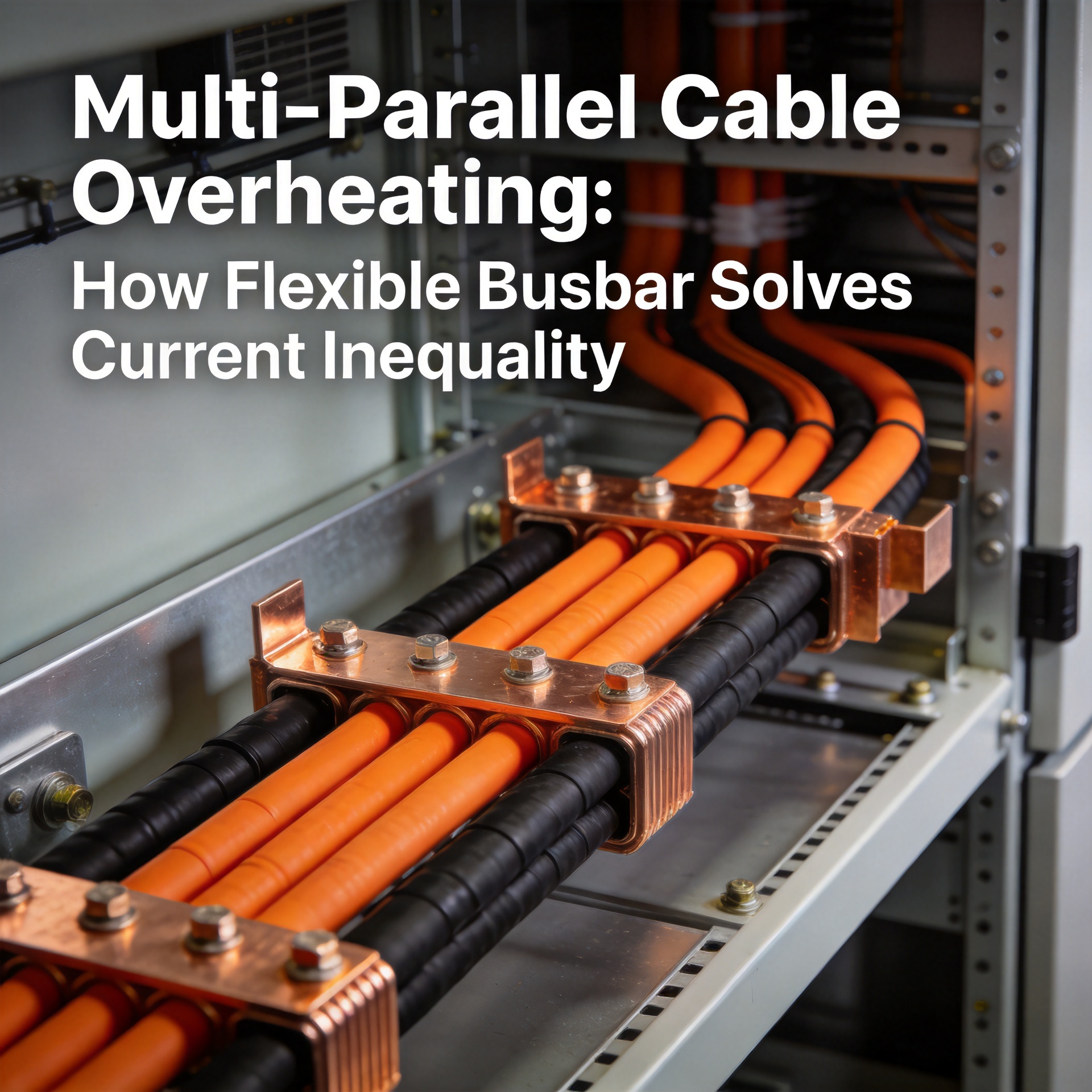
Multi-Parallel Cable Overheating: How Flexible Busbar Solves Current Inequality
When multiple cables are connected in parallel, current does not flow equally through each conductor due to differences in impedance, contact resistance, and cable length. This imbalance causes certain cables to overheat, reducing system reliability. Flexible busbars solve this by providing a low-impedance, equal-length path that ensures uniform current distribution across all parallel connections, reducing hotspots and extending system life [K1].
Application Scenario
Multi-parallel cable configurations are common in energy storage systems, data centers, and large-scale industrial power distribution, where high currents must be delivered reliably. The typical problem arises when engineers use multiple single-core cables in parallel to handle currents above a single cable’s rating—e.g., 4000A using four 1000A cables. In these setups, even small differences in cable length, termination resistance, or conductor temperature create unequal current sharing [K1].
Flexible busbars are specifically designed for such scenarios. Their laminated copper or aluminum layers provide a defined, repeatable geometry, so every parallel path has identical impedance. This prevents the thermal runaway that occurs when one cable carries more than its share of current and heats up, further reducing its resistance and drawing even more current [K1].
Engineering Decision Criteria
When selecting between flexible busbars and traditional parallel cables, evaluate these factors:
| Criterion | Traditional Parallel Cables | Flexible Busbar |
|---|---|---|
| Current sharing accuracy | Poor—typically ±20% or worse due to length and connection variations | Excellent—±1-2% due to identical conductor geometry [K1] |
| Mechanical flexibility | High (cables bend easily) | Moderate (pre-formed but adaptable) |
| Space utilization | Poor—requires large bending radius and separation | Good—compact, flat form factor |
| Thermal management | Hotspots likely; difficult to predict | Uniform temperature distribution [K1] |
| Installation complexity | Medium—requires careful cable dressing | Low—prefabricated to exact dimensions |
| Long-term reliability | Degrades as connections oxidize | Consistent due to low-contact design [K1] |
Suitable Cases
Flexible busbars are the optimal choice when:
- High-current applications (above 1000A) with multiple parallel paths
- Space-constrained enclosures where cable bending radius cannot be maintained
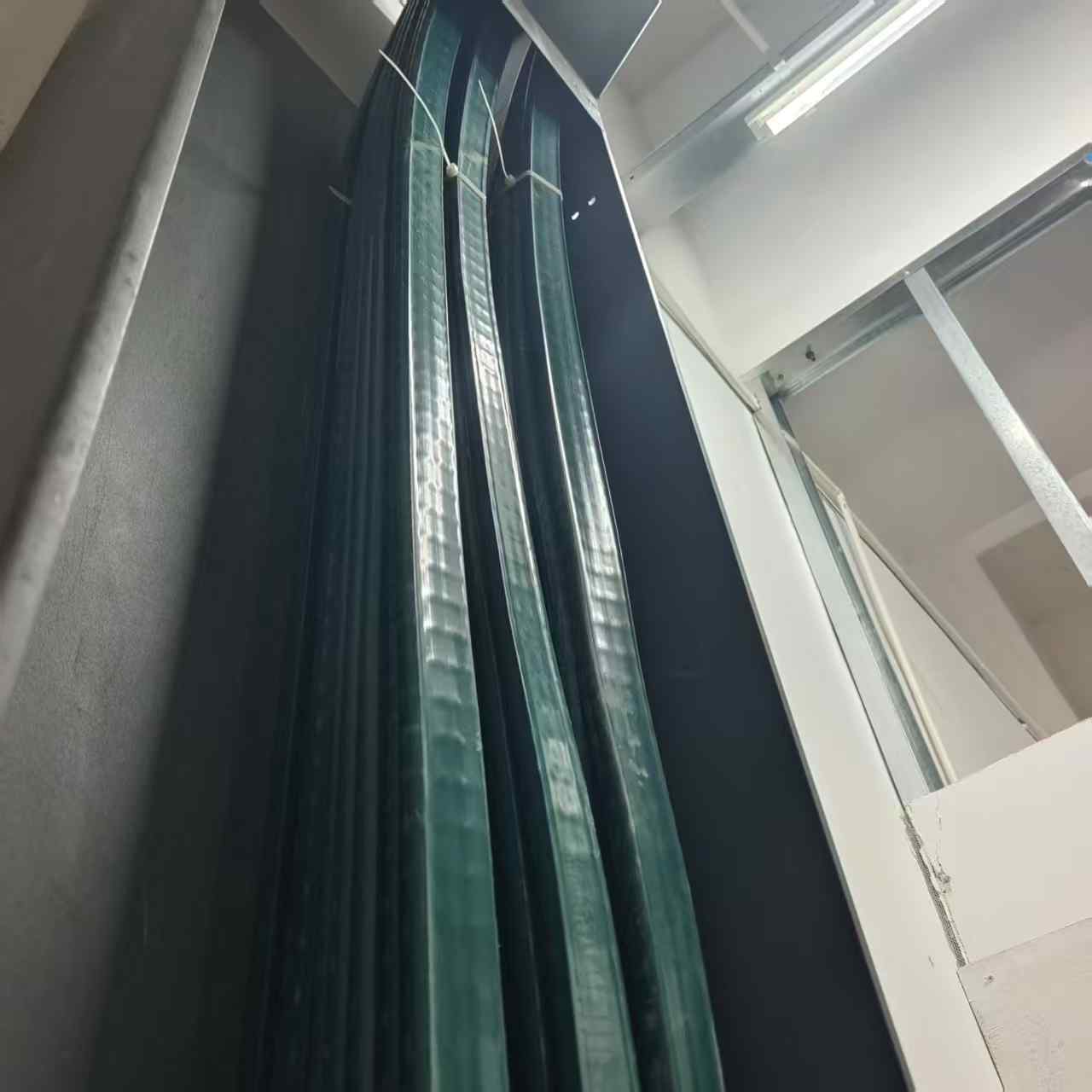
- Dynamic or vibrating environments (e.g., energy storage containers, mobile equipment) where cable movement can change contact resistance
- Systems requiring predictable thermal behavior for UL or IEC compliance testing [K1]
Not Suitable Cases
Avoid flexible busbars when:
- Low-current, low-density applications (under 200A) where single cables suffice
- Very long runs (over 10 meters) where cable cost and voltage drop are primary concerns
- Frequent reconfiguration needed—flexible busbars are custom-sized and not easily re-routed
- Extreme temperature variations (above 105°C continuous) unless specifically rated; always verify manufacturer’s temperature rating [K1]
Procurement Notes
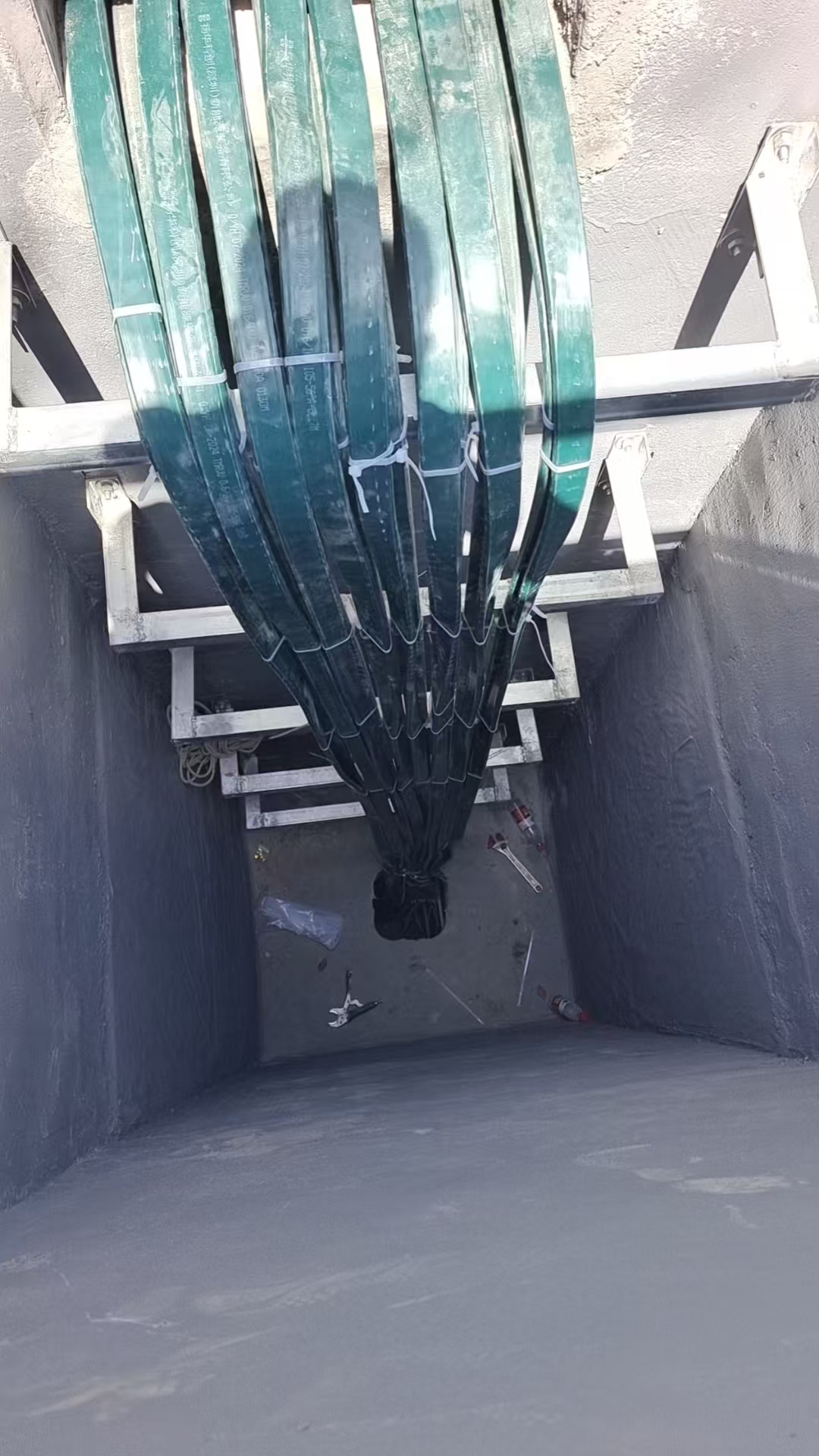
- Request current-sharing test data from the manufacturer for your specific configuration. Yanghua provides detailed impedance matching guarantees for flexible busbar assemblies [K1].
- Specify exact hole patterns and dimensions—flexible busbars are fabricated to order. Provide a drawing or template.
- Consider the termination method: bolted connections (preferred), compression lugs, or welded tabs. Each affects long-term contact resistance.
- Order with tin or silver plating on contact surfaces to prevent oxidation in humid environments [K1].
- Lead time: custom flexible busbars typically require 2-4 weeks; plan accordingly for maintenance or new installations.
Frequently Asked Questions
Q: Why do parallel cables fail due to current inequality even if I use the same cable length?
A: Even with identical cable lengths, differences in termination resistance (due to varying torque, surface oxidation, or contact area) and temperature gradients cause unequal current sharing. A cable that runs hotter has higher resistance initially, but as it heats, its resistance increases, potentially shifting current to other cables—or, in positive feedback scenarios, causing a thermal runaway. Flexible busbars eliminate these variables by providing uniform, low-resistance paths [K1].
Q: Can flexible busbars replace all parallel cable connections in an energy storage system?
A: Not all—but they are ideal for busbar connections between battery modules, inverters, and distribution panels where high current density and space savings matter. For long-distance runs between racks, traditional cables may still be more cost-effective. Use flexible busbars for the critical, high-density interconnections where current inequality is most damaging [K1].
Q: How do I know if my parallel cable system already has current inequality?
A: Measure the temperature of each cable under full load using a thermal imaging camera or contact thermocouple. A temperature difference of more than 5°C between cables indicates significant current imbalance. For a precise measurement, use a clamp meter on each cable individually—differences over 10% from the average suggest inefficiency and risk [K1].
Q: What is the typical cost comparison between flexible busbars and multiple parallel cables?
A: Flexible busbars generally have a higher upfront material cost but lower installation labor costs. For a 4000A system, flexible busbars can reduce enclosure size by 30-50%, cutting enclosure costs and improving airflow. The total installed cost is often comparable or lower for flexible busbars in high-current applications, especially when factoring in reduced troubleshooting and maintenance [K1].
Q: Are flexible busbars more fire-resistant than parallel cables?
A: The source material does not provide fire resistance ratings for flexible busbars. Both solutions must comply with local fire safety codes (e.g., UL 94 V-0 for plastics). Flexible busbars do not contain organic insulation that can propagate fire, but the copper or aluminum conductors themselves are not flammable. Always verify with the manufacturer for specific fire rating requirements in your application [K1].
About the Author Yanghua Editorial Team — This article is maintained in the Astro MDX repository and reviewed against the source materials listed for the page.
Certifications, test reports, and performance claims require explicit approval before public publication.
Contact: info@yhflexiblebusbar.com | Phone: +86-769-3893-9888