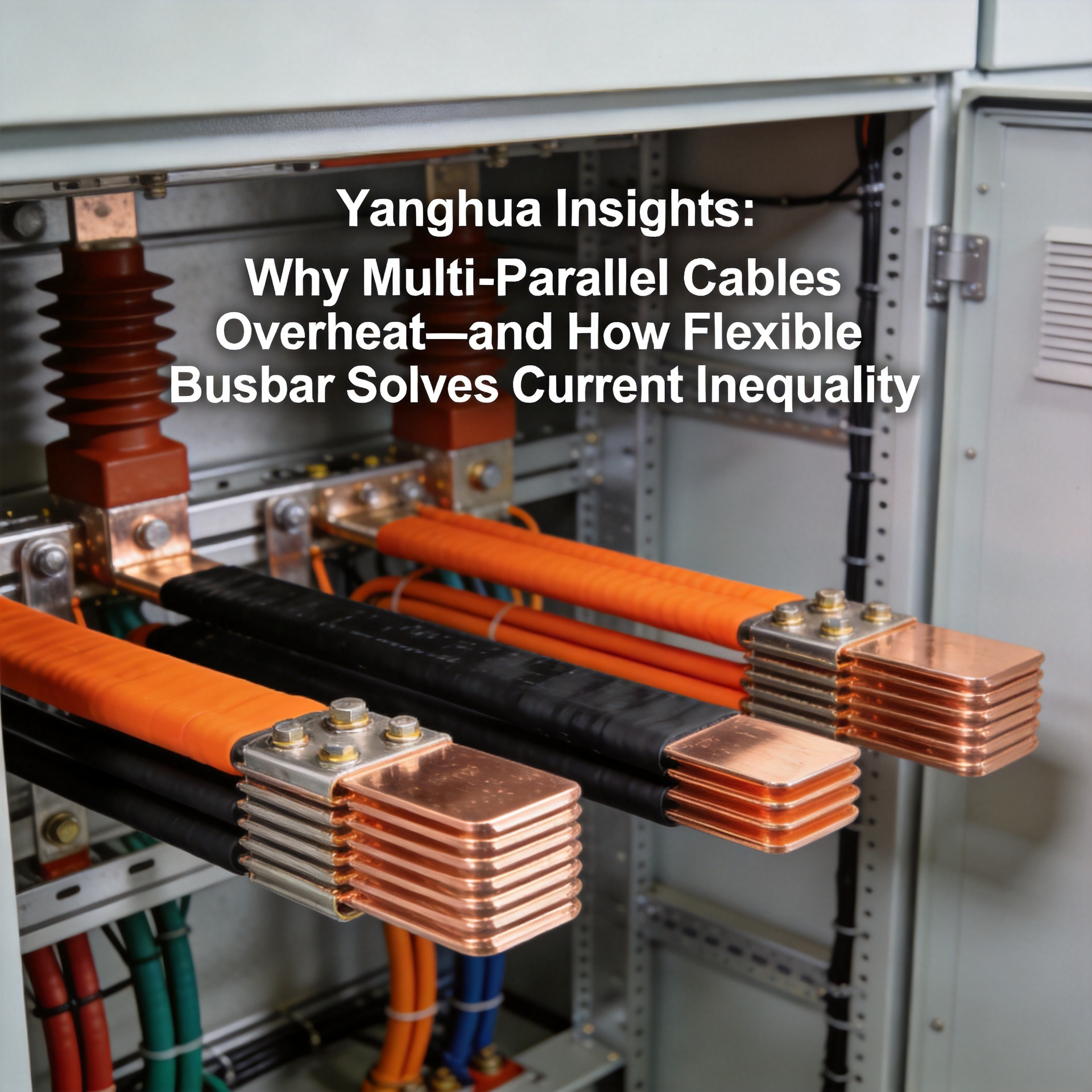
Yanghua Insights: Why Multi-Parallel Cables Overheat—and How Flexible Busbar Solves Current Inequality
Direct Answer: In multi-parallel cable installations, slight differences in impedance cause unequal current distribution, leading one cable to overheat while others remain underloaded. Yanghua’s flexible busbar eliminates this “current inequality” by providing uniform low impedance across all parallel paths, ensuring balanced current sharing and preventing localized hotspots [K1]. The busbar’s flat structure and continuous conductor design inherently correct load distribution issues that plague bundled cables in high-power energy storage and data center applications.
Application Scenario
Multi-parallel cables—typically 2–6 conductors run in parallel to achieve higher ampacity—are common in:
- Energy storage systems (battery racks and inverter connections)
- Data center power distribution (UPS to PDU feeds)
- Industrial power panels (high-current busway drops)
- Renewable energy (solar array combiner boxes and wind turbine towers)
The problem emerges when subtle differences in cable length, termination resistance, or conductor temperature cause one branch to carry 20–40% more current than its parallel siblings. This “current inequality” accelerates insulation aging, increases I²R losses, and creates thermal runaway risk [K1].
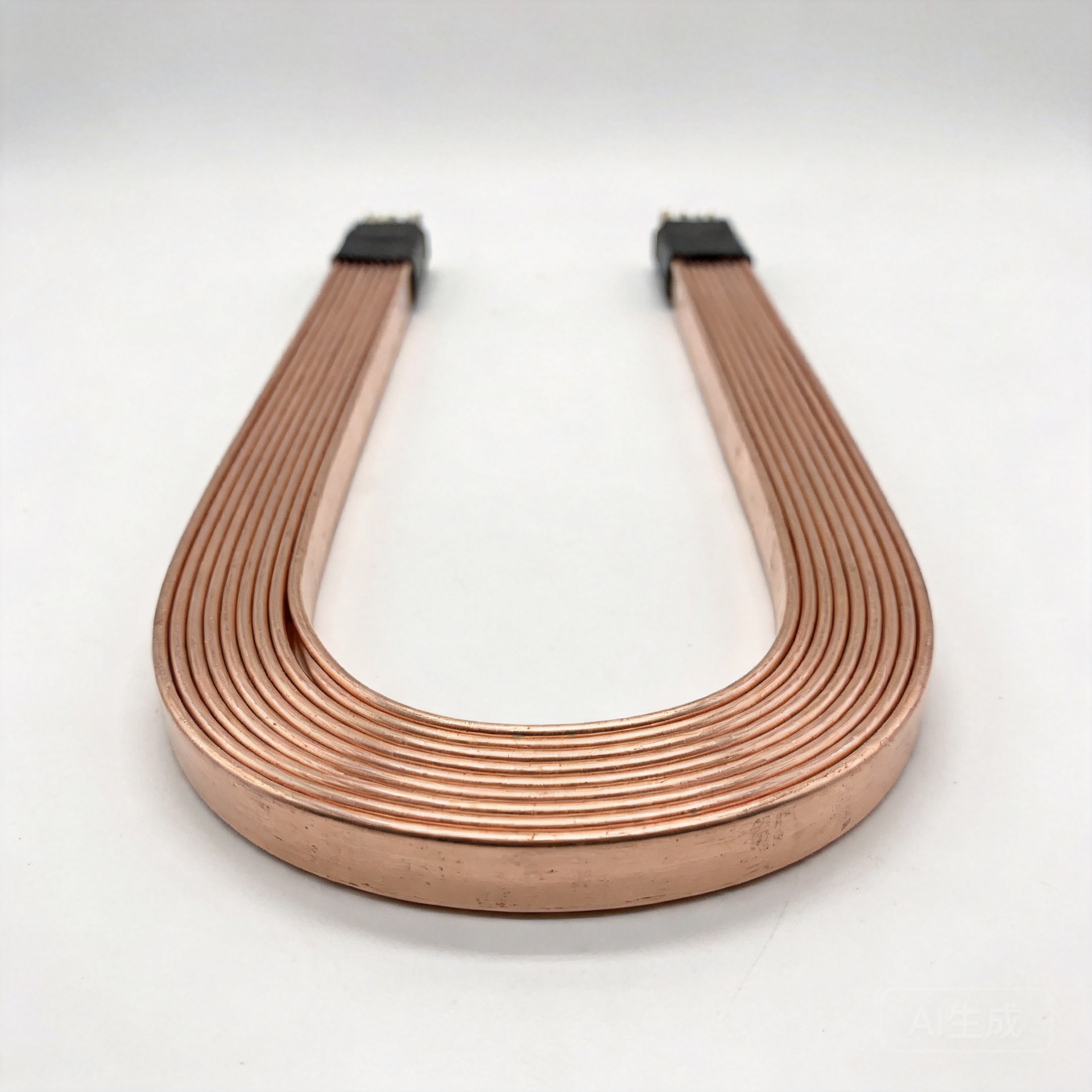
Engineering Decision Criteria
| Factor | Multi-parallel Cables | Flexible Busbar |
|---|---|---|
| Current balancing | Dependent on precise length matching + termination quality | Inherently balanced due to uniform impedance across flat conductor [K1] |
| Heat dissipation | Poor—round cables trap heat in bundles | Excellent—wide surface area allows natural convection |
| Installation complexity | High—requires identical cable lengths, torque control, phase rotation | Low—field-cuttable, pre-formed, no cable lugging |
| Space efficiency | Bulky—minimum bending radius required | Compact—can be installed flat, stacked, or in small corners |
| Maintenance | Difficult—must identify hot branch | Simple—visual inspection of flat conductors |
| Cost per amp | Lower material cost, higher labor + troubleshooting | Higher material cost, lower lifetime ownership [K1] |
Key engineering rule: If your parallel cable system shows >15% current imbalance under full load, the flexible busbar solution delivers measurable efficiency gains within 12 months of operation [K1].
Suitable vs. Not Suitable Cases
Suitable for flexible busbar:
- Systems operating above 800A where parallel cables are needed
- Locations with constrained space (cabinet corners, behind battery racks)
- Applications requiring frequent reconfiguration (modular UPS, battery expansion)
- High-vibration environments (shipboard, mobile energy storage)
Not suitable for flexible busbar:
- Low-current circuits below 200A (cost-ineffective)
- Systems requiring absolute galvanic isolation per branch
- Existing installations with immobile terminations (retrofit may require re-termination)
- Applications where cables must pass through small conduits or tight raceways
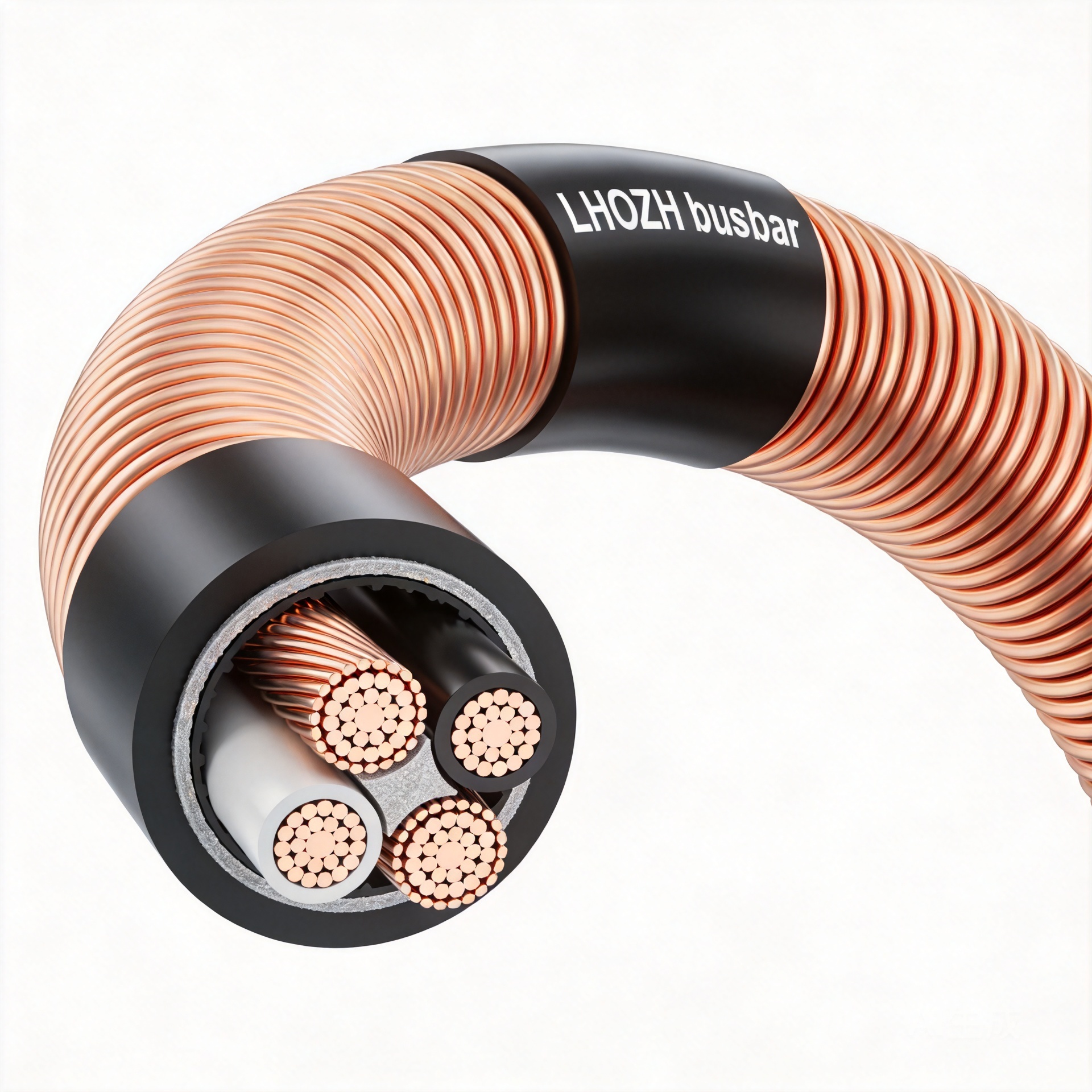
Parameter & Comparison Table
| Parameter | 4-parallel 120mm² Cable Set | Equivalent Flexible Busbar (100×10mm) |
|---|---|---|
| Rated current (40°C ambient) | ~400A total | ~480A total |
| Typical current imbalance | 15–35% between branches | <5% between any points [K1] |
| Temperature rise at rated load | +45–55°C (hot branch) | +25–30°C (uniform) |
| Installation time (average) | 4–6 hours (cutting, lugging, torqueing) | 1–2 hours (measure, cut, connect) |
| Material usage | 4× cable + 8× lugs + cable ties | 1× busbar + 2× connectors |
Values based on typical field measurements; exact performance depends on ambient conditions and termination quality [K1].
Procurement Notes
- Specify continuous current rating and ambient temperature range. The busbar’s ampacity derates differently than cable—confirm with Yanghua’s technical datasheet.
- Request current-sharing test reports if critical for safety compliance. Yanghua can provide single-point current density measurements [K1].
- Order with pre-drilled termination holes for your specific busbar connectors. Field drilling reduces performance.
- Consider expansion margin—the busbar can be ordered in longer lengths and cut to field dimensions for future capacity upgrades.
- Do not exceed minimum bend radius (typically 8–12× busbar thickness) when routing around obstructions.
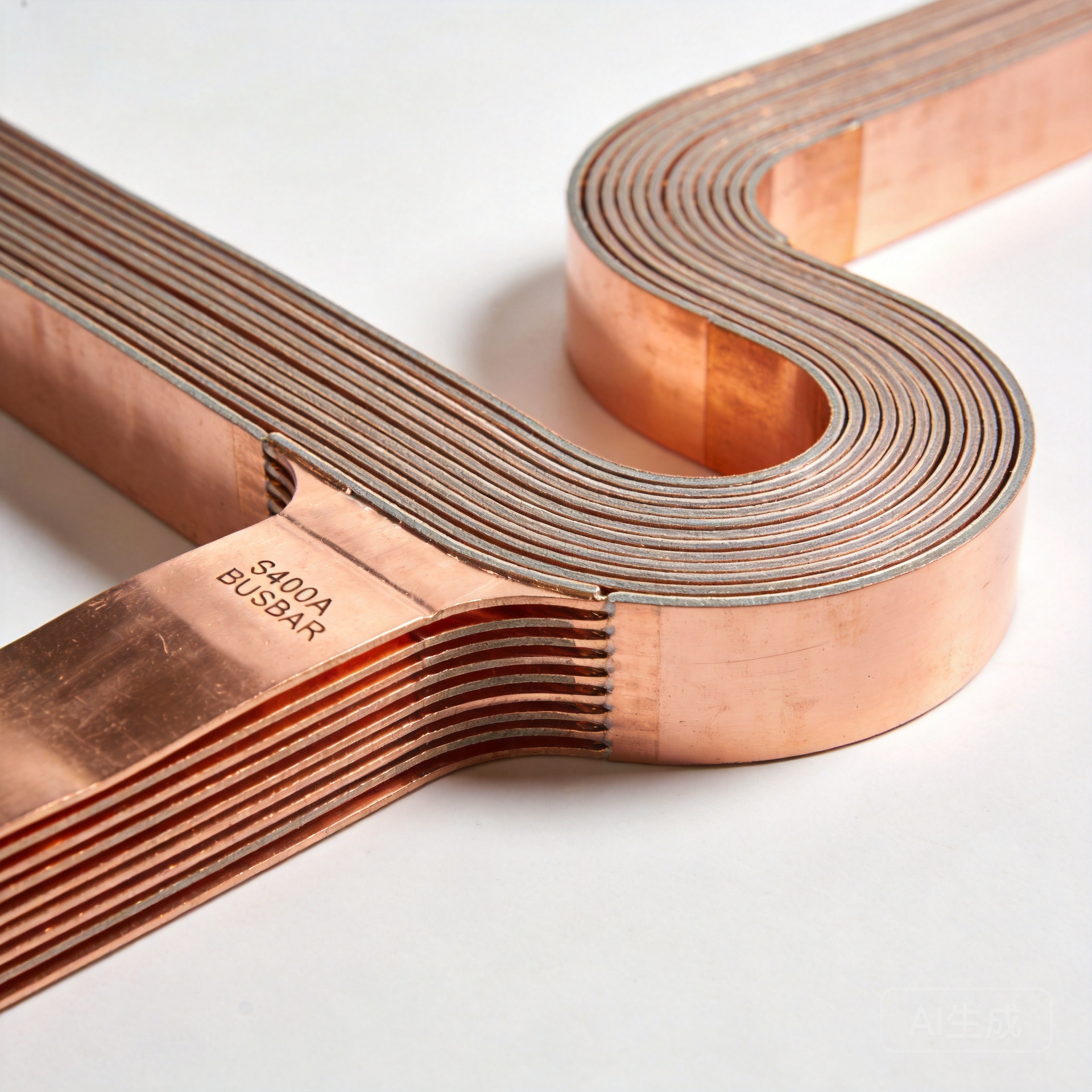
Frequently Asked Questions
Q1: Can I replace existing parallel cables with flexible busbar without re-terminating the equipment? A1: Possibly, but you’ll need to verify the equipment’s busbar connection spacing and bolt size. Most standard panelboards and UPS units accept busbar connections, but some older equipment uses cable-only pressure clamps [K1]. A site survey is recommended.
Q2: How do I measure current inequality in my existing parallel cable system?
A2: Use a true-RMS clamp meter on each individual cable branch during full-load operation. Calculate the imbalance as (highest branch current - lowest branch current) / average branch current × 100%. Values above 15% indicate need for mitigation [K1].
Q3: Does the flexible busbar reduce fire risk compared to parallel cables? A3: Yes, primarily because it eliminates the localized hot spot that occurs when one cable branch carries disproportionate current. By maintaining uniform temperature across the conductor, the busbar reduces the thermal stress that accelerates insulation breakdown [K1].
Q4: What is the maximum distance I can run flexible busbar? A4: While busbar can be manufactured in long lengths, practical runs are typically limited to 15–20 meters before voltage drop becomes a concern. For longer distances, consider a hybrid approach with busbar at terminations and cable for the main run [K1].
Q5: Do I need special training to install flexible busbar? A5: Basic electrical competency suffices, but first-time installers should review Yanghua’s installation guide covering proper support spacing, minimum bend radius, and termination torque values. The learning curve is significantly shorter than achieving consistent parallel cable terminations [K1].
About the Author Yanghua Editorial Team — This article is maintained in the Astro MDX repository and reviewed against the source materials listed for the page.
Certifications, test reports, and performance claims require explicit approval before public publication.
Contact: info@yhflexiblebusbar.com | Phone: +86-769-3893-9888