Why Replace Parallel Cables with Flexible Busbar in Factory Power Distribution
Direct answer: For factory power distribution, flexible busbar replaces parallel cables primarily to address installation space constraints, reduce installation time, and improve reliability under high current loads. Unlike multiple parallel cables, a flexible busbar eliminates complex cable-fanning, reduces the risk of thermal imbalance, and saves up to 60% installation space [K1]. It is best suited for new industrial plants or retrofits where cable routing is congested, but not recommended for very short, straight runs.
Application Scenario
Flexible busbar (also known as laminated busbar or power distribution busbar) is designed for high-current, low-voltage distribution (typically ≤ 1000V) inside factories. Typical applications include:
- Main distribution boards (MDB) to sub-distribution boards (SDB) – especially when routing through cable trays or trunking.
- Connecting switchgear to transformers where space is limited and multiple parallel cables would be bulky.
- Inside energy storage systems (ESS) or battery racks where clean, organized power routing is needed.
- Retrofitting older plants where existing cable pathways are overcrowded.
A flexible busbar is a pre-engineered assembly of copper or aluminum conductors laminated with insulation, offering both mechanical flexibility and electrical efficiency.
Engineering Decision Criteria
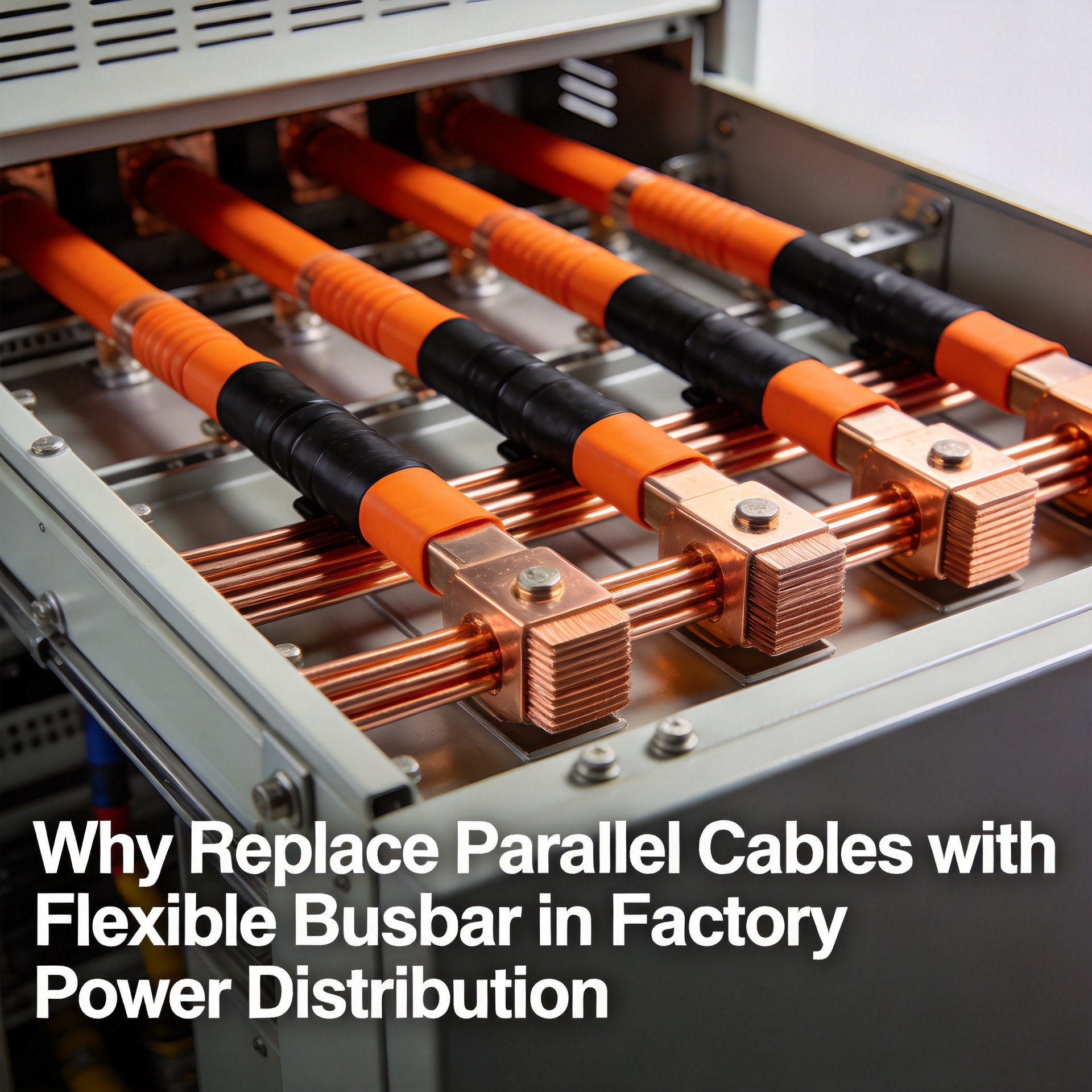
When deciding between parallel cables and flexible busbar, consider these factors:
| Criterion | Parallel Cables | Flexible Busbar |
|---|---|---|
| Installation space | Requires large bending radius & multiple cable runs | Compact – up to 60% less space needed [K1] |
| Installation time | Time-consuming cable pulling, terminations, and testing | Pre-cut and pre-terminated, faster to mount |
| Thermal performance | Risk of overheating due to uneven current sharing | Balanced current distribution due to laminate design |
| Flexibility in routing | Limited to cable tray/trunking | Can follow tight bends (e.g., 90° bends inside cabinets) |
| Maintenance | More connection points (increased risk of loose terminations) | Fewer joints, easier visual inspection |
| Cost | Lower material cost but higher labor cost | Higher material cost but lower total installed cost (if space is premium) |
Key engineering insight: Flexible busbar is most cost-effective when installation space is limited or when installation labor is expensive.
Suitable Cases vs. Not Suitable Cases
Suitable for flexible busbar:
- Congested cable trays – where multiple parallel cables are difficult to route.
- High-rise factory floors – where vertical riser space is at a premium.
- Mobile equipment connections – such as overhead cranes or moving machine tools.
- Applications requiring pre-certified assemblies – flexible busbar can be tested as a complete system, reducing site commissioning.
NOT suitable for flexible busbar:
- Very short straight runs (e.g., <2 meters) – here, busbar’s cost premium outweighs its benefits.
- Open-air installations subject to physical abuse – cables are more robust against mechanical impact.
- Applications requiring frequent re-routing – cables are simpler to cut and re-terminate than busbars.
Procurement Notes
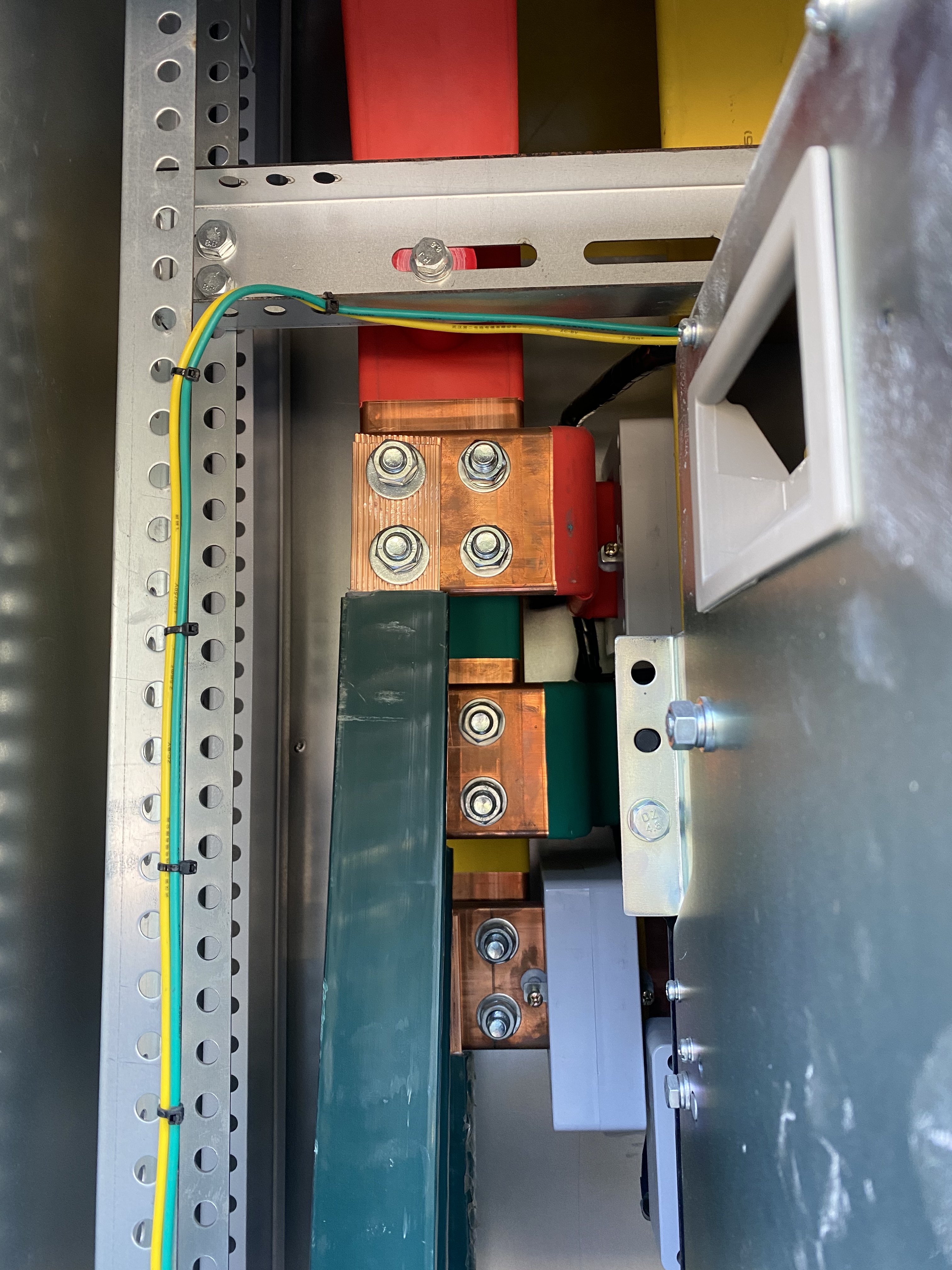
When sourcing flexible busbar for factory power distribution:
- Check conductor material: Copper busbar has higher conductivity but is heavier; aluminum is lighter but requires larger cross-section for same current. Ensure compatibility with existing terminations.
- Verify insulation voltage rating: Typical ratings include 600V, 1000V, or 1500V DC. For factory distribution, 1000V AC/DC is common [K1].
- Confirm IP rating: For dusty factory environments, IP54 or higher is recommended unless installed inside a cabinet.
- Ask for bending radius: Flexible busbar can achieve bending radii as low as 5x thickness, but verify with custom fabrication if your routing involves sharp bends.
- Request current sharing test data: Reliable manufacturers provide test reports demonstrating even temperature distribution across conductors under full load.
Frequently Asked Questions
Q1: Can flexible busbar replace existing parallel cables without redesigning the power system?
Yes, if the existing current rating and short-circuit rating match. However, you must verify that the busbar’s cross-section at least equals the copper equivalent of the cables it replaces. Use manufacturer ampacity tables for comparison.
Q2: Is flexible busbar more expensive than parallel cables per meter?
Typically yes – busbar has higher material cost per meter. But total installed cost can be lower because busbar requires less labor, fewer supports, and less cable management. For a project where space is valuable, the cost difference is often offset.
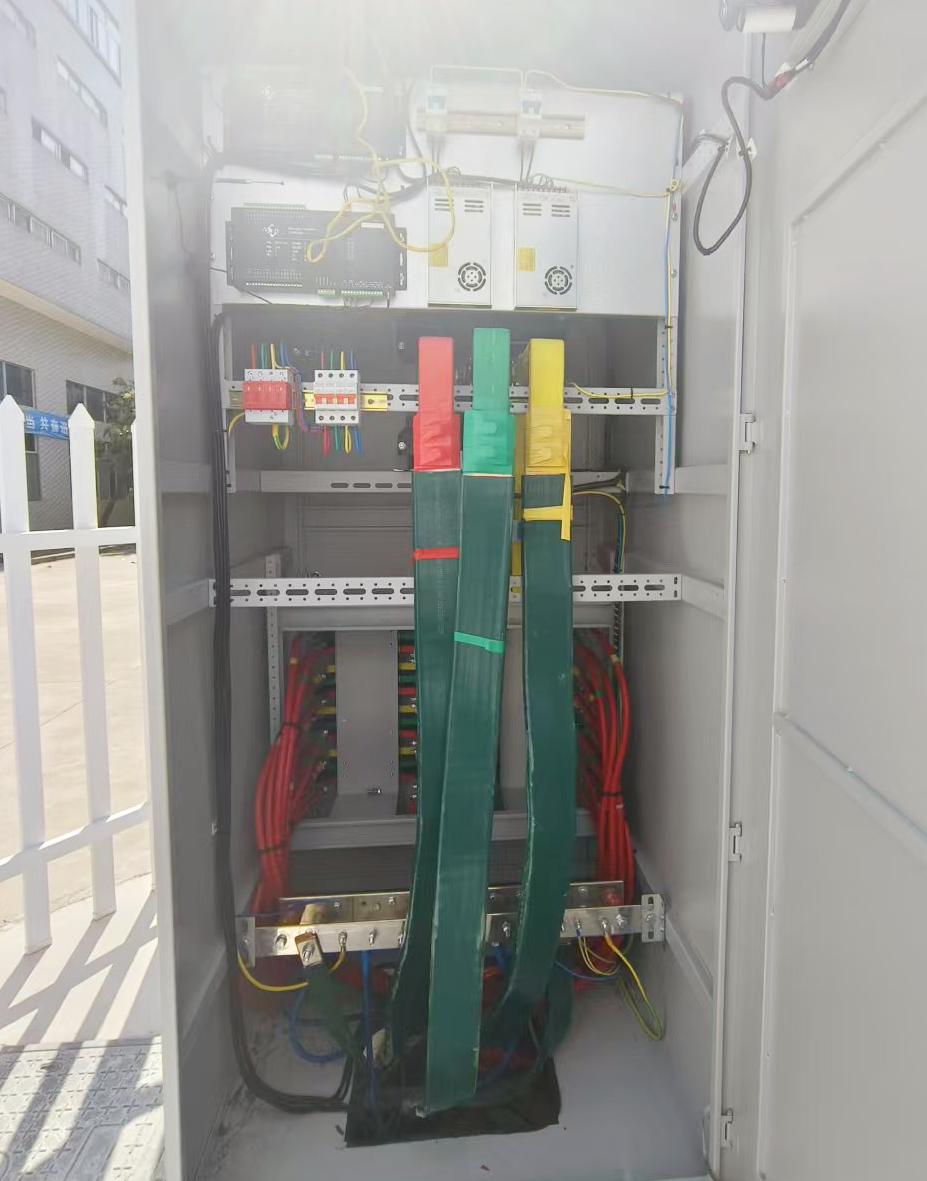
Q3: How does flexible busbar handle thermal expansion in long runs?
Most flexible busbar assemblies include expansion loops or sliding supports to accommodate thermal expansion. For runs over 50 meters, consult the manufacturer for expansion joint designs.
Q4: Can flexible busbar be used outdoor or in wet environments?
Not recommended unless specifically rated for outdoor use (e.g., with UV-resistant jacketing and IP66 enclosures). For factory indoor use, standard insulation is adequate.
Q5: What maintenance does flexible busbar require?
Minimal – periodic visual inspection for insulation damage, dust buildup, and tightness of bolted connections. Unlike cables, busbar has fewer termination points, reducing failure risk.
About the Author Yanghua Editorial Team — This article is maintained in the Astro MDX repository and reviewed against the source materials listed for the page.
Certifications, test reports, and performance claims require explicit approval before public publication.
Contact: info@yhflexiblebusbar.com | Phone: +86-769-3893-9888