High-Rise Building Power Distribution: Flexible Busbar Vertical Installation
When designing vertical power distribution in high-rise buildings, a flexible busbar system (typically rated up to 630A) offers significant advantages over traditional cable or rigid busbar approaches: it eliminates the need for multiple parallel cables, reduces installation time by up to 50%, and accommodates structural settling or thermal expansion without compromising electrical continuity [K1].
Application Scenario
Flexible busbar vertical installation is appropriate for commercial and residential high-rise buildings where:
- Floor-to-floor height adaptation is critical — flexible busbar can be installed in shafts with subtle misalignments or irregular floor levels [K1]
- Load changes are anticipated — tap-off points can be added or relocated as tenant requirements evolve
- Space is constrained — busbar cross-section is smaller than equivalent cable bundles, freeing up shaft space for other services
- Speed of construction is a priority — prefabricated sections and quick-connect joints significantly reduce on-site labor
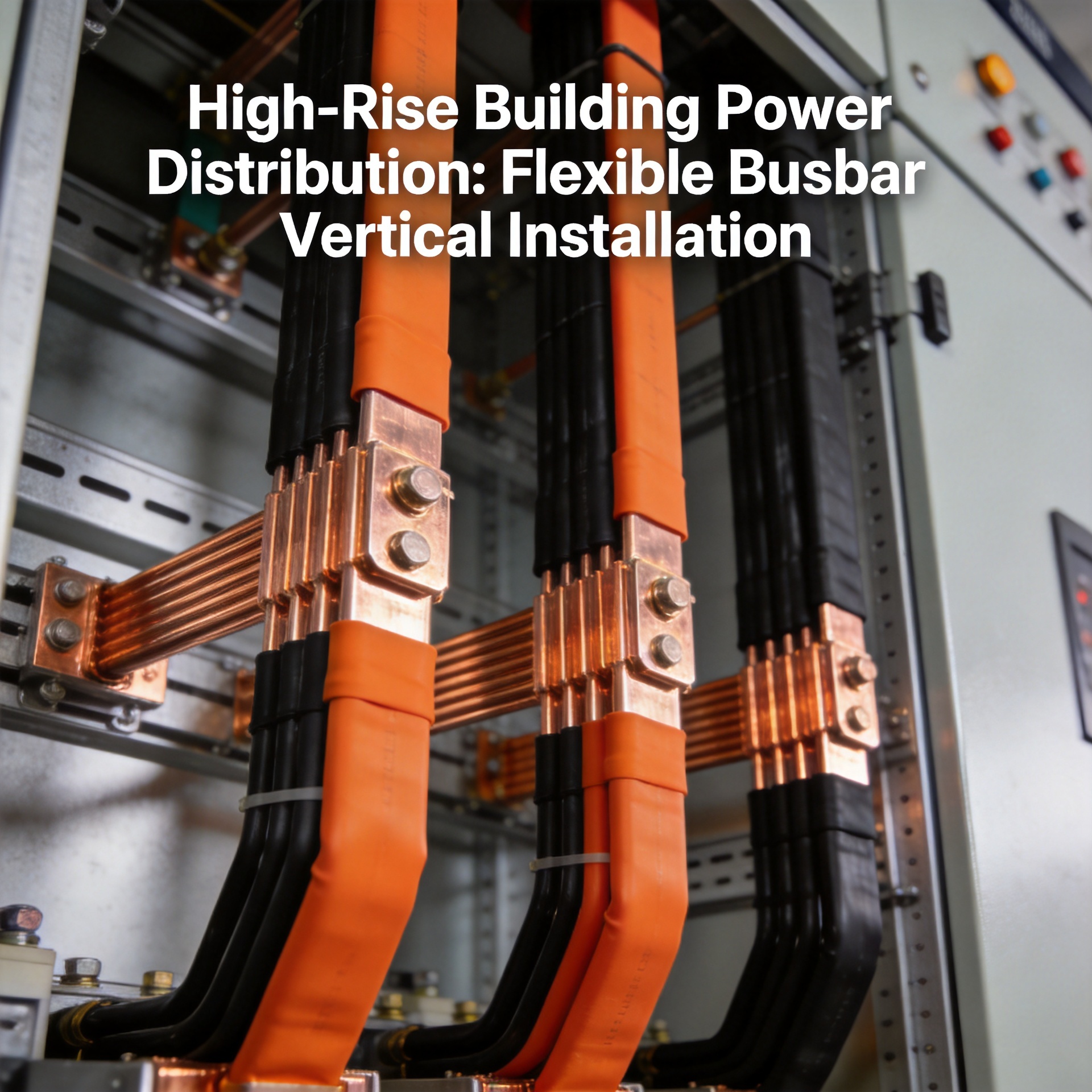
Typical applications include office towers, luxury apartment blocks, and mixed-use developments above 10 stories [K1].
Engineering Decision Criteria
| Parameter | Flexible Busbar | Traditional Cable | Rigid Busbar |
|---|---|---|---|
| Installation speed | Fast (prefabricated) | Moderate (pulling & termination) | Moderate (section assembly) |
| Space requirement | Compact | Bulky (multiple cables) | Compact |
| Adaptation to building movement | Excellent | Limited | Poor |
| Tap-off flexibility | High (tool-less) | Low (requires junction box) | Moderate |
| Typical rating range | 160A–630A | Depends on cable size | Up to 6300A |
| Cost at 100m vertical run | Moderate | Low–moderate | High |
Engineer’s note: While cable is often cheaper for short runs, flexible busbar becomes cost-competitive above 50 meters due to reduced labor and support infrastructure [K1].
Suitable vs. Not Suitable Cases
Suitable
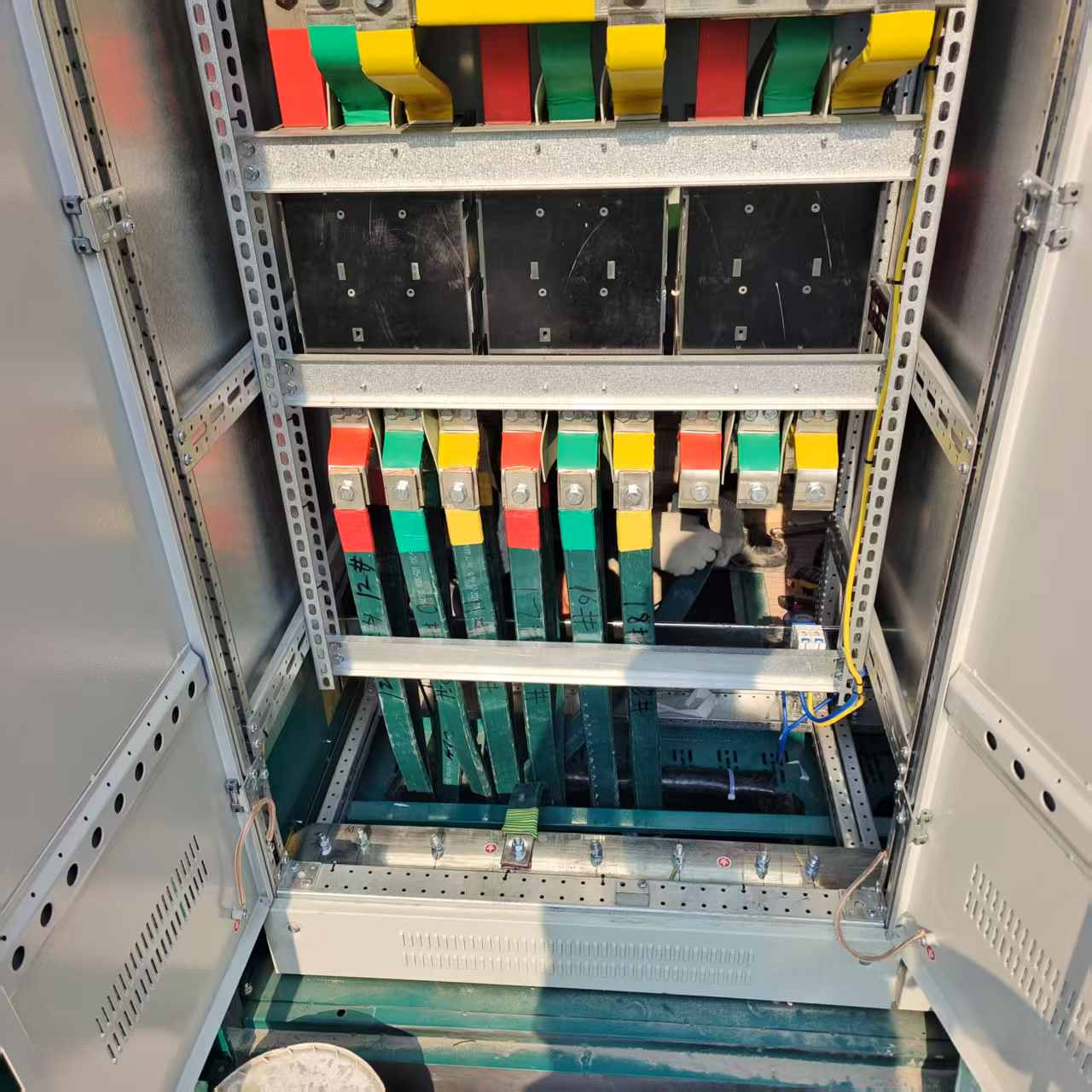
- Buildings with irregular floor heights or non-standard shaft dimensions
- Projects requiring future load flexibility — e.g., converting office floors to residential or data centers
- Renovations where existing cable shaft space is insufficient for additional circuits
- Seismic zones where rigid busbar joints may fracture under stress
Not Suitable
- Extra-high current applications above 630A — rigid busbar or parallel cable is required
- Cost-sensitive projects under 30m vertical run — cable remains more economical
- High ambient temperature environments (above 50°C ambient) unless derating is carefully applied [K1]
- Applications requiring fire-rated circuits — verify local building codes; flexible busbar typically does not provide the same fire resistance as mineral-insulated cable
Procurement Notes
- Specify operating temperature range — standard flexible busbar is rated for -5°C to +40°C; higher ratings require confirmation with manufacturer [K1]
- Request tap-off point layout in advance — while tap-off positions are adjustable, early planning optimizes busbar section lengths
- Confirm IP rating — vertical shaft installations typically require IP54 minimum to protect against dust and accidental contact
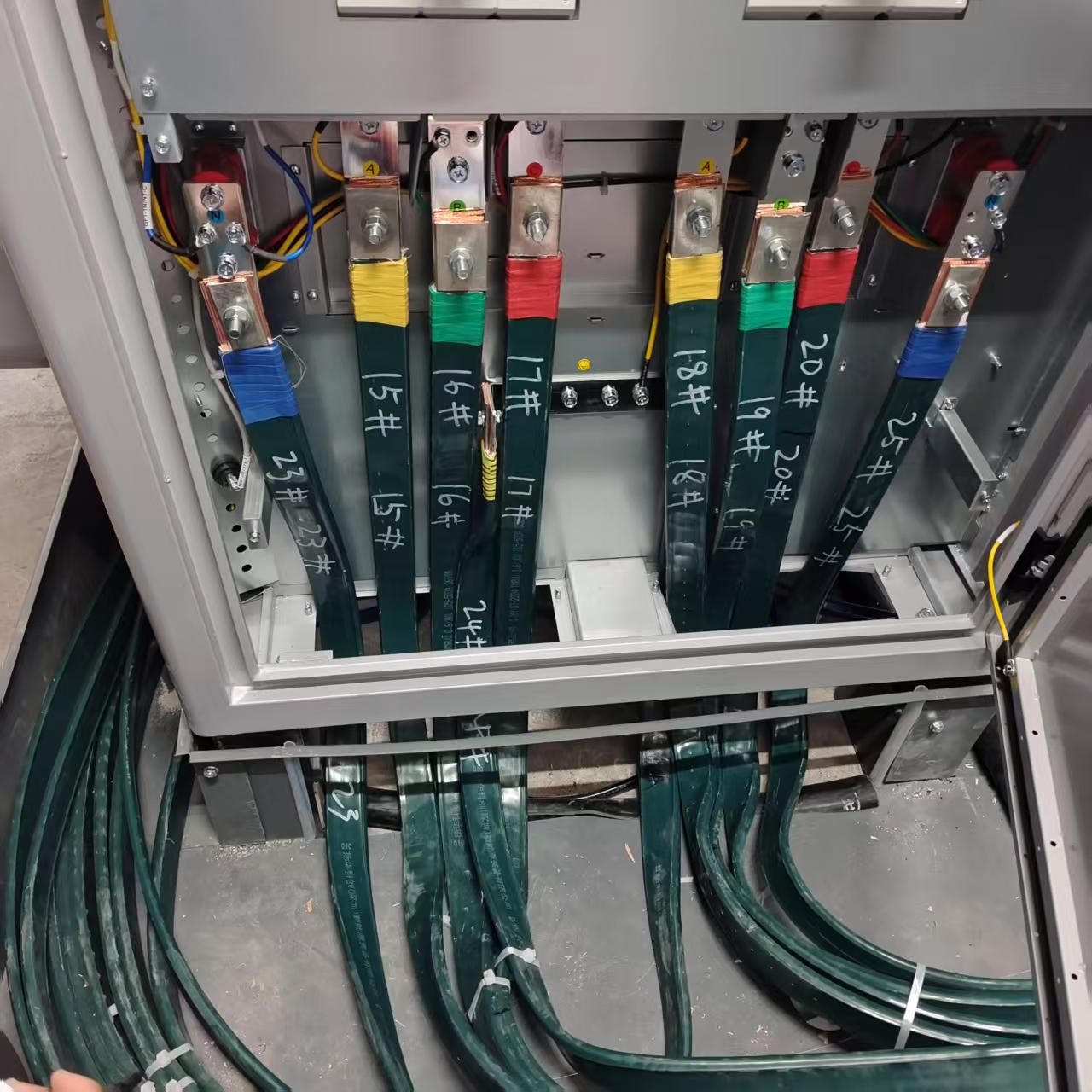
- Ask for bending radius documentation — tight radius bends affect current-carrying capacity and should be verified against design drawings
- Check certification compliance — ensure busbar meets IEC 61439-1/6 or equivalent local standard (do not assume without written evidence)
Frequently Asked Questions
Q: Can flexible busbar be installed in a concrete shaft before the walls are poured? Yes, but it is not recommended. Flexible busbar should be installed after the shaft is complete to avoid physical damage from concrete work and to ensure correct alignment with floor tap-off points [K1].
Q: How do I calculate voltage drop over a 100m vertical run with flexible busbar? Voltage drop depends on busbar cross-section, load current, and power factor. For a typical 400A flexible busbar at 100m, expect approximately 2-3% voltage drop under full load. Always request manufacturer-specific drop tables.
Q: Is flexible busbar suitable for emergency power distribution? Flexible busbar can be used for backup power circuits, but verify local fire-rating requirements. Some authorities require separate fire-resistant cabling for life safety systems.
Q: What happens if a floor load changes after installation? Tap-off points can be added, removed, or relocated along the busbar length — typically requiring less than 30 minutes per change with tool-less connectors [K1].
Q: Does flexible busbar require maintenance? Periodic inspection (every 2-3 years) of tap-off connections and busbar supports is recommended. No routine maintenance is needed under normal operating conditions [K1].
About the Author Yanghua Editorial Team — This article is maintained in the Astro MDX repository and reviewed against the source materials listed for the page.
Certifications, test reports, and performance claims require explicit approval before public publication.
Contact: info@yhflexiblebusbar.com | Phone: +86-769-3893-9888