Underground Power Distribution: IP68 Flexible Busbar Advantages
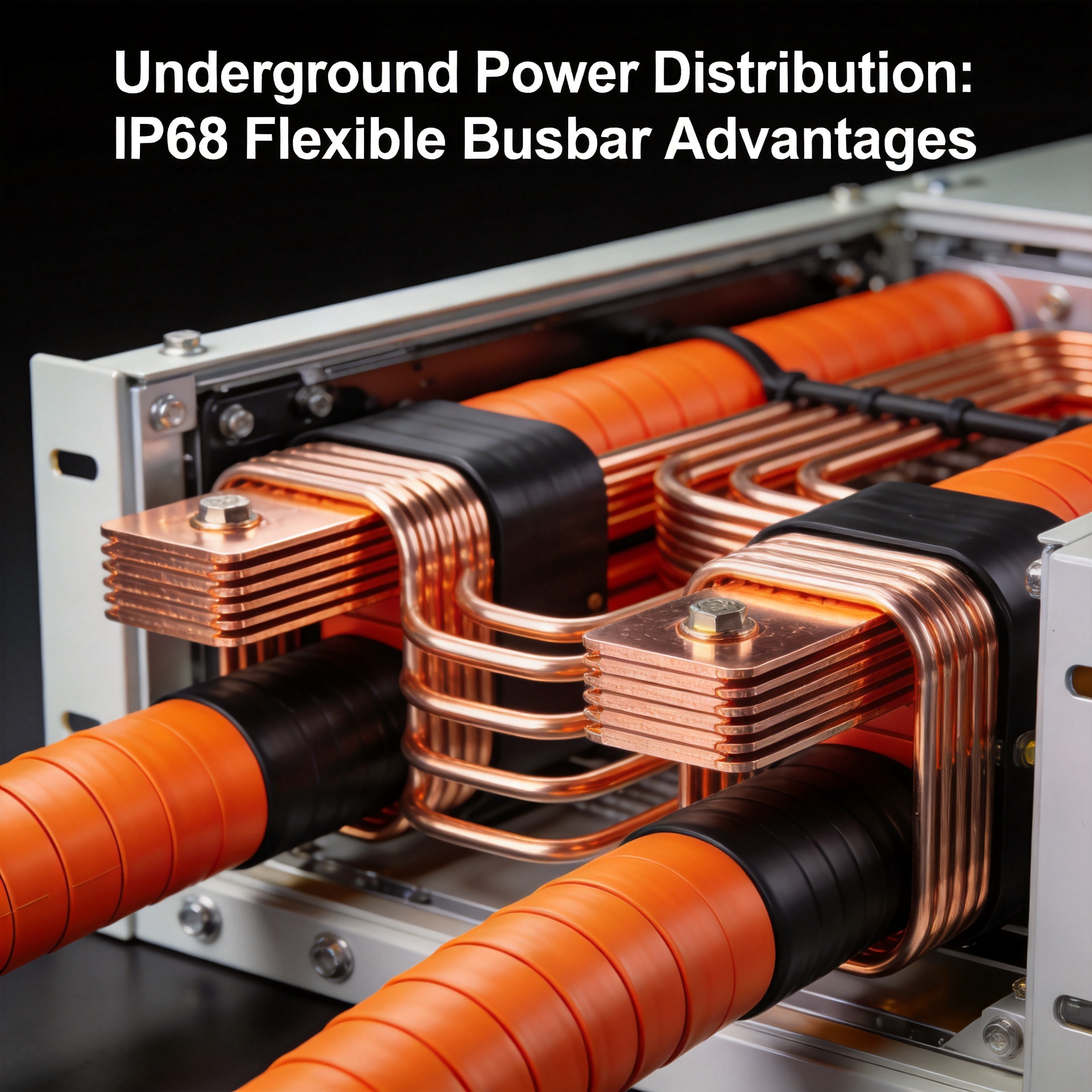
When you need a flexible, fully waterproof power distribution solution for underground tunnels, wet environments, or outdoor cable transitions, the IP68 flexible busbar system offers a proven alternative to traditional cables or rigid busbar trunks. It provides continuous sealing against water ingress (submersion up to 1 meter for 30 minutes), high mechanical flexibility for routing in confined spaces, and simplified jointing compared to cable-based installations [K1]. This makes it particularly suitable for applications where water resistance, space constraints, and ease of installation are critical engineering priorities.
Application Scenarios
The IP68 flexible busbar is engineered for power distribution in environments where water, dust, or physical stress are constant factors. Typical scenarios include:
- Underground cable tunnels and subways – where condensation, flooding risk, and limited access demand a sealed, corrosion-resistant system.
- Outdoor cable transitions and trenches – connecting power from ground-level switchgear to underground distribution points.
- Industrial wet areas – such as water treatment plants, food processing lines, or wash-down zones requiring IP68 ingress protection.
- Temporary power installations – where flexible routing and rapid deployment are needed, yet the system must withstand rain or ground moisture.
Engineering Decision Criteria
When evaluating the IP68 flexible busbar against traditional cable or rigid busbar, consider these key parameters:
| Parameter | IP68 Flexible Busbar | Traditional PVC/XLPE Cables | Rigid Busbar Trunking |
|---|---|---|---|
| Water protection | IP68 (submersible) [K1] | Lower IP rating typical (IP44–IP67) | IP54–IP68 possible, but joints critical |
| Flexibility | High – can bend to fit obstacles | Moderate – requires minimum bend radius | Low – straight runs only |
| Number of joints per run | Minimal – often joint-less per coil | Many – each drum needs joint | Many – at each section |
| Installation time | Fast – no cable glanding or complex sealing | Moderate – cable pulling & termination | Slow – assembly of sections |
| Continuous rating | Up to 630A (example range) | Up to 630A typical | Up to 5000A possible |
Choose the IP68 flexible busbar when:
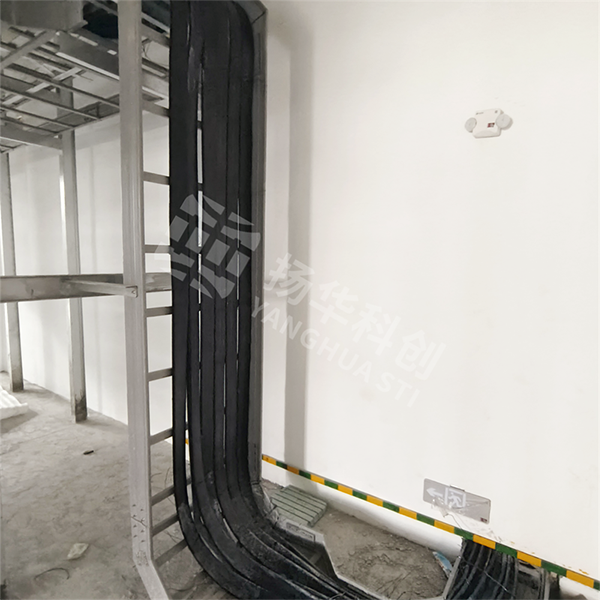
- The route involves multiple bends, tight spaces, or existing obstacles.
- Water exposure is frequent or unpredictable; a fully submersible rating is mandatory.
- Installation speed and reduced labour cost are priorities.
- You want to eliminate weak points at cable joints or termination boxes.
Suitable vs. Not Suitable Cases
| Suitable ✅ | Not Suitable ❌ |
|---|---|
| Underground tunnel distribution up to 630A | Very high current applications above 630A |
| Lighting or small power distribution in damp environments | Feeder circuits for large motors or transformers |
| Temporary site power with weather exposure | Long straight runs where rigid busbar is cheaper |
| Retrofit in existing cable trenches | Applications requiring fire-rated or fire-resistant busbar (no fireproof claims in source material) |
| Connections requiring multi-directional routing | High-voltage primary distribution above 1 kV |
Note: The source material does not include fire resistance certification or specific fireproof test reports. For fire-rated applications, verify with the manufacturer whether alternative products or additional protection are needed.
Procurement Notes
Before specifying the IP68 flexible busbar system, consider:
- Rating confirmation: Ensure the amperage (e.g., up to 630A) and voltage class match your load requirements [K1].
- Installation accessories: Request a full list of compatible sealing kits, support hangers, and termination enclosures.
- Length per coil: Understand maximum continuous length available without joints to minimise weak points.
- Thermal rating: Check continuous operating temperature range and de-rating factors if installed in high-ambient tunnels.
- Testing evidence: Ask the supplier for IP68 test reports – genuine verification under IEC 60529 for submersion conditions.
- Lead time: Factory-flexible busbar may have shorter lead times than rigid sections, but confirm with supplier.
Frequently Asked Questions
Q1: Can the IP68 flexible busbar be bent on-site without special tools? Yes, the busbar is designed for manual flexible bending during installation to fit around obstacles, making it easier than cable bending or rigid busbar sections [K1].
Q2: How does the IP68 rating prevent water ingress over time? The busbar body and end seals are manufactured as a continuous, extruded system with no openings along the run. Properly installed termination enclosures maintain the IP68 integrity. Regular inspection of end seals is recommended.
Q3: Is the flexible busbar suitable for both AC and DC applications? The source material supports AC distribution up to 630A. For DC applications, verify with the manufacturer regarding voltage drop, corona effects, and compatible switchgear.
Q4: What is the typical lifespan of an IP68 flexible busbar in underground conditions? Product lifespan depends on installation quality, water chemistry, and mechanical stress. The source material does not specify a warranty period, so request specific manufacturer data on long-term performance in your environment.
Q5: Can the busbar be reused or relocated after initial installation? Flexible busbar can be carefully removed and re-installed if undamaged. However, each re-installation requires new sealing kits and termination accessories to maintain the IP68 rating. Budget for replacement of sealing components.
About the Author Yanghua Editorial Team — This article is maintained in the Astro MDX repository and reviewed against the source materials listed for the page.
Certifications, test reports, and performance claims require explicit approval before public publication.
Contact: info@yhflexiblebusbar.com | Phone: +86-769-3893-9888