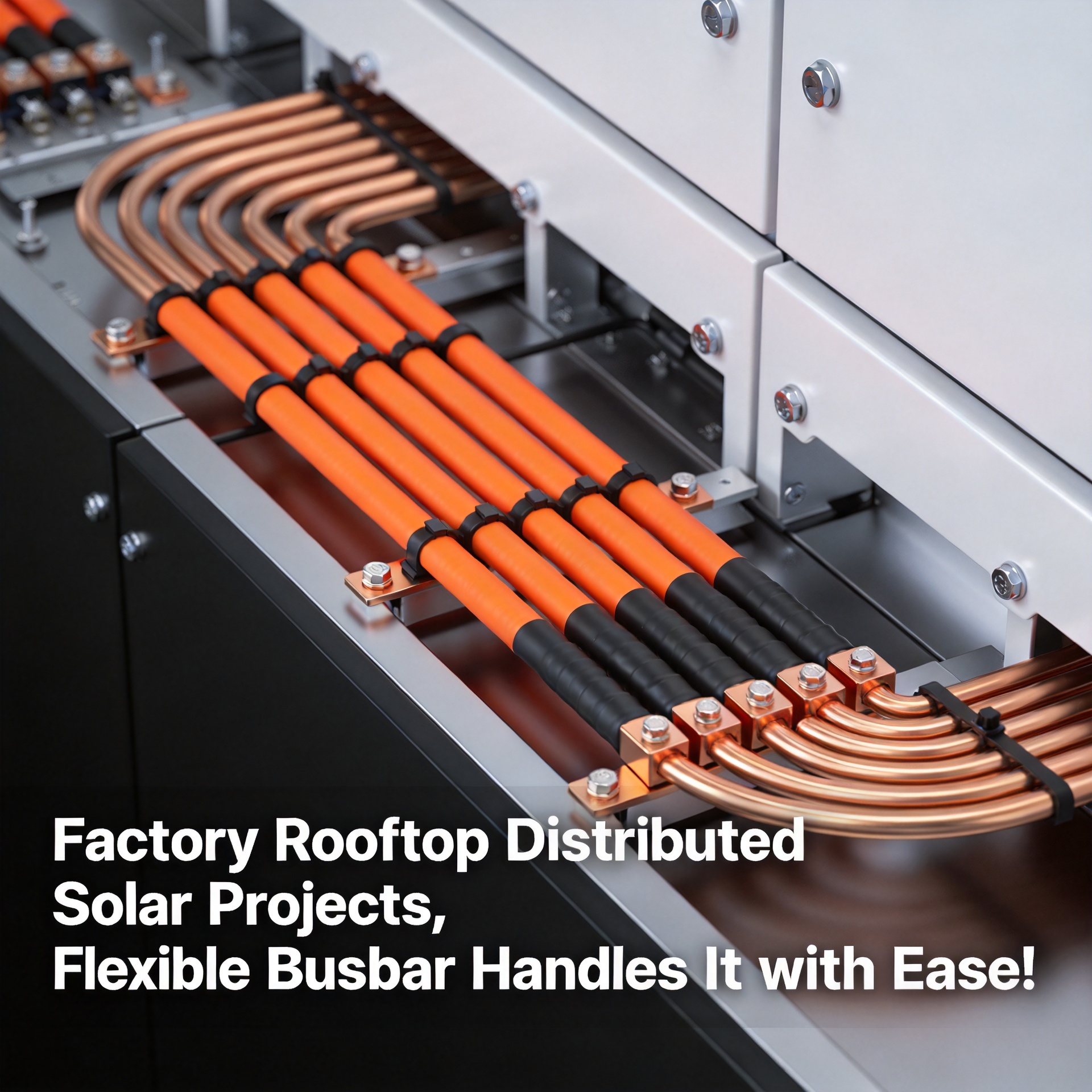
Factory Rooftop Distributed Solar Projects, Flexible Busbar Handles It with Ease!
Direct Answer: Factory rooftop distributed solar projects require efficient, safe, and space-saving power distribution solutions. Yanghua’s flexible busbar systems are engineered to handle high current loads in these installations, offering easy routing around roof obstacles and reducing installation complexity. Compared to traditional cable trays, flexible busbars provide better thermal management, lower electromagnetic interference, and faster deployment for commercial and industrial solar arrays [K1][K4].
Application Scenario: Factory Rooftop Distributed Solar
Factory rooftops present unique challenges for solar PV installations:
- Irregular roof layouts with HVAC units, skylights, and equipment
- High ambient temperatures affecting cable performance
- Need for minimal rooftop weight and visual impact
- Strict electrical safety requirements for industrial facilities
Yanghua flexible busbars serve as the main power distribution backbone from solar panels to inverters and grid connection points. They are particularly suitable for large-scale factory rooftop systems where multiple inverter strings need to converge at a central collection point [K1][K3].
Engineering Decision Criteria
When evaluating flexible busbar vs. traditional cabling for factory rooftop solar:
| Criteria | Flexible Busbar | Traditional Cable |
|---|---|---|
| Installation speed | 30-50% faster (pre-fabricated lengths) | Slower (manual cutting, termination) |
| Space utilization | Fits tight spaces, 90° bends possible | Requires larger bend radius |
| Thermal performance | Lower heat buildup per amp | Higher heat, derating needed |
| EMI/RFI shielding | Integrated shielding available | Requires separate conduit |
| Maintenance access | Easy tap-offs for monitoring | Harder to modify later |
| Rooftop weight | 40-60% lighter per amp | Heavier copper cables |
Key engineering considerations [K1][K3]:
- Current rating: Match busbar ampacity to PV string combiner output (typically 63A-630A per circuit)
- Voltage rating: Ensure system voltage compatibility (1000V DC or 1500V DC common)
- Environmental rating: Verify UV resistance, temperature range (-40°C to +90°C)
- Short-circuit capacity: Confirm withstand rating for fault conditions
Suitable Cases
✅ Best applications for flexible busbar:
- Large factory rooftops (>500 kWp): Multiple inverter strings require organized power collection
- Rooftops with complex geometry: Obstacles like AC units, vents, or skylights make cable routing difficult
- High-ambient-temperature environments: Busbars maintain lower operating temperatures than cables
- Applications requiring future expansion: Busbar tap-offs simplify adding more PV strings
- Time-sensitive projects: Pre-engineered busbar systems speed installation [K3]
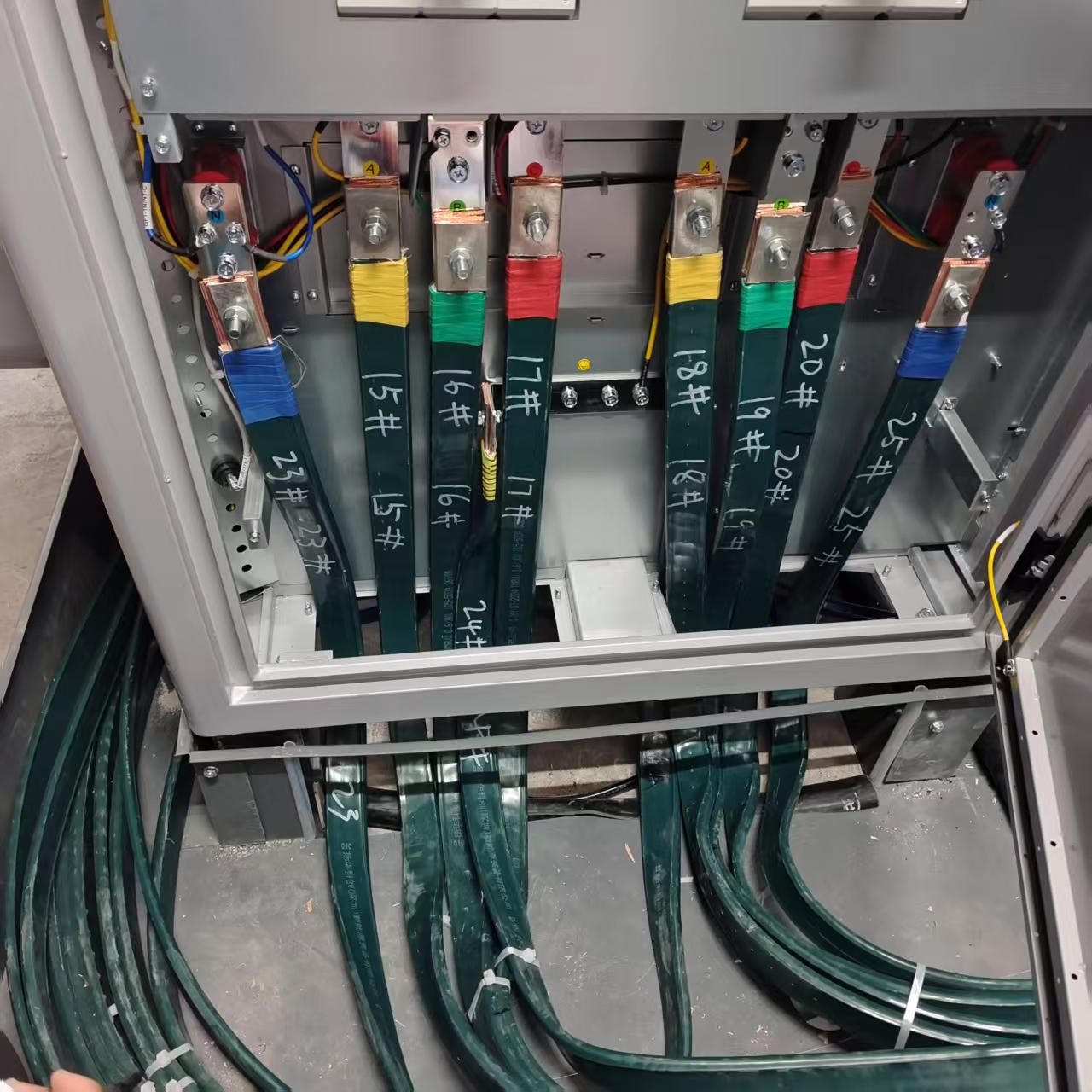
Example scenario: A 2 MW factory rooftop solar project with 400 V AC inverters. The flexible busbar runs from inverter AC outputs to the main step-up transformer, carrying 2500A total. The busbar makes three 90° turns around roof obstructions and requires no cable trays [K1].
Not Suitable Cases
❌ Consider alternatives when:
| Situation | Reason | Alternative |
|---|---|---|
| Small residential rooftops (<10 kWp) | Busbar minimum lengths impractical | Standard cables |
| Temporary or movable installations | Busbar requires fixed mounting | Flexible cables with connectors |
| Extreme chemical exposure | Some busbar coatings not resistant | Specialized chemical-resistant cables |
| Budget-constrained small projects | Busbar higher upfront cost | Cables with larger margin |
| Remote locations with limited technical support | Busbar may require specialist installation | Standard wiring methods |
Note: For medium-scale projects (10-500 kWp), evaluate case-by-case considering total installed cost vs. operational benefits [K3].
Procurement Notes
When sourcing flexible busbar for factory rooftop solar:
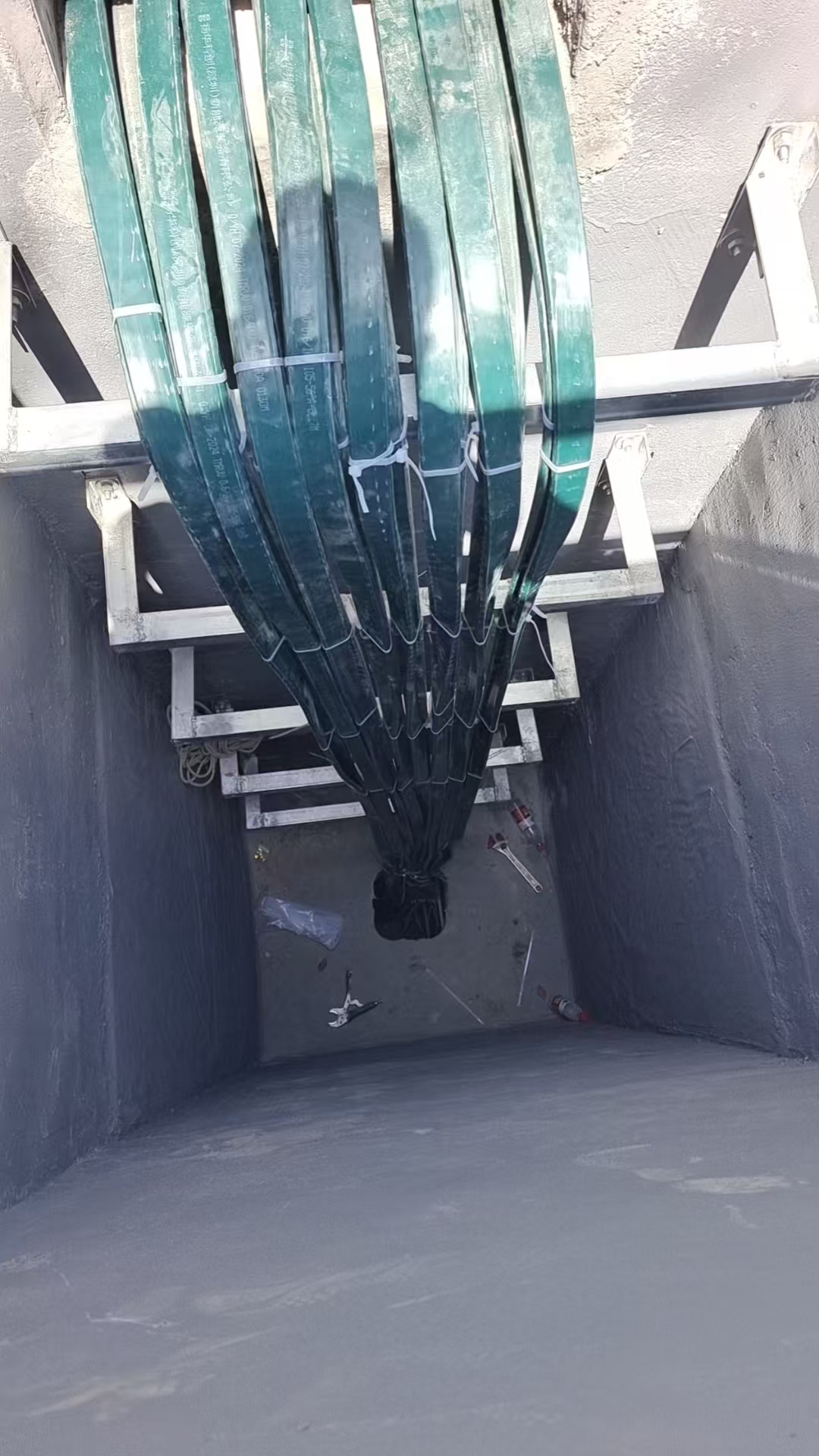
- Request custom parameters: Provide system voltage, current per circuit, ambient temperature range, and number of tap-off points [K3]
- Specify environmental conditions: UV exposure level, rain/snow loads, wind speeds
- Include installation plan: Route drawings showing obstacles, bend locations, support points
- Check certifications: Verify manufacturer provides type-tested assemblies (IEC 61439-6 or equivalent)
- Ask for thermal simulation: Request temperature rise calculations for your specific design
Available from Yanghua: Pre-engineered flexible busbar systems with custom lengths, pre-drilled tap-off points, and integrated mounting brackets for rooftop installation. Technical specifications and design manuals can be downloaded from the product page [K3].
Frequently Asked Questions
Q1: How does flexible busbar reduce installation time on factory rooftops? A1: Flexible busbar comes in pre-assembled lengths that can be bent on-site, eliminating cable pulling, cutting, and termination work. Installations can be 30-50% faster compared to traditional cable trays, especially on complex rooftops with many obstacles [K1][K3].
Q2: Can flexible busbar be used for both AC and DC sides of a solar system? A2: Yes, Yanghua flexible busbar is available in both AC-rated and DC-rated versions. For solar PV, specify the DC voltage rating (typically 1000V or 1500V) and ensure proper insulation for DC applications. Many factory rooftop systems use busbar on the AC side between inverters and transformers [K3].
Q3: What maintenance does a rooftop flexible busbar system require? A3: Periodic visual inspection for physical damage, loose connections, or debris accumulation is recommended. Unlike cables, busbars do not require re-termination or re-torquing under normal conditions. Access to tap-off points makes adding new PV strings straightforward [K1].
Q4: How does flexible busbar handle thermal expansion in rooftop installations? A4: Yanghua flexible busbar designs incorporate expansion loops or sliding support mechanisms that accommodate length changes from temperature variations (-40°C to +90°C). This is engineered into the system layout, not an afterthought like cable slack [K3].
Q5: What is the typical lifespan of a flexible busbar in a solar PV application? A5: While manufacturer-specific data should be verified, properly installed and maintained flexible busbar systems have an expected lifespan of 25+ years in outdoor solar PV environments, matching typical solar panel warranties. Environmental factors like UV exposure and thermal cycling affect longevity [K1].
About the Author Yanghua Editorial Team — This article is maintained in the Astro MDX repository and reviewed against the source materials listed for the page.
Certifications, test reports, and performance claims require explicit approval before public publication.
Contact: info@yhflexiblebusbar.com | Phone: +86-769-3893-9888