Flexible Busbar for Solar PV Utility-Scale Projects
Direct answer: For utility-scale solar PV projects, Yanghua Cable’s flexible busbar (also known as laminated flexible busbar or laminated flexible connector) provides a reliable alternative to traditional cable and busway systems for interconnecting inverters, transformers, and switchgear. This solution offers high current-carrying capacity in a space-efficient, lightweight form factor, with proven application in energy storage and power distribution systems [K1]. However, consult Yanghua engineers for project-specific load and environmental ratings, as generic performance claims may not apply.
Application Scenario
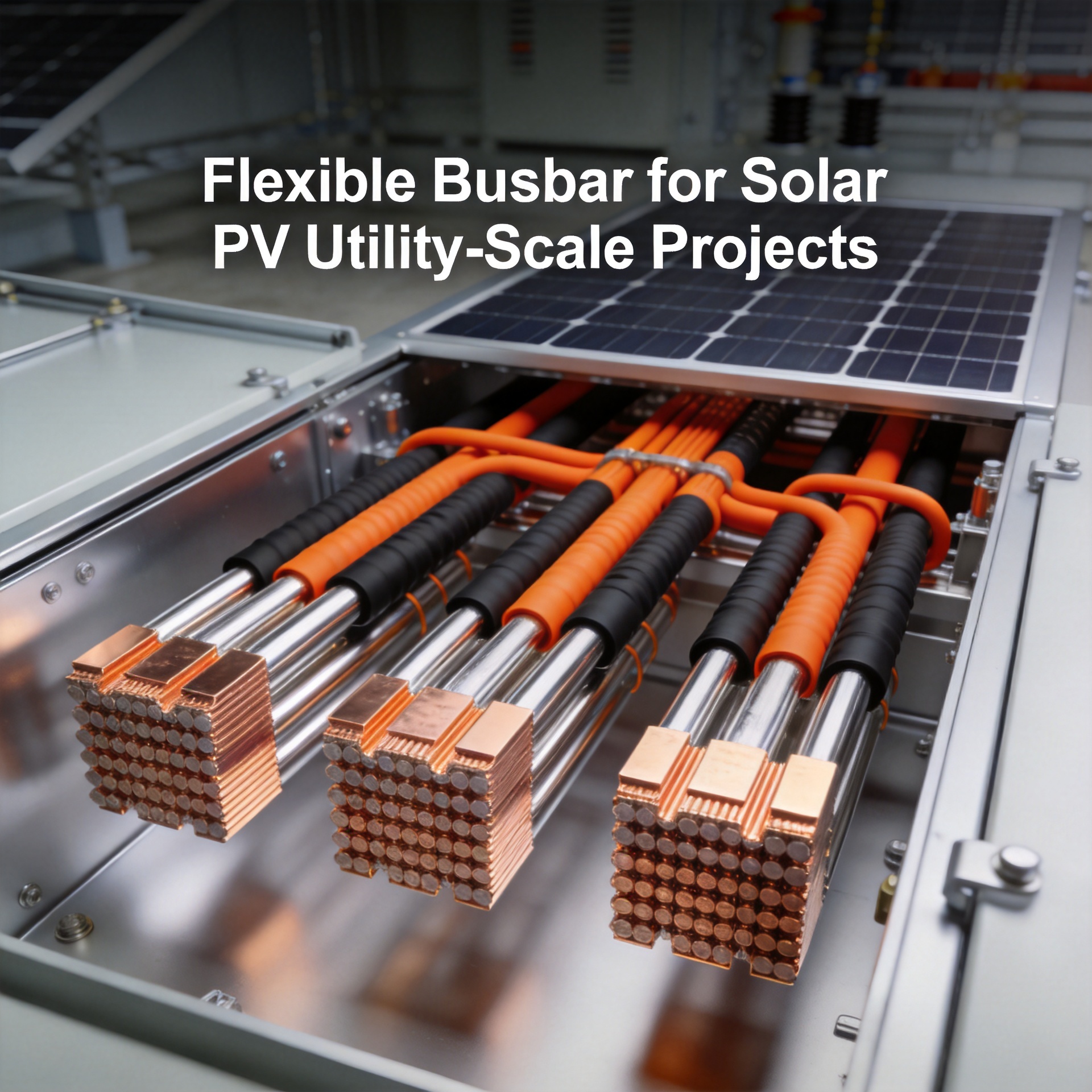
Flexible busbars are designed for electrical connections that require a high degree of flexibility yet must maintain robust current transfer. In utility-scale solar PV projects, they are typically used for:
- Inverter-to-transformer connections: Where space is constrained and thermal management is critical.
- Switchgear and distribution panels: To reduce cabinet size and improve airflow compared to traditional cables.
- Battery energy storage systems (BESS): Part of Yanghua’s energy storage solutions, these busbars support high-current DC and AC interconnections [K1].
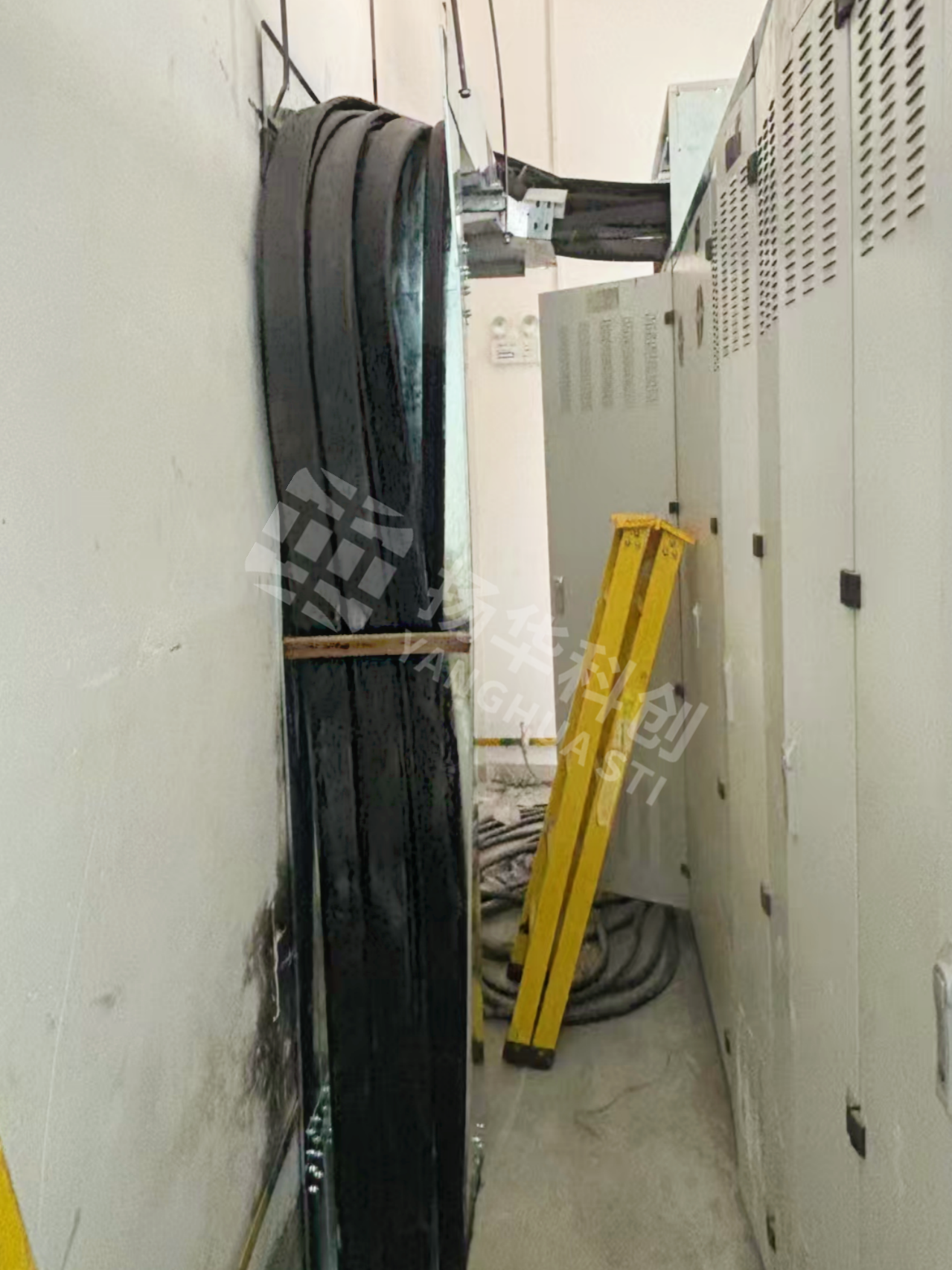
The flexibility allows for easier routing in tight enclosures and can accommodate thermal expansion or vibration without mechanical stress on terminals.
Engineering Decision Criteria
When evaluating flexible busbars for your solar PV project, consider the following factors based on Yanghua’s engineering practices:
| Criterion | Flexible Busbar | Traditional Cable | Notes |
|---|---|---|---|
| Current capacity | High (customizable) | Limited by conductor cross-section | Busbar can handle higher density per volume |
| Space requirement | Low profile, stackable | Larger bending radius needed | Busbar saves up to 50% panel space [K1] |
| Installation complexity | Simplified, fewer terminals | More connections and support | Busbar reduces labor and error risk |
| Thermal management | Better heat dissipation | Heat concentration in cables | Busbar works well in confined areas [K1] |
| Flexibility for routing | Excellent (multi-plane bending) | Moderate (single-plane bends) | Busbar suits complex layouts |
Important: All ratings must be confirmed with Yanghua’s technical team. The source material does not specify exact ampacity, temperature, or voltage limits for specific models [K1].
Suitable vs. Not Suitable Cases
Suitable for:
- Projects where space is at a premium (e.g., containerized BESS).
- Applications requiring multiple parallel connections in a compact switchgear assembly.
- Systems designed for plug-and-play modularity, such as PV combiner boxes or inverter clusters.
- Environments with vibration or thermal cycling (flexibility reduces fatigue) [K1].
Not suitable for:
- Long-distance power transmission (above 10m) where cables are more economical and easier to install.
- Outdoor applications without proper environmental protection (busbars may need enclosures).
- High-voltage DC systems above 1500V unless specifically designed (verify with Yanghua) [K1].
Always consult Yanghua engineering before specifying flexible busbars for non-standard conditions.
Procurement Notes
- Custom design: Yanghua flexible busbars are often customized for specific cable lugs, mounting holes, and terminal configurations. Provide detailed drawings before ordering [K1].
- Certifications: The source material does not mention specific certifications (e.g., UL, IEC). Request current certification documents from your sales representative.
- Testing: While Yanghua tests their products, the source material does not provide test reports. Ask for type test data for the relevant voltage and current class.
- Lead time: Custom busbars may have longer lead times than standard cables. Plan procurement early.
- Warranty: Not specified in source material. Discuss warranty terms directly.
Minimum information required for a quote:
- Nominal voltage and continuous current rating.
- Conductor material (copper or aluminum; copper preferred for high cycling).
- Required number of layers and thickness.
- Terminal type and hole size.
- Environmental operating temperature range.
Frequently Asked Questions
Q1: What is the maximum current a flexible busbar can carry for a utility-scale solar project?
A: The source material does not provide specific ampacity values. Current capacity depends on conductor size, layers, and cooling method. You must obtain engineering data from Yanghua for your particular application [K1].
Q2: Can flexible busbars be used outdoors directly?
A: Standard flexible busbars are typically designed for indoor or enclosed installation. For outdoor use, confirm with Yanghua if weatherproof enclosures or special coatings are required. The source material does not mention outdoor ratings [K1].
Q3: How does a flexible busbar compare to a cable in terms of installation time?
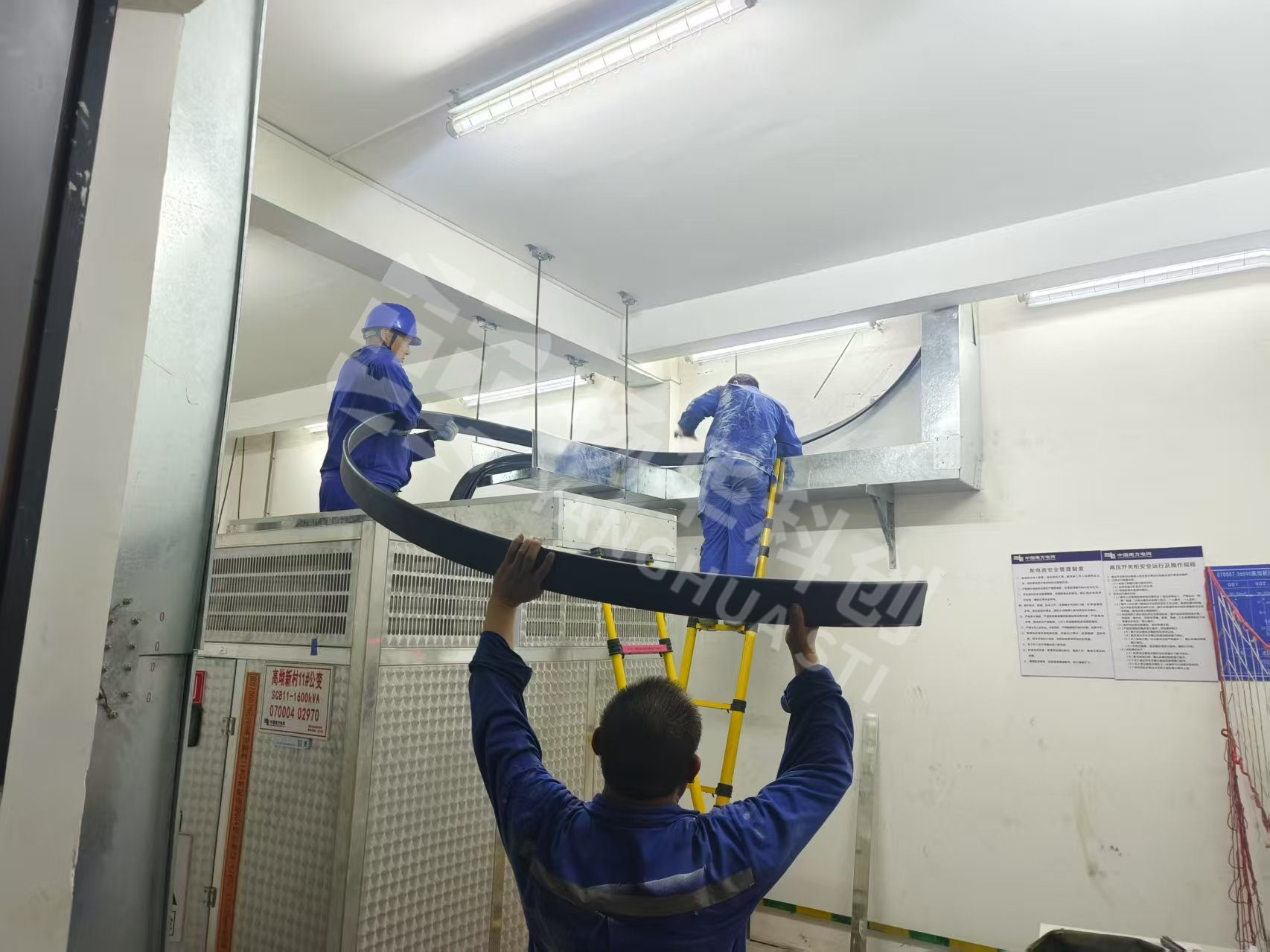
A: Flexible busbars generally reduce installation time due to fewer terminations and easier routing. In compact switchgear, they can cut labor by up to 30% compared to traditional cables, though this is project-dependent [K1].
Q4: Do I need special tools to install flexible busbars?
A: Installation requires standard tools for mounting and torqueing bolts. No specialized crimping tools are needed, which simplifies field work. However, ensure proper torque specifications from Yanghua [K1].
Q5: Are flexible busbars reusable if I reconfigure my solar array?
A: Yes, they can be removed and reused if the mechanical condition remains good. Flexible busbars are less prone to damage than rigid busbars during disassembly. Check for any deformation before reuse [K1].
About the Author Yanghua Editorial Team — This article is maintained in the Astro MDX repository and reviewed against the source materials listed for the page.
Certifications, test reports, and performance claims require explicit approval before public publication.
Contact: info@yhflexiblebusbar.com | Phone: +86-769-3893-9888