Flexible Busbar for Mining and Heavy Industry Power Distribution
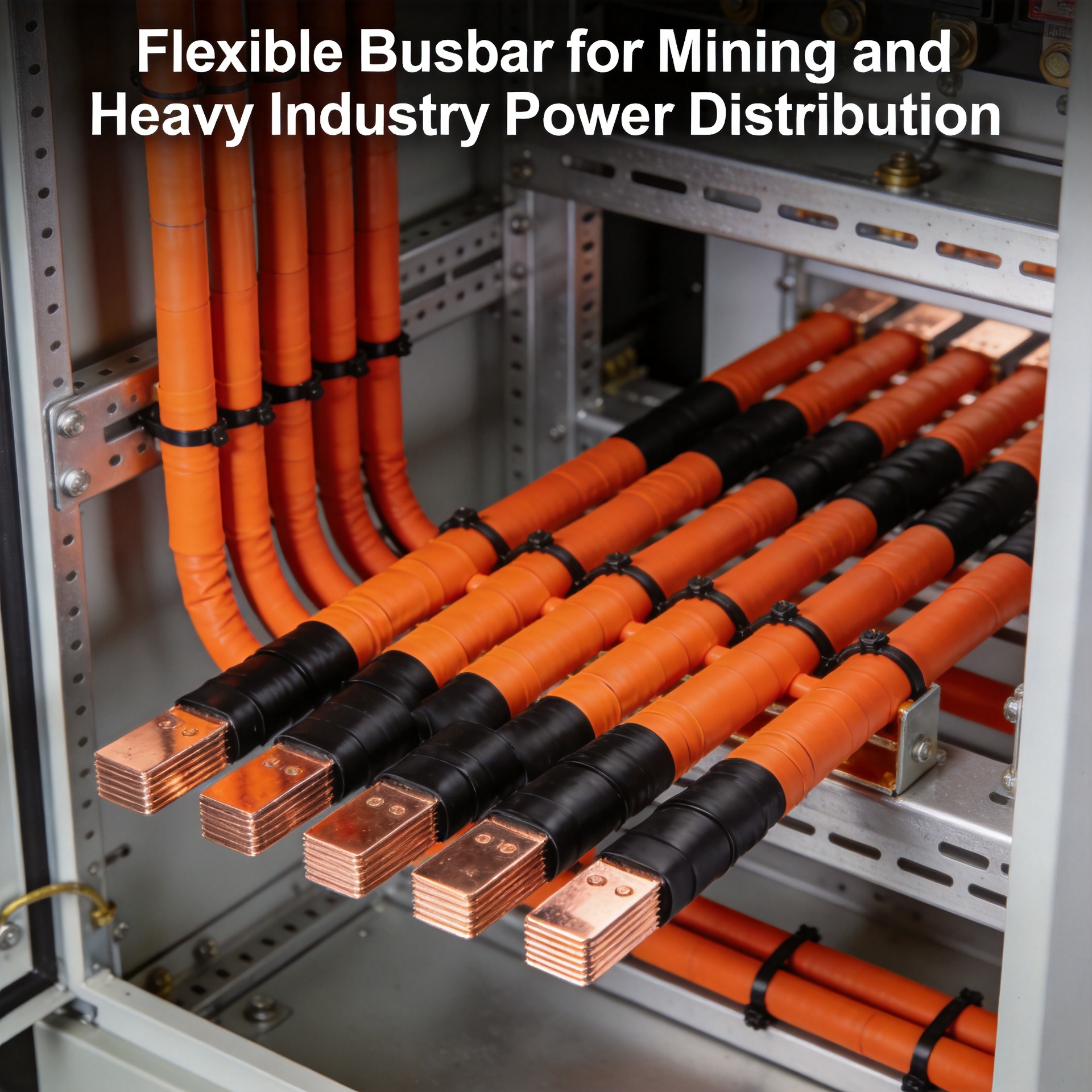
Direct answer: Flexible busbars for mining and heavy industry power distribution offer a safer, more reliable, and space-saving alternative to traditional cable bundles. Designed to withstand harsh mine environments, including vibration, dust, and moisture, these laminated assemblies provide high current-carrying capacity with minimal inductance and heat generation. They are ideal for connecting switchgear, transformers, and variable frequency drives (VFDs) in underground and surface mining applications, reducing installation time and eliminating the risks of loose cable connections. [K1]
Application Scenarios
Flexible busbars excel in mining and heavy industrial contexts where space is constrained, vibration is constant, and safety is paramount:
| Scenario | Description | Why Flexible Busbar Fits |
|---|---|---|
| Underground mining substations | Power distribution in cramped tunnels with high humidity and dust | Compact design, no cable bending radius required, corrosion resistance |
| Surface mining mobile equipment | Connecting power systems on draglines, shovels, and drills | Handles continuous vibration without loosening; flexible connection absorbs movement |
| Variable frequency drive (VFD) output | Connecting VFDs to motors in crushers, conveyors, and mills | Low inductance reduces voltage spikes and motor stress |
| Switchgear to transformer connections | Medium-voltage power transfer in enclosed cabinets | Reduced clearance needed; easier to route in confined spaces |
| Battery energy storage systems | Mining site backup or peak-shaving installations | High current density in limited footprint; simple parallel connections [K1] |
Engineering Decision Criteria
When evaluating flexible busbars for mining power distribution, consider these key parameters:
Technical Decision Table
| Criterion | Flexible Busbar | Traditional Cable | Notes for Mining |
|---|---|---|---|
| Continuous current rating | Validated for 100–1000 A+ per phase | Dependent on cable cross-section | Busbar offers higher density per volume [K1] |
| Temperature rise | Controlled via laminated design; lower inductance | Higher I²R losses in cables | Lower temperature rise improves safety in gassy mines |
| Voltage rating | Up to 1.5 kV standard; custom options for medium voltage | Up to 35 kV available | Busbar limited to low and medium voltage applications |
| Bending radius | Zero minimum; flexible conductors | Minimum 5× cable outer diameter | Critical for tight machinery compartments |
| Vibration tolerance | Superior; no mechanical fasteners to loosen | Connectors and lugs can fatigue over time | Key for haul trucks, excavators, and underground jumbos |
| Installation time | Up to 50% faster: “Plug in and tighten” | Requires cutting, stripping, lugging, and multiple pull points | Reduces downtime in continuous mining operations [K1] |
| Maintenance | Visual inspection; no grease or tape needed | Periodic torquing and dielectric testing | Lower maintenance burden in remote mine sites |
The key engineering advantage: flexible busbars eliminate cable gland and lug failure points—a common cause of arc-flash incidents in mining environments.
Suitable Cases
- Retrofitting existing mining switchgear where cable routing is physically impossible or requires extra cabinets for bending space.
- High-vibration applications such as mining shovels, conveyor drives, and tunnel boring machines. The flexible laminated structure absorbs movement without micro-movement fatigue.
- Enclosed distribution boards where thermal management is critical. Lower heat generation means smaller ventilation or cooling requirements.
- Battery-to-inverter connections in mining energy storage systems. The low-inductance design reduces ripple current and extends battery life.
Not Suitable Cases
- Extra-high voltage transmission (> 3.6 kV). Flexible busbars are not designed for high-voltage power lines—stick with traditional insulated cables or rigid busway.
- Extremely long runs (over 15–20 meters per segment). While flexible busbars can be manufactured in long lengths, very long runs may require intermediate support and can suffer from sagging. For main feeders across large facilities, use traditional cable tray or busway.
- Outdoor overhead exposed installations. Flexible busbars need enclosure protection from rain, snow, and direct UV exposure. They are not self-supporting aerial conductors.
- Applications requiring frequent reconfiguration by untrained personnel. Flexible busbars are permanent installations—not designed for daily disconnection like power distribution plugs.
Procurement Notes
When sourcing flexible busbars for mining applications:
- Specify the exact environment—including ambient temperature range, humidity, dust levels, and potential corrosive gases (e.g., hydrogen sulfide in some mines).
- Request insulation type confirmation—PVC, XLPE, or ETFE depending on thermal and chemical exposure. For mining, ETFE or similar high-performance insulation is recommended due to better abrasion and chemical resistance.
- Ask for factory test reports for dielectric strength and partial discharge. Yanghua provides routine testing per client specification. [K1]
- Confirm termination type—whether you need pre-crimped lugs, ring terminals, or bare ends for compression lugs. Compatibility with existing switchgear busbars is critical.
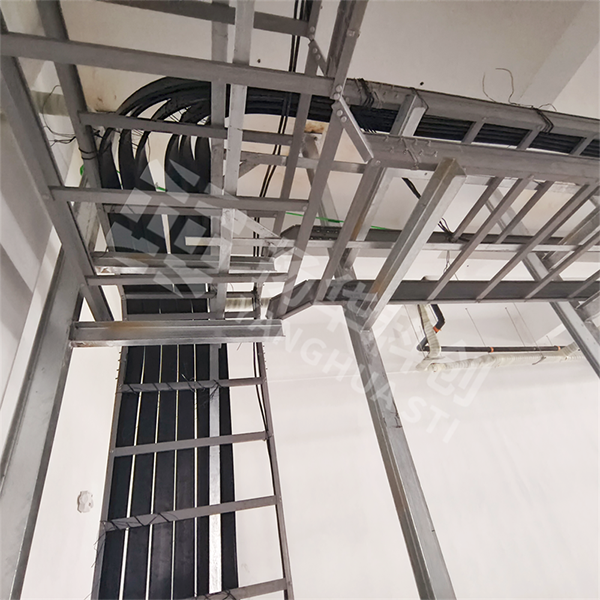
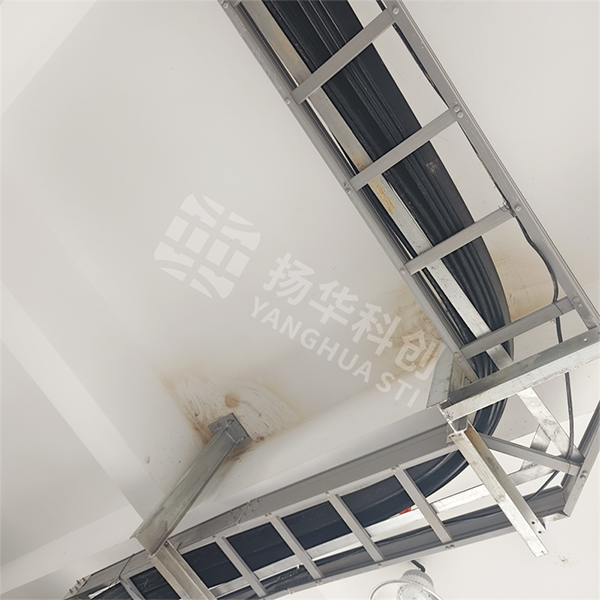
- Plan for proper support and strain relief—even though flexible, the assembly should be supported every 3–5 meters to avoid sagging and potential abrasion against enclosure edges.
Frequently Asked Questions
1. Can flexible busbars replace power cables in an existing mining distribution panel without modifying the enclosure?
In most cases, yes. Flexible busbars require less clearance and no minimum bending radius, so they can often fit directly into existing cabinets. However, you must verify that the existing termination points match the busbar lug patterns and that the enclosure has appropriate cable entry points for busbars (slotted or rectangular openings rather than round cable glands). The Yanghua flexible busbar product line includes custom shapes to match existing switchgear. [K1]
2. How do flexible busbars perform in explosive gas environments (e.g., underground coal mines)?
Flexible busbars reduce sparking risk by eliminating loose cable connections and minimizing inductive load switching spikes. However, all busbars must be enclosed and installed per the mine’s explosion-proof regulations (e.g., MSHA, ATEX, or IECEx). The laminated insulation reduces surface creepage distance compared to traditional cables—ensure the insulation system is rated for your gas group and temperature class. Yanghua does not make explosion-proof claims for unenclosed busbars—consult your mine electrical engineer for complete system certification.
3. What is the maximum ambient temperature flexible busbars can withstand?
The maximum operating temperature depends on the insulation material. Standard PVC-insulated flexible busbars are rated up to 105°C conductor temperature. XLPE-insulated versions handle up to 125°C. For mining applications near heat sources (e.g., near engines or hydraulic systems), specify high-temperature insulation. The busbar assembly itself will also be affected by enclosure ambient conditions—derating may be required above 40°C ambient. Always request the manufacturer’s temperature derating table for your specific assembly. [K1]
4. How much faster is installation compared to traditional cables?
Field experience from mining installations suggests a 40–50% reduction in installation time for busbars versus equivalent cable runs. This is because you eliminate cutting, stripping, lugging each individual conductor, pulling through conduits, and terminating. With flexible busbars, you simply lay them in place, secure with pre-installed brackets, and tighten connection bolts. For retrofits within active mining operations, this time savings can be crucial to minimize production downtime. [K1]
5. Can flexible busbars be connected in parallel for higher current capacity?
Yes. Flexible busbar laminations can be paralleled by using multiple layers or by running two assemblies in parallel on a common bus. When paralleling, ensure equal impedance in each path to balance current sharing. Yanghua can provide custom parallel assemblies with matched inductances. However, for currents above 2000 A per phase, rigid busway may be more cost-effective. Always validate with thermal imaging after installation to confirm load sharing is balanced. [K1]
About the Author Yanghua Editorial Team — This article is maintained in the Astro MDX repository and reviewed against the source materials listed for the page.
Certifications, test reports, and performance claims require explicit approval before public publication.
Contact: info@yhflexiblebusbar.com | Phone: +86-769-3893-9888