![Flexible Busbar Industry Solutions [Energy Storage] (With Complete Manual Download Instructions)](/storage/uploads/images/2026/07/aaa3a043044cfb13c649.jpg)
Flexible Busbar Industry Solutions [Energy Storage] (With Complete Manual Download Instructions)
A flexible busbar is a laminated, insulated copper or aluminum conductor engineered for high-current energy storage applications, offering superior thermal management, space savings, and simplified assembly compared to traditional cabling. For BESS (Battery Energy Storage System) integrators, selecting the correct flexible busbar involves evaluating continuous current rating, insulation voltage withstand, and bending radius constraints. Yanghua provides a comprehensive manual to guide technical decisions.
Application Scenarios
Flexible busbars are designed for dense, high-current environments. [K1] In energy storage systems (ESS), they are commonly used for:
- Battery module interconnects: Linking cells or modules within a rack to minimize resistance and optimize space.
- Power conversion system (PCS) connections: Carrying high current between the battery bank and inverter with lower inductance.
- Busbar trunking systems: Distributing power within a containerized ESS where cable bundles would be bulky or impede airflow.
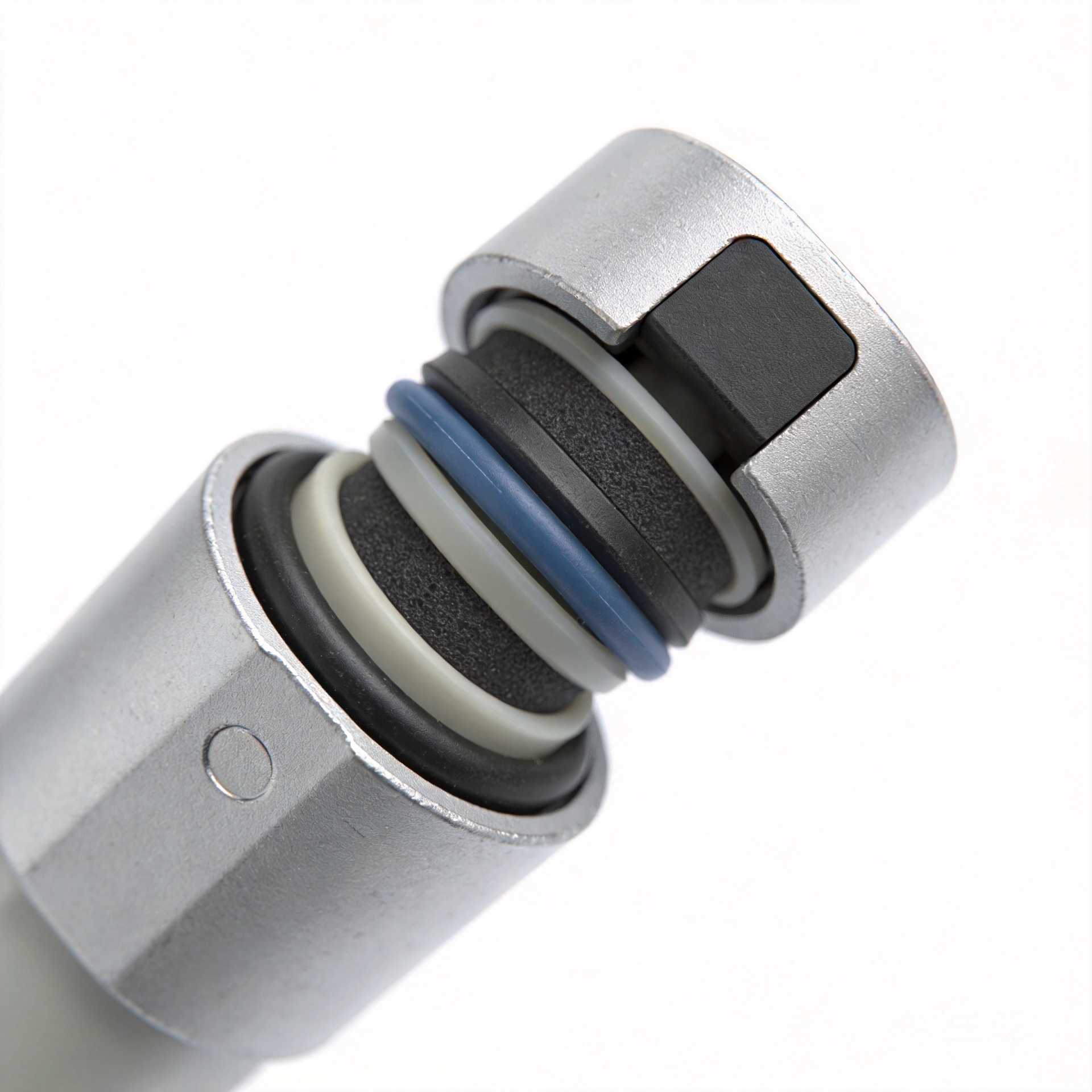
They are particularly suited for applications where thermal cycling and mechanical vibration are concerns, as the flexible construction absorbs movement without loosening.
Engineering Decision Criteria
When evaluating flexible busbars for energy storage, key parameters include:
- Current rating (continuous): Typically ranges from 100A to 6000A, depending on cross-section and cooling conditions. [K1] Always derate for ambient temperature and enclosure airflow.
- Dielectric strength: Insulation must withstand system voltage (e.g., 1000V DC to 1500V DC common in BESS) plus safety margin. [K1]
- Bending radius: Minimum bend radius is typically 3–5× the busbar thickness to prevent cracking of insulation or conductor.
- Temperature class: Insulation rated for -40°C to +125°C is common for outdoor or unheated BESS installations.
- Electromagnetic compatibility (EMC): Laminated construction reduces loop inductance, improving EMC. [K1]
Caution: Performance varies with the number of repetitive bends. For dynamic applications (e.g., sliding battery drawers), consult Yanghua’s specific dynamic bending life data.
Suitable vs. Not Suitable Cases
| Suitable for | Not suitable for |
|---|---|
| High-current BESS up to 1500V DC | Extra-high voltage transmission above 3 kV |
| Compact module-to-bus interconnection | Flexible joints where continuous articulation is required (e.g., robot arms) |
| Environments with mild thermal cycling | Immersion cooling or corrosive chemical exposure (check insulation compatibility) |
| Applications needing minimal inductance | Very high-temperature zones above 125°C continuous |
| Retrofit upgrades where re-cabling is impractical | Extremely high bending frequency (contact Yanghua for fatigue analysis) |
Procurement Notes
- Download the complete manual from the bottom of the article page for detailed specifications, installation torque values, and test certificates. [K1]
- Define your voltage class, current, and ambient temperature before ordering. Standard lengths are available, but custom dimensions can be quoted.
- Request a qualification sample for physical validation—do not rely solely on catalog currents without thermal testing in your enclosure. [K1]
- Inquire about UL or IEC certification based on your target market. Not all sizes may be certified; verify with the sales team.
- Specify terminal plating (tin, silver, nickel) based on contact material to prevent galvanic corrosion.
Frequently Asked Questions
Q: Can flexible busbars handle 1500V DC in a typical BESS environment? A: Yes, when specified with appropriate insulation class. Standard flexible busbars can be engineered for 1500V DC, provided the insulation thickness and creepage distances are verified against the system voltage and altitude. [K1]
Q: What is the typical lifetime of a flexible busbar in a stationary energy storage system? A: With proper installation (no overload, within temperature limits), a flexible busbar can last the life of the ESS—often 10–15 years. The manual includes guidance on thermal cycling and connection maintenance. [K1]
Q: Is the installation torque critical on flexible busbars? A: Yes. Over-torquing can deform the laminated layers and cause insulation to crack. Under-torquing leads to resistive heating. Follow the torque values specified in the manual. [K1]
Q: How do I measure correct bending radius when routing? A: The minimum bending radius is typically 3–5× thickness for the flat plane and 2–3× thickness for the edgewise bend. Route with the natural curve—do not force kinks. [K1]
Q: Can I parallel multiple flexible busbars for higher current? A: Yes, but derate for current unbalance. Ensure equal path lengths and similar contact resistance per terminal. The manual includes paralleling guidelines. [K1]
About the Author Yanghua Editorial Team — This article is maintained in the Astro MDX repository and reviewed against the source materials listed for the page.
Certifications, test reports, and performance claims require explicit approval before public publication.
Contact: info@yhflexiblebusbar.com | Phone: +86-769-3893-9888