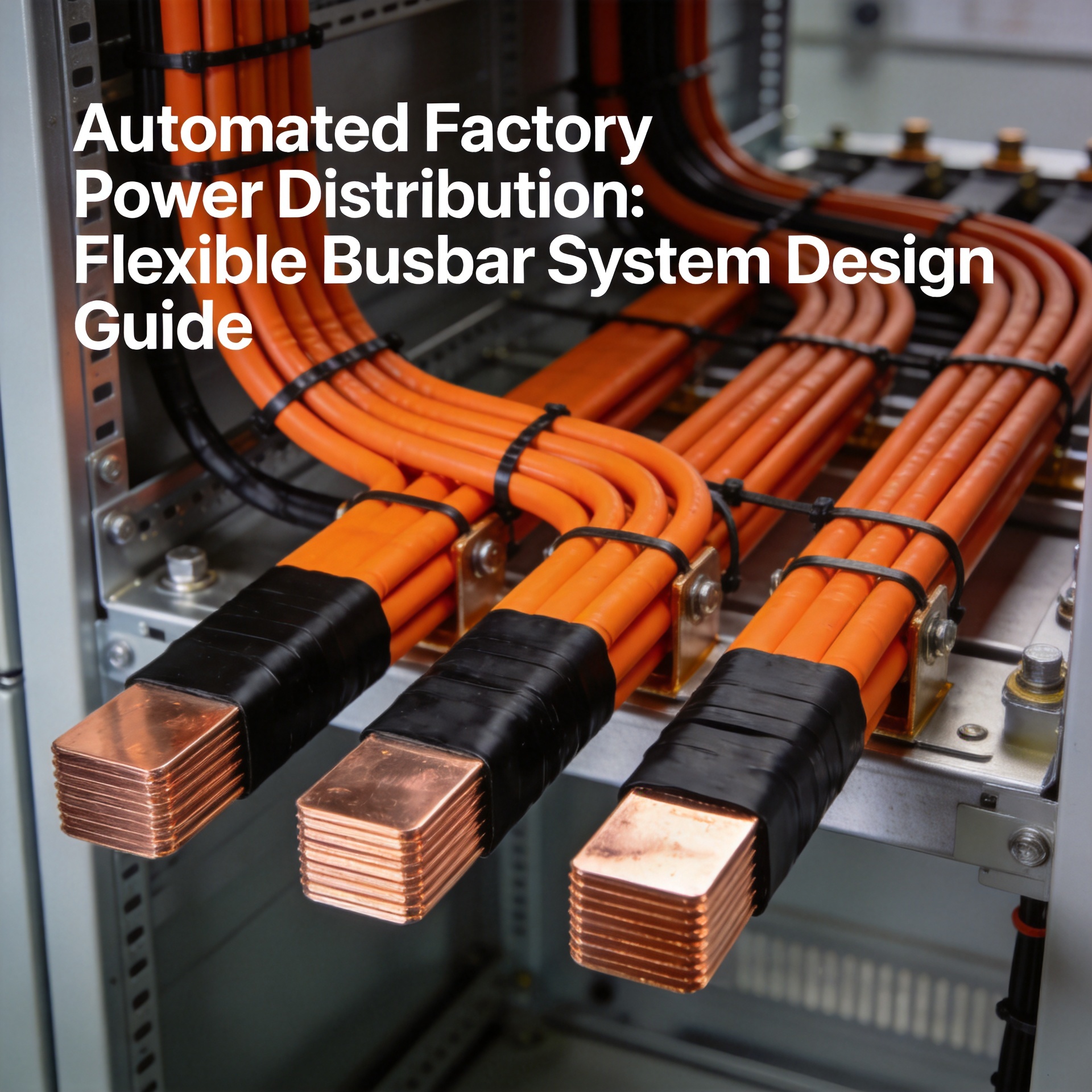
Automated Factory Power Distribution: Flexible Busbar System Design Guide
Flexible busbar systems are the optimal power distribution solution for automated factories requiring high-density, flexible layouts and easy reconfiguration. Unlike rigid cable or traditional busbar, flexible busbar accommodates frequent equipment repositioning, supports high current ratings in compact spaces, and reduces installation time by up to 50%. For automated production lines with dynamic load demands, a flexible busbar system with centrally-located feed units and plug-in tap-off points enables rapid reconfiguration without interrupting adjacent processes [K1].
Application Scenarios
Flexible busbar systems are best suited for automated factory environments where production equipment must be frequently added, moved, or reconfigured. The core benefit is the ability to tap off power at any point along the busbar length, eliminating the need for separate distribution boards or cable re-runs [K1]. Typical applications include:
- Assembly lines with modular workstations that change position quarterly or more often.
- Robotic cells requiring multiple high-power connections at varying locations.
- Warehouse automation systems where conveyor modules are added or removed seasonally.
- Clean rooms where minimizing dust-collecting cable trays is critical.
- Any facility planning for future capacity expansion without a full electrical redesign.
Engineering Decision Criteria
When evaluating flexible busbar for an automated factory, engineers should assess based on these criteria [K1]:
| Criterion | Priority | Acceptable Range | Notes |
|---|---|---|---|
| Rated current per phase | High | 25 A to 630 A | Match peak load plus 20% headroom |
| Short-circuit withstand | High | Minimum 10 kA for 1 sec | Verify with upstream protection device coordination |
| IP rating | Medium | IP54 for general factory, IP65 for washdown areas | Dust and moisture protection |
| Ambient temperature | Medium | -5°C to +55°C | Derate for continuous high-temperature zones |
| Number of tap-off points | Low | Every 0.25 m to 1 m spacing | Based on typical feeder density |
| Material | Low | Copper or aluminum conductors | Copper for lower losses; aluminum for lower cost |
Key design parameters:
- Busbar sizing: Calculate continuous current (including harmonics) at ambient temperature. Use manufacturer derating curves when mounting adjacent to heat sources.
- Voltage drop: Ensure total length does not exceed 2% drop at full load for sensitive automation equipment.
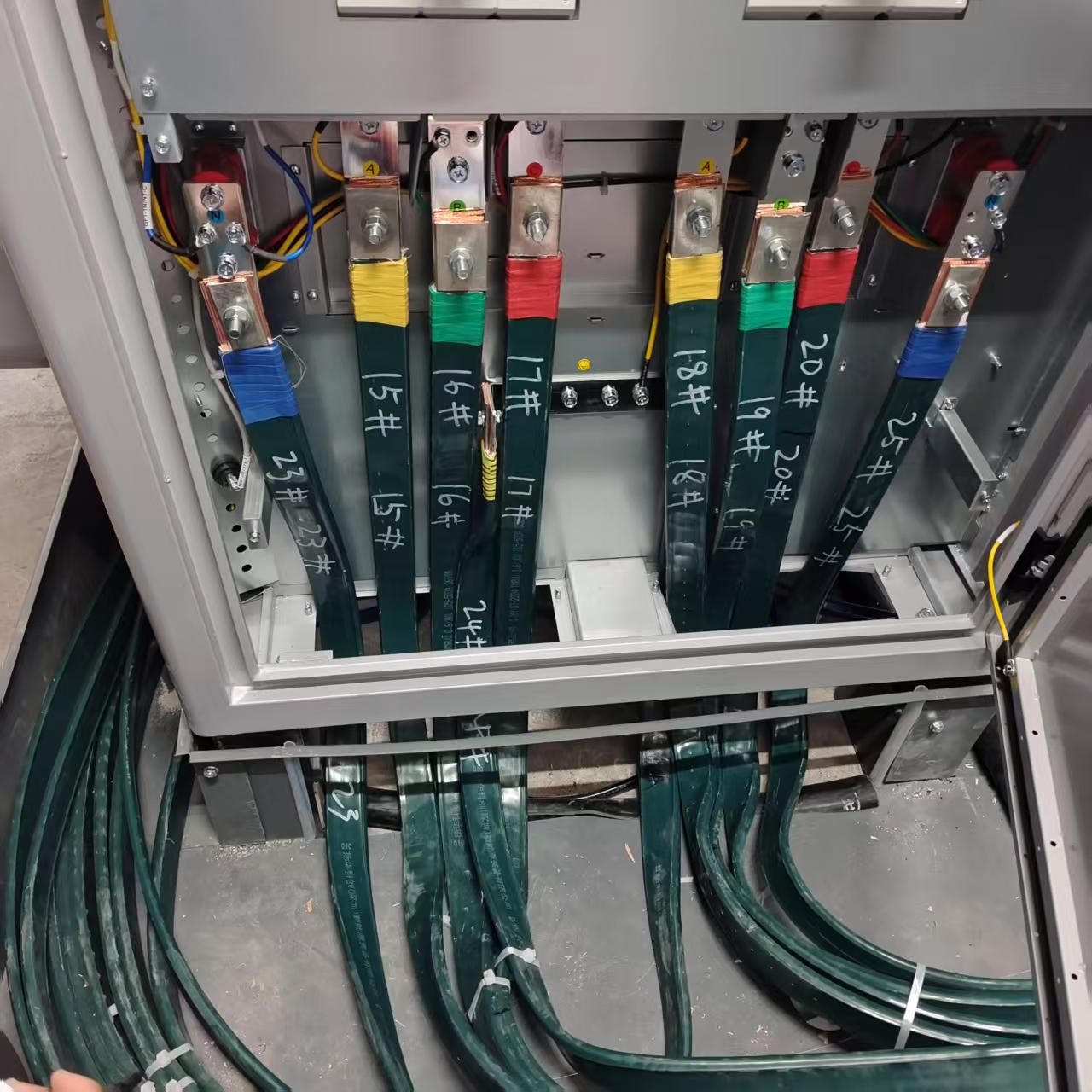
- Tap-off plug selection: Use only approved plug-in units with integrated fuse or circuit breaker protection. Each tap-off must match the load’s starting characteristic [K1].
- Earthing: Flexible busbar systems typically include an integral earth conductor. Confirm it meets the required fault-loop impedance for the facility.
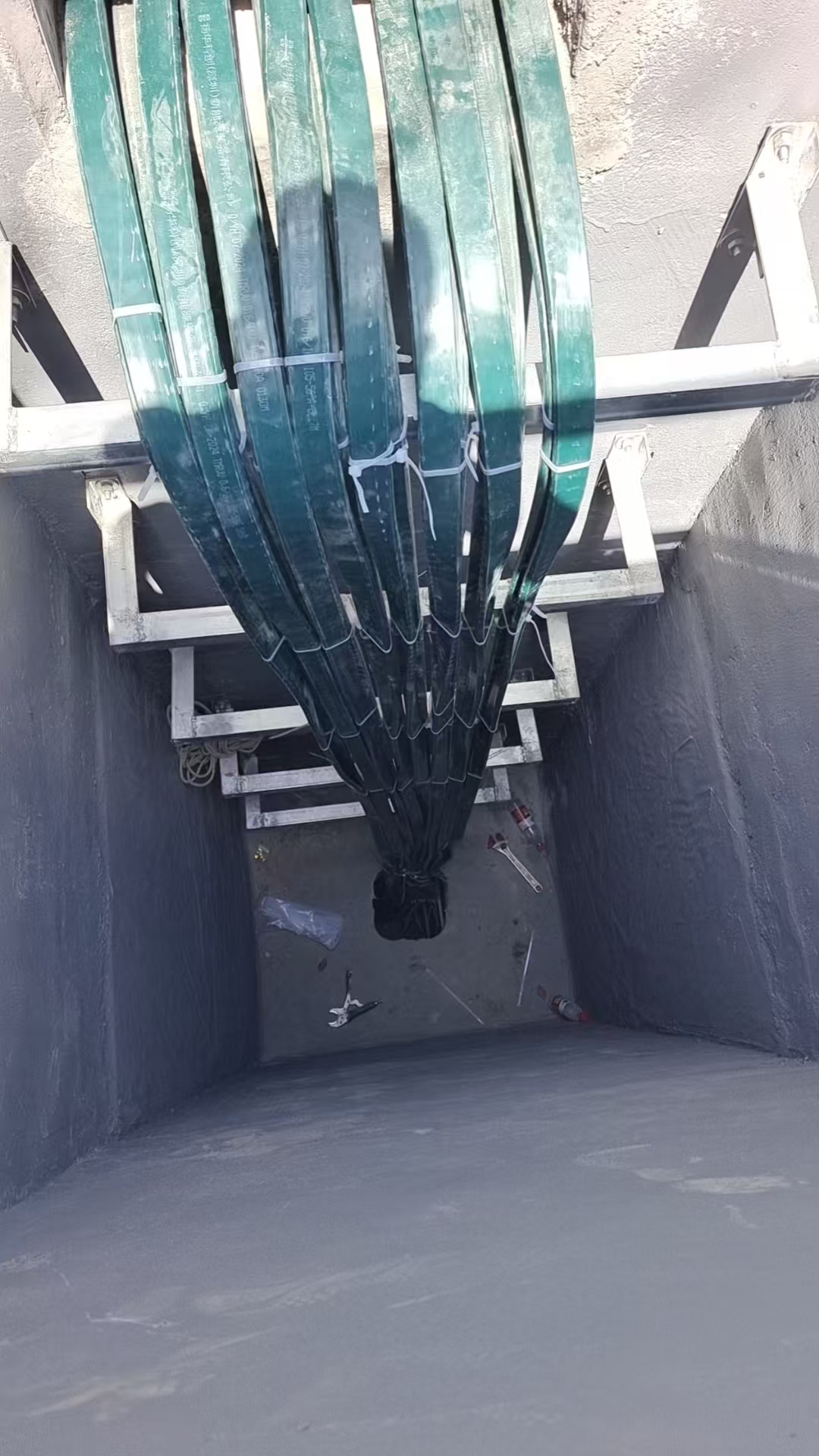
- Expansion joints: For runs over 12 m, include an expansion joint to accommodate thermal movement—critical for factories with temperature cycling [K1].
Suitable vs. Not Suitable Cases
✅ Suitable for:
- High-density load clusters (e.g., multiple robots within 10 m radius).
- Production lines with >3 reconfigurations per year.
- Facilities requiring overhead power distribution to preserve floor space.
- Applications needing mixed loads (lighting, small motors, controls) from one busbar run.
❌ Not suitable for:
- Single stationary loads with 10+ year fixed positions (use traditional cable busway or conduit).
- Outdoor or corrosive environments unless explicitly rated (e.g., IP66 with epoxy coating).
- High-frequency switching loads (e.g., >100 kHz) due to possible EMI coupling—check with busbar manufacturer.
- Continuous current above 630 A per phase (consider high-current rigid busbar instead).
Procurement Notes
When procuring a flexible busbar system for automated factory use, consider these practical points [K1]:
- Request a single-line diagram from the manufacturer showing the full busbar route, feed units, tap-off locations, and required accessories (end caps, brackets, joint packs).
- Insist on third-party type test certificates for short-circuit and temperature-rise tests—these are not invented claims but verifiable standards compliance.
- Confirm spare parts availability for the busbar line for at least 10 years. Some proprietary designs have limited aftermarket support.
- Plan for spare tap-off units—stock 5% of total ordered quantity for rapid expansion or emergency replacement.
- Verify the busbar’s fire resistance rating if required by local building codes (e.g., BS 476 or EN 50374). Only source materials with tested ratings—do not assume fireproof claims.
- Ask for installation training—flexible busbar assembly is not intuitive for all electricians. Factory-specific jointing tools may be needed.
Frequently Asked Questions
Q1: Can I connect flexible busbar directly to a motor starter or VFD? A: Yes, but you must use a tap-off unit rated for the motor’s starting current (typically 6-8× full-load current). VFDs require a separate input filter to prevent harmonic pollution back onto the busbar. Always consult the busbar manufacturer for specific compatibility [K1].
Q2: What happens if I need to add a tap-off point after installation? A: Flexible busbar is designed for this exact scenario. You can add a plug-in tap-off unit at any available socket on the busbar run, provided the total load does not exceed the busbar’s rated current. No de-energization is typically needed if using a “live tap-off” accessory—but always follow local safety regulations [K1].
Q3: How many tap-off points can I have on one busbar run? A: It depends on the busbar’s rated current and the total connected load. As a rule of thumb, space tap-offs every 0.5 m to 1 m, and limit total connected load to 80% of the busbar’s continuous current rating. For automated lines with 30+ stations, consider splitting the run into two busbar sections with separate feeds [K1].
Q4: Is flexible busbar more expensive than traditional cable tray? A: For initial material cost, yes—flexible busbar is typically 20-40% more expensive per linear meter. However, total installed cost is often lower when you include labor, reconfiguration savings, and reduced downtime. For the automated factory context, the time savings during each production line changeover usually pays back the premium within one year [K1].
Q5: Do I need special tools to install flexible busbar? A: Most systems require a basic toolkit including a hex key, torque wrench, and possibly a crimping tool for joint packs. The manufacturer’s installation manual is essential. Some brands offer pre-assembled sections that require only bolt-on joints at site [K1].
About the Author Yanghua Editorial Team — This article is maintained in the Astro MDX repository and reviewed against the source materials listed for the page.
Certifications, test reports, and performance claims require explicit approval before public publication.
Contact: info@yhflexiblebusbar.com | Phone: +86-769-3893-9888