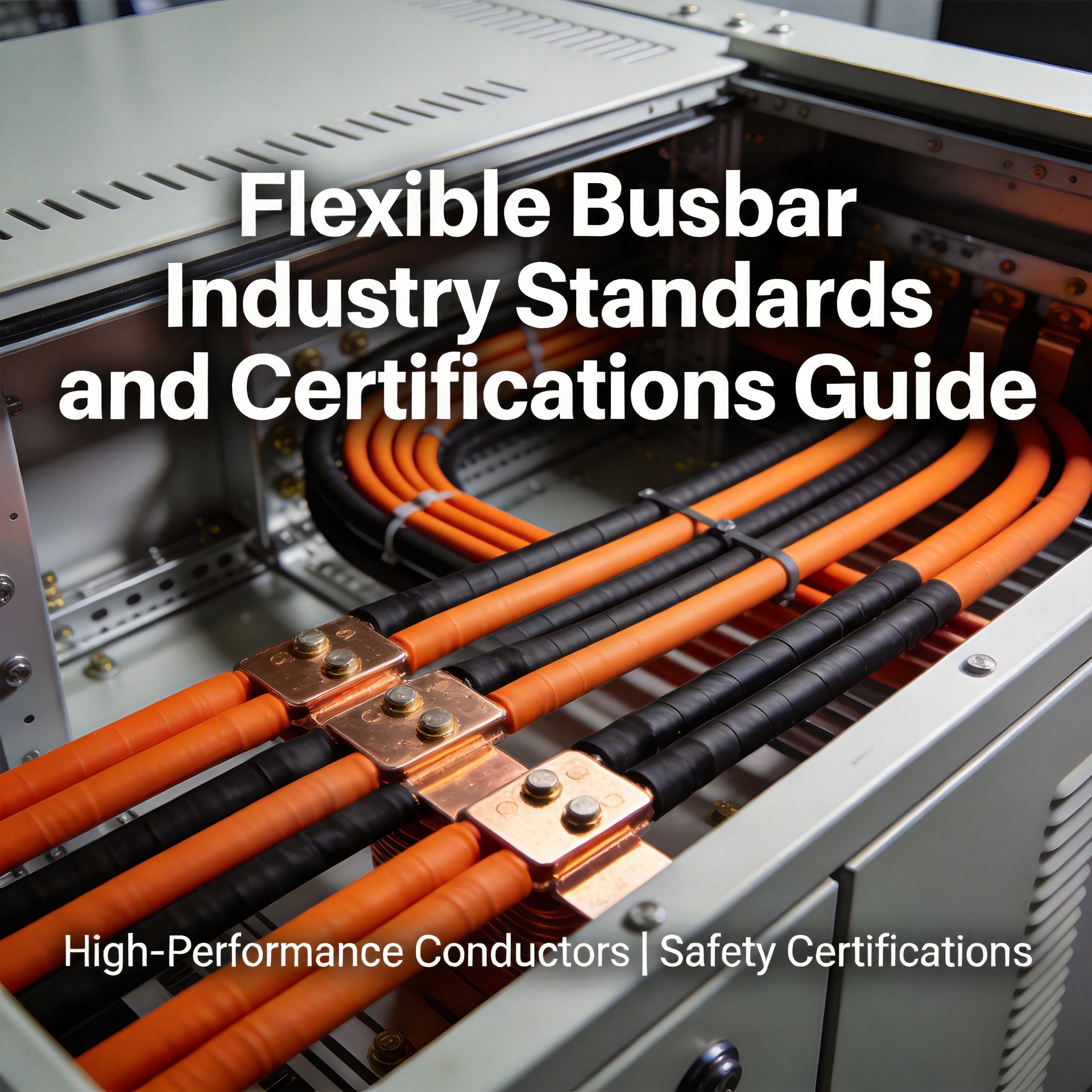
Flexible Busbar Industry Standards and Certifications Guide
Flexible busbars (also known as laminated busbars or flexible connectors) must meet rigorous industry standards for electrical safety, thermal performance, and mechanical durability. Key certifications include UL 758 (Appliance Wiring Material), UL 2556 (Flame and Temperature Tests), and IEC 60068 (Environmental Testing). In the EU, RoHS and REACH compliance are mandatory, while for high-power applications, EN 60204-1 (Safety of Machinery) applies. Always verify that your busbar supplier holds current, audited certification reports from recognized bodies.
Application Scenario
Flexible busbars are ideal for electrical connections where movement, vibration, or tight space constraints are present—common in energy storage systems (battery racks), switchgear cabinets, UPS units, and electric vehicle (EV) power distribution units. They replace rigid cables or flat copper bars when frequent flexing or complex routing is required.
Engineering Decision Criteria
| Criterion | Requirement | Recommended Standard |
|---|---|---|
| Voltage Rating | Match system operating voltage | UL 758 (rated up to 600V or 1000V) |
| Current Carrying Capacity | No sustained over-temperature | IEC 60068-2-38 (temperature cycle test) |
| Insulation Thickness | Minimum 0.5 mm for 600V rail | UL 1581 (vertical flame test, VW-1) |
| Flex Life | >10,000 cycles without conductor break | Custom supplier endurance report |
| Flammability | Non-propagating flame, self-extinguishing | UL 94 V-0 or VW-1 |
| Environmental | Lead-free, phthalate-free, RoHS compliant | UL 758 / REACH compliance statement |
Key insight: No single standard covers all flexible busbar use cases. For battery connections (up to 1500V DC), look for UL 9540 or UL 1973 system-level reference. For industrial machinery, EN 60204-1 is mandatory for CE marking.
Suitable Cases
- Energy storage (battery racks): Low-inductance design reduces bus voltage spikes during rapid charge/discharge.
- Switchgear and UPS: Compact 90-degree bends with multi-layer stacking fit tight compartments.
- EV charging stations: Flexible busbars absorb thermal expansion and connector vibration.
- Solar inverter DC links: High-current paths with minimal skin effect losses.
Not Suitable Cases

- Subsea or high-humidity submersible applications: Standard insulation may absorb moisture; special hermetically sealed designs required.
- Ultra-high voltage (>1500V AC) main distribution: Air-gap creepage distances become excessive; rigid busbars or cables preferred.
- High-frequency AC (above 10 kHz): Laminated construction can cause parasitic coupling; consult for custom shielding.
Procurement Notes
- Request valid certification reports – Do not accept a statement of “compliant to UL 758” without the actual test report number. Verify with the issuing body (e.g., UL’s online Product iQ database).
- Confirm material traceability – Insulation (PVC, XLPE, or silicone) must have a material declaration (MDL) listing RoHS/RoHS 2 substances.
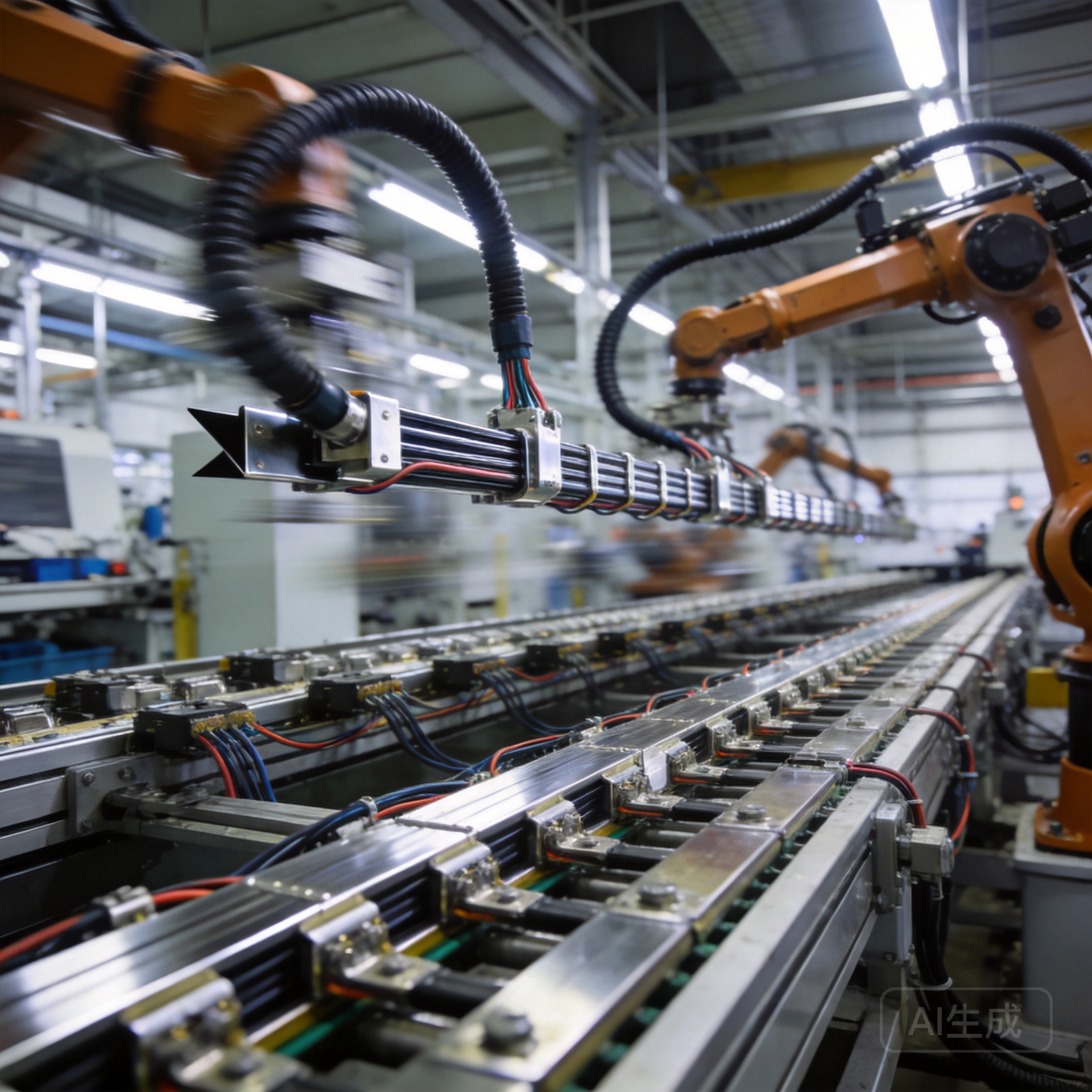
- Check flex life data – For dynamic applications (e.g., robotic arms or battery pack interconnect), insist on a documented flex test at minimum bend radius.
- Specify flame class – For indoor equipment (cabinets, control panels), VW-1 or UL 94 V-0 is typically required. FT-2 (horizontal flame) is for low-risk areas only.
- Request a Declaration of Performance (DoP) if needed for CE marking under Construction Products Regulation (CPR).
- Consider dual labeling – Some projects accept only UL-listed products; others require CSA (Canada) or TÜV (EU). Confirm with your regulatory team.
FAQs
Q: What certifications must a flexible busbar have for UL 9540 battery systems? A: UL 9540 itself is a system-level standard (ESS). The busbar should be listed as a component under UL 1973 (Stationary Battery) or UL 1642 (Battery Cells) with appropriate UL 758 wiring material rating. Always cross-check the system builder’s acceptance criteria for subcomponents.
Q: Does UL 758 cover all flame tests for flexible busbars? A: UL 758 includes the VW-1 vertical flame test, but for high-rise or critical facilities, you may also need UL 1666 (Riser) or UL 1581 (FT-4). Specify the end-use environment in your procurement spec.
Q: Can I use a non-certified busbar if I test it myself? A: Self-testing is rarely accepted by code enforcement or insurance carriers. Most jurisdictions require a third-party certification mark (UL, CSA, VDE). Self-declared “equivalent performance” not backed by accredited lab reports can invalidate your building permit or system warranty.
Q: What is the difference between UL 94 V-0 and VW-1 for busbar insulation? A: Both measure flame resistance, but VW-1 (from UL 1581/2556) is a tougher burn test—it includes a required indicator flag that must not be destroyed. UL 94 V-0 is a standard for plastics; it is acceptable for fixed equipment but may not be sufficient for wire/cable inside cabinets. Many inspectors require VW-1 for insulated conductors.
Q: How do I know if my busbar meets RoHS or REACH? A: Ask for a full Material Declaration (MDL) from the supplier that lists each substance weight (ppm). For RoHS, all 10 restricted substances must be below the threshold. For REACH, the supplier must confirm no SVHC (Substances of Very High Concern) above 0.1% w/w. A valid “Declaration of Conformity” is not proof; the MDL is.
About the Author Yanghua Editorial Team — This article is maintained in the Astro MDX repository and reviewed against the source materials listed for the page.
Certifications, test reports, and performance claims require explicit approval before public publication.
Contact: info@yhflexiblebusbar.com | Phone: +86-769-3893-9888